Lilongwe Philatelic Society

Lilongwe Philatelic Society

Lilongwe

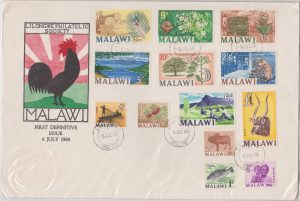
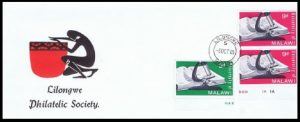
The Lilongwe Philatelic Society was created by John Lanham, a Posts & Telecommunications worker who lived in Lilongwe. Although the society did not hold any meetings or events, it appears the main purpose was to create philatelic covers during the 1960’s in which Lanham believed would be superior to those issued by official postal authorities.

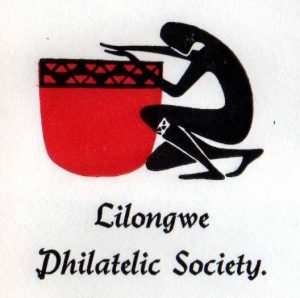
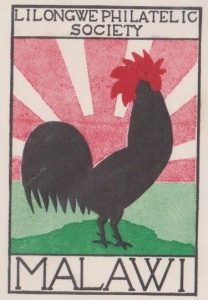
Originally, covers bore the emblem of the cockerel against a background of a rising sun. However, the postal authorities considered the emblem sacrosanct unto them and it was changed to a native drummer for future issues.

First Day Covers

References


The Umtali Advertiser

The Umtali Advertiser

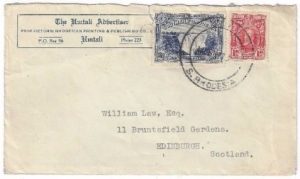
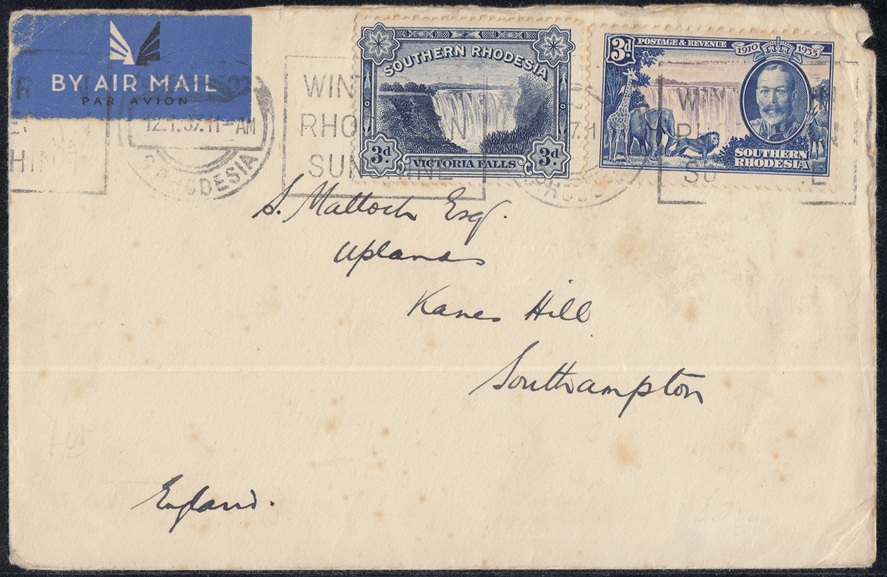
The Umtali Advertiser was the second newspaper to be launched in Southern Rhodesia and preceded The Buluwayo Chronicle. The first edition appeared on December 13, 1893. At the time Umtali was on its second site where Old Umtali Mission was later established on the Inyanga road.

The newspaper was founded by a Jewish Scotsman named Maurice Henry. Besides being interested in journalism Mr Henry ran a printing and stationery business and also an auction business, a native labour office and a laundry.

The Advertiser began its career in cyclostyle form. The pages were small; scarcely larger than the sheets of an exercise book. The Cyclostyle duplicating process is a form of stencil copying invented by David Gestetner in London in 1890. The machine Henry used would have been hand operated and was a very new system of printing at the time.

Mr Henry said that he hoped this little paper would be the means of giving long needed publicity to the town and district. He believed that the paper would be conducted on entirely independent principles apart from political bias or party feeling and that the reports would be plain unvarnished statements of what actually occurred.

In the beginning it was difficult to get sufficient paper and the issue of May 5, 1894 carried an apology. Two months later the paper once again had to be suspended due to the non -arrival of printing ink. In an attempt to brighten up the paper’s appearance he used coloured sheets of paper as front and back covers ranging from a bilious orange to a pale buff.

The first illustration, a drawing of Umtali, (a number of small box-shaped houses at the base of a large hill) appeared on May 19 1894. On November 6, 1894 the Advertiser daringly published a cartoon of the New Woman – a girl cyclist astride her machine wearing bloomers and a bowler hat.

On November 20, 1894 Henry sold the newspaper to Charles Hancock, a mining engineer. Later he sold it to G B Mitchell and Company but Hancock was retained as editor until August 1895 when the Advertiser was absorbed into the Rhodesian Printing and Publishing Company which owned the Herald and the Chronicle and in which the Argus Company held the major shareholding.

In 1907 the Argus Printing & Publishing Company sold the Advertiser to Mr Horace Freeman who owned it until ill health forced him to sell it in 1912 to Charles Eickhoff, a founder of the Umtali Municipality and Mayor of Umtali between 1917 to 1919. Eickhoff owned and ran the paper for the next 22 years.

By 1934, Mr Eickhoff, at the age of 65, found the running the newspaper and its associated printing and bookselling business, as well as his parliamentary and public duties, just too onerous. On 1st August he sold the Umtali Advertiser, the printing business, the buildings and the property in Main Street to The Rhodesian Printing and Publishing Company.

In 1949 the newspaper was re-named the Umtali Post.

Reference

Charles Stewart Day Old Chicks (Pvt) Ltd

Charles Stewart Day Old Chicks (Pvt) Ltd

Hartley

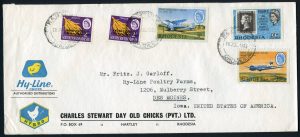
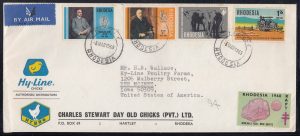
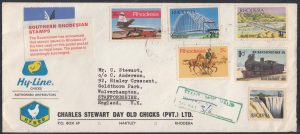
Charles Stewart Day Old Chicks is a family business established in 1958 by Charles Stewart. Initially producing one day old chicks, after a few years the business began exporting day old chicks and breeding stock to Malawi(1971), Mozambique, and Northern Rhodesia (Zambia).

Today, the company employs over 500 staff and stocks broiler chicks, layer chicks, stock feeds, Hy-Line breeding stock vaccines and medication. The business’ headquarters is in Blantyre, Malawi.

Contributors
  • James Gavin
  • Walter Herdzik

FB

Royal Automobile Club of South Africa

Royal Automobile Club of South Africa

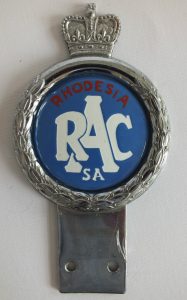
The Royal Automobile Club of South Africa (RACSA) was established on 23rd October, 1901 in Cape Town, South Africa. After that several other bodies began to spring up around the country.

In 1911, after the visit of the Duke of Connaught to open the first Union parliament, the original Cape Town based Automobile Club of SA received a royal charter and became known as the Royal Automobile Club of South Africa.

On 29th November, 1965, RACSA was taken over by the Automobile Association of South Africa.

Contributors
  • James Gavin

Automobile Association of Rhodesia

Automobile Association of Rhodesia

Salisbury

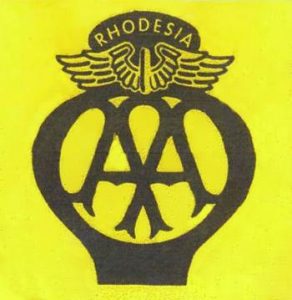
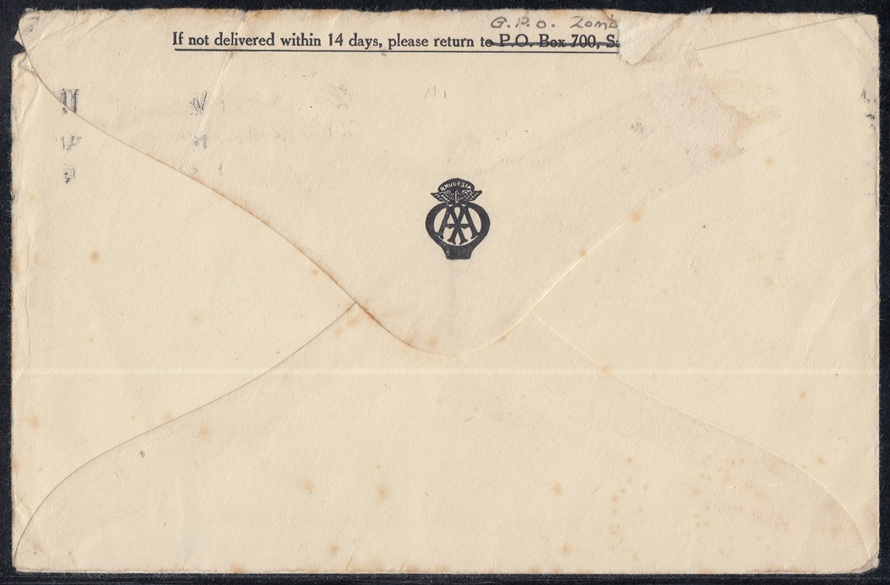
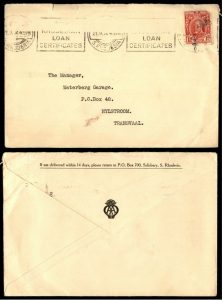
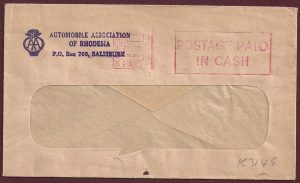
The Automobile Association of Rhodesia was founded in 1923 by Sir Crawford Douglas-Jones, who was at that time Resident Commissioner for Southern Rhodesia. The purpose was to assist motorists and to further the cause of motoring in the country. Through the generosity of some businessmen, the first General Meeting of the Association was held in July 1923 at the Zimbabwe Ruins.

As early as 1926 the association was issuing insurance for motorists and over the years it provided guidance for motorists within in Zimbabwe, including producing a number of maps and travel guidance.
It is now known as the Automobile Association of Zimbabwe.
Postcards

References

Contributors
  • James Gavin
  • Keith Harrop

Duly & Co Ltd: Gatooma

Duly & Co Ltd

Gatooma

Duly & Co Ltd: Fort Victoria

Duly & Co Ltd

Fort Victoria

Revenue

Duly & Co Ltd: Salisbury

Duly & Co Ltd

Salisbury


Duly & Co Ltd: Umtali

Duly & Co Ltd

Umtali

Duly & Co Ltd: Bulawayo (Head Office)

Duly & Co Ltd

Bulawayo (Head Office)

1 38 39 40 41 42 51