Tassilo Burger

Tassilo Burger

Salisbury

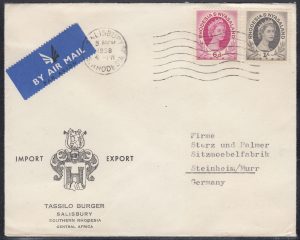
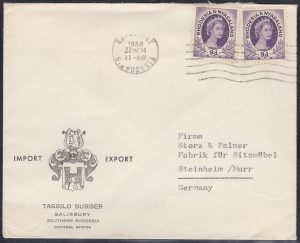
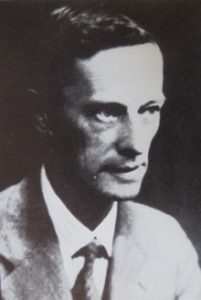
Tassilo Burger, a master watchmaker who had settled in Rhodesia in 1957. In 1967 he began operating Tassburg above some shops on the first floor of a building in Magaba Shopping Centre. His decision to diversify into manufacturing was based on his vision that, following the isolation of the country, such an industry would be a vital contributor for growth.

The initial production was wood screws and in 1969 the plant was relocated to Greenock Road. In 1974 the existing factory where the fastener plant is currently based was built and the range of products was expanded dramatically.  In the late 70s Tassburg made significant inroads into the South African fastener market and enjoyed an enviable reputation for the quality of product it manufactured.
In 1984 Tassilo Burger again identified the need to manufacture High Tensile Bolts and nuts to supply the building, mining and agricultural industries in Zimbabwe.
In 2008 the manufacturing operations of Tassburg were sold to the Zimplow Group.
Contributors
  • James Gavin

Springvale School

Springvale School

Marandellas


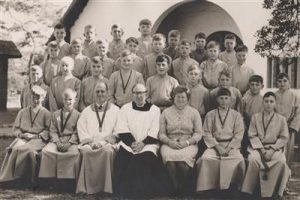
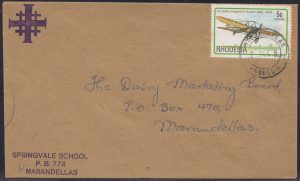
Springvale School was founded in 1952 by Rev. Canon Robert Grinham and Maurice Carver, the founders of Ruzawi School. It was opened as a second Anglican junior boys’ school in Marondera. The school was born of the desire to cater for the large number of children on Ruzawi’s waiting list which grew to ‘epic proportions’ in 1945. In 1949, the Ruzawi Board bought 1000 acres of land for £2 an acre from Jim Blake, the owner of Springvale Farm.

In 1950, Canon Grinham left the headship of Ruzawi School to undertake the new project. His first task was to raise funds for building the school and to assemble a Board of Governors. At the first meeting, the Board was advised that the Registrar of Companies had formally registered “Springvale Ltd” on 2 March 1952. The company was set up under the Anglican Foundation.

The first boys arrived in May, 1952, under the headship of Robert Grinham. The boys were temporarily transferred to Ruzawi then returned to Springvale in August. Canon Grinham retired in 1956. In 1957, John Paterson, the headmaster of St. Andrew’s Preparatory School (Grahamstown, South Africa), became the second headmaster of Springvale. He oversaw the building of the music block in December 1959 and the establishment of Junior House (a boarding house with classrooms, a dining room and kitchen/laundry facilities, dormitories and a housemaster’s residence).

The 1960’s saw major infrastructural developments with new tennis courts, a games room, playing fields, staff flats and a reference library being added, as well as the conversion of the old Form I classroom into a science laboratory. Rugby was introduced in 1961.

In January 1973, owing to the increasingly unstable political and security situation in Rhodesia, the border was closed and Express Motorways, a coach company, was forbidden to operate in Zambia thus making it difficult to transport Zambian pupils to the school. The number of Zambian pupils began to drop sharply.

By 1976 student numbers dwindled still further. Boys from Zambia and Malawi were being withdrawn as a result of the security situation and by 1979, economic sanctions meant that parents were not permitted to transfer money to pay the school fees. Others were finding places in schools closer to Salisbury.

The school became desperate in its need of financial assistance, and all the fundraising and appeals were simply not enough to keep it viable. By 1979 there were just 37 pupils and the school was owed nearly R$20,000 in fees. Many business concerns stepped in to support the school in its most difficult times but the board was forced to close the school at the end of 1979.

The school would eventually re-open in 1985 as Springvale House.


Reference

Contributors
  • James Gavin

Society for the Prevention of Cruelty to Animals (S.P.C.A.)

Society for the Prevention of Cruelty to Animals (S.P.C.A.)

Bulawayo

The first Society for the Prevention of Cruelty to Animals (S.P.C.A.) Centre to be officially registered as a Welfare Organisation in Zimbabwe was Bulawayo in 1967, followed by Kwekwe, Harare and Masvingo in the same year, Mutarein 1968 and Gweru in 1969. The smaller centres followed suit in the early 1970s.

The National Society for the Prevention of Cruelty to Animals was established in 1969 by Messrs Barrow, Hearsh, Morris, Brierley, Bott, Sobey and Howell, who represented the eight SPCA Centres providing services to animals in Zimbabwe at that time. Over 30 years later, founder member Mr G B Howell, who retired as Chairman of the Mutare SPCA in 2002, is still an active and most respected member of the Society. There are currently 15 active SPCA centers or divisions of ZNSPCA throughout Zimbabwe, with the recent important addition of Beitbridge.

In 2000, the National Executive Council, which represents all SPCA centers, appointed a National Co-ordinator, Chief Inspector Meryl Harrison to provide liaison between the centers, advise members on correct policy and procedure and most importantly, to provide training to Inspectors for appointment by the Minister of Tourism and the Environment, empowered to enforce the Prevention of Cruelty to Animals Act, the primary objective of the Society. With only 10 Inspectors currently employed throughout Zimbabwe, the training of Inspectors remains the Chief Inspector’s priority.

As the only organisation authorised to rescue the thousands of animals abandoned or affected by ongoing land reforms, the brave and determined Inspectors of ZNSPCA have been a credit to the Society and have received international commendations and awards for their bravery.

Apart from the rescue work which currently takes up most of the National team’s time, Chief Inspector Harrison still manages to find time to deal with the myriad other animal welfare concerns of the Society, such as live animal transportation, intensive farming, wildlife in captivity, improving the conditions of laboratory animals, the introduction of codes of practice for livestock producers, export and translocation of wild animals and ensuring the humane treatment of regulated problem animals. She routinely consults with all the stake-holders connected with these activities and has established the Animal Welfare Forum, a tri-partite group comprising the Chief Inspector of the ZNSPCA, Chief Government Veterinarian and Chairman of the Veterinary Council of Zimbabwe.

Through the work of the Inspectorate, the Society in Zimbabwe is no longer perceived as an organisation merely concerned with the welfare of ‘cats and dogs’, but an organisation committed to the prevention of cruelty to animals in all of its manifestations.

Cinderellas

References

Contributor
  • James Gavin
  • Sandy Robertson

FB
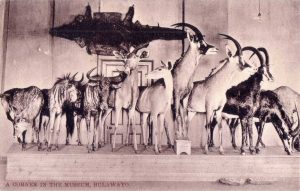
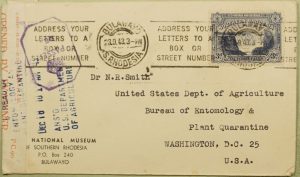
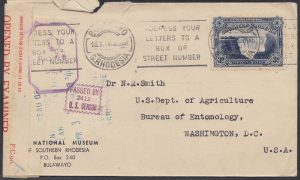
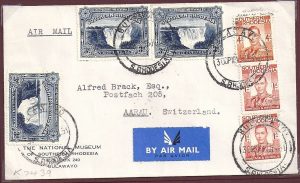
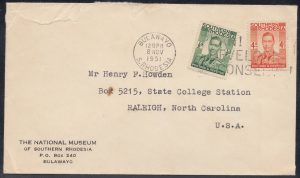
The National Museum of Southern Rhodesia

The National Museum of Southern Rhodesia

Bulawayo

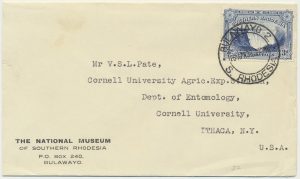
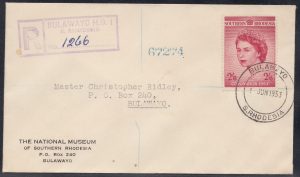
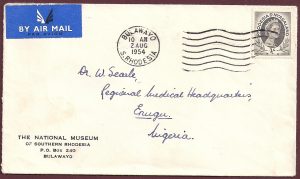
In 1936 the Government, acting on a recommendation made by the Museums Commission, chaired by Sir Henry Miers, took over The Rhodesia Museum under an Act of Parliament of Southern Rhodesia, and it was renamed the National Museum of Rhodesia.

The control was vested in a Board of Trustees appointed by the Governor. It included departments of zoology, entomology, geology, and ethnology, prehistory and national history. Under the provisions of the Act, the Board was also empowered, subject to the approval of the Governor, to acquire by agreement any existing museum in the Colony, and also, if directed by the Governor, to establish and maintain any new museum in the Colony. Dr George Arnold, continued his role as Director.

The Bulawayo City Council made available land in Centenary Park and the present building begun in 1960 is the fifth museum. The unique round museum was opened to the public on 20th March 1964 but completion of new public galleries and individual displayed has continued up to the present time.

Initially the museum had a focus on economic geology but with time successive curators have introduced new fields of interest. Many of these researchers have been leading world figures in their fields (see part curators). They have left us with one of the best collections of Zimbabwe’s, and indeed the region’s, natural heritage.

In 1981, under a policy of centralization, the National Museums and Monuments streamlined the operations of its five museums and as a result the National Museum was renamed the Natural History Museum of Zimbabwe (NHMZ).

References

Contributor
  • James Gavin
  • Keith Harrop

FB

The Rhodesia Museum

The Rhodesia Museum

Bulawayo

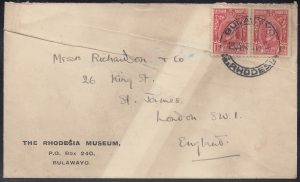
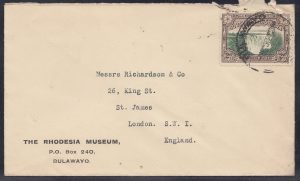
In 1901 when Cecil Rhodes visited Bulawayo for the last time he received two requests, the first from the Chamber of Mines to appoint a Geologist and the second from the Rhodesia Scientific Association who wanted a museum to house their growing collection of minerals. It was suggested that the two bodies get together and on 1st January, 1902, The Rhodesia Museum came into being.

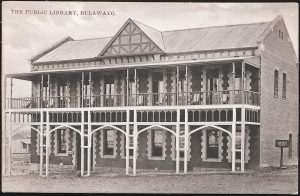
To support the museum, the Government of Southern Rhodesia contributed to maintenance an annual grant equal in amount to the subscriptions guaranteed by the founding bodies and an annual contribution from the Bulawayo Municipality. Mr F.P. Mennell, a Geologist, after which the Geology Gallery is named, took up his post as the first Curator. Initially the ‘new’ museum occupied a room at the Bulawayo Public Library which the growing collections soon got too small for.

In 1905 the Museum Committee bought and moved to the former Congregation Chapel. This, the second museum was opened by Professor G Darwin, President of the British Association in September 1905.

In 1910 a much larger building on the north-east corner of Fort Street and 8th Avenue (now the Parcels Office) was donated to the Museum Committee by the British South African Company. This was informally opened on 21st August 1910, although it was not until late November that it was officially opened by the Duke of Connaught, son of Queen Victoria.

As the museum continued to grow so the impressive 8th Avenue frontage, the fourth museum, was built in 1922. Designed by Sir Herbert Baker, the entrance porch initially doubled up as the cenotaph. Further extensions were added in 1930 and 1936.

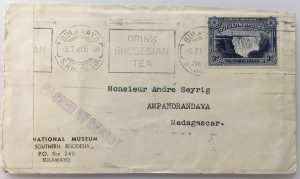
In 1936 the Government acquired the museum that was renamed The National Museum of Southern Rhodesia.

Postcards

References

Contributor
  • James Gavin

Hassam Janmahomed Bros Ltd

Hassam Janmahomed Bros Ltd

Limbe


Hassam Janmahomed was a wholesale business owned by a wealthy Muslim-Indian named Omar Hassam Janmahomed. Omar financed one of the first Muslim-Indian primary schools in Limbe and in 1951, the business donated funds to establish a Nyasaland Museum.

References

  • The Nyasaland Journal Vol. 4, No. 2 (July, 1951)
Contributors
  • James Gavin

The Goldfields of Matabeleland Limited

The Goldfields of Matabeleland Limited


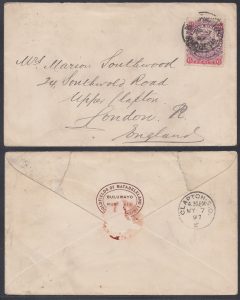
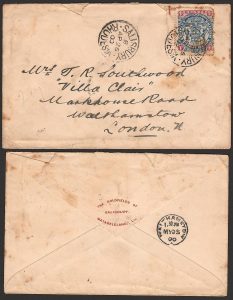
The Goldfields of Matabeleland Ltd was a British Company that owned ‘development estates’ within Rhodesia. Owners of development estates were not required to develop the land until a Rand-type boom or a steady increase in land value made it worthwhile for the owner to sell. Revenue was received through Native rents, leases of sites, and timber and mining licenses.

During the 1890’s, the company acquired the Nyagadzi farm.

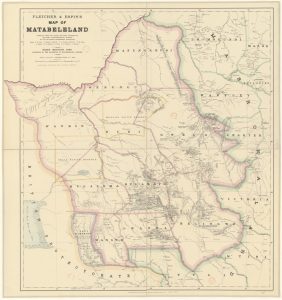
In 1896, with the assistance of Fletcher and Espin, Bulawayo, and Government Surveyors, they published the Fletcher and Epsin’s Map of Matabeleland. In 1897, they published a second map, Fletcher and Espin’s geological sketch map of Matabeleland.

On the 30th August, 1906, the company went into voluntary liquidation and was re-constructed as a company with the same name. It eventually returned to voluntary liquidation in July, 1909 and its assets were sold to Amalgamated Properties of Rhodesia Ltd.

References

Contributors
  • James Gavin

FB
World Outreach International

World Outreach International

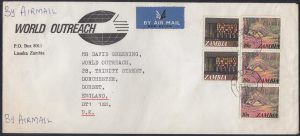
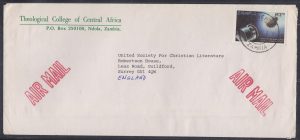
World Outreach International was established in 1932 by Dr Len Jones. Dr Jones constantly emphasised two priorities: a tenacious faith in a God who can do great things, and an expanded vision among people who dare to believe.

Eventually opportunities came to minister in Africa, so the name changed to World Outreach and later World Outreach International.

Today on five continents World Outreach International missionaries and coworkers walk by faith seeking to REACH the least-reached peoples across the world with a vision to fulfil all that God has for their lives and daring to believe in a God who can do more.

References

Contributors
  • James Gavin

Chloride Zambia Limited

Chloride Zambia Limited

Kitwe

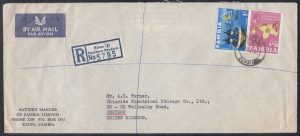
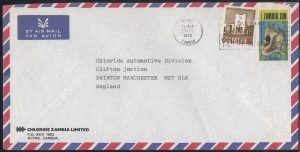
Chloride Zambia Ltd company was first registered in Zambia in 1963 as Battery Makers of Zambia Ltd.

Chloride is the largest distributor of automotive batteries in Zambia, with its flagship brand being the “Exide” brand. Chloride Zambia has a network of 12 own branches throughout Zambia and authorized distributors Countrywide covering all provincial Centres.

It is currently part of the Amalgamated Regional Trading Holdings Ltd.

Reference

Contributors
  • James Gavin

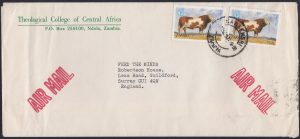
Theological College of Central Africa

Theological College of Central Africa

Ndola

In 1978, the Evangelical Fellowship of Zambia members indicated a desire for an undergraduate level theological college.

In November 1980, the first Board of Governors met in Lusaka and established a constitution; EFZ approved the proposal in May 1981. In January 1982, the Theological College of Central Africa (TCCA) opened its doors with 14 post-secondary students and in the same year received application forms from the Accrediting Council for Theological Education in Africa (ACTEA).

On Saturday 28 May 1983, the college was officially opened by Member of Central Committee Mr. Alex Shapi. The college’s purpose is to provide a theological education with internationally recognized academic accreditation, and also to equip students for practical ministry. It offers a four year degree in Theology and a three year diploma on Theology, both accredited by the Accrediting Council for Theological Education in Africa (ACTEA)

In May 1985, the college received an official visit by an ACTEA team and was granted accreditation (with notations) for its diploma and degree programmes in May 1986. TCCA was re-accredited by ACTEA in 1996 and 2007.

It is now known as the Evangelical University.

References

Contributors
  • James Gavin

FB

1 39 40 41 42 43 51