The Salvation Army: Howard Institute

The Salvation Army

Howard Institute
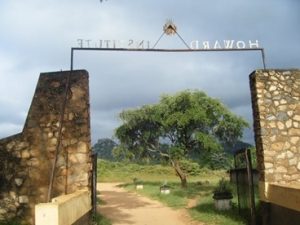
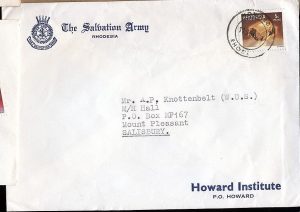
In 1923, Major James Barker and Captain Leonard Kirby of The Salvation Army moved the education facility that was at Pearson Farm to Nyachuru in the Chiweshe Communal lands, approximately 80km north of Salisbury (Harare). The new mission was built on 105 acres granted by the British South Africa Company and named Howard Institute after T. Henry Howard, the Salvation Army’s second Chief of Staff, who died in 1923.

Howard Institute would become the Salvation Army’s primary education center in Southern Rhodesia, with a “Practicing School” (where student teachers could practice in a class room), a combined Central Primary School with boarding section and theological training school for Salvation Army Officers, teacher training (established 1933 by Captain Thomas Lewis) and a nurses training school (begun 1939). By 1928, Howard had 48 students. Secondary education was added as of the 1960’s. Howard Hospital was opened 1928.

Eva Burrows, future General of the Salvation Army (as of 1986), was appointed an officer teacher at Howard Institute beginning 1952. During her 14 years at Howard, Burrows focused on the training of teachers to serve in the network of Salvation Army schools throughout Southern Rhodesia. She was promoted to Head of the Teachers’ College and then Vice-Principal of Howard Institute, before leaving to become Principal at Usher Institute in 1966/1967.
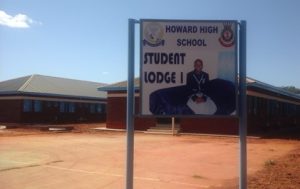
Howard Institute currently consists of Howard High School, with approximately 800 students, and Howard Hospital.

Facilities

References

Contributors
  • Mark Loomis

FB

The Salvation Army: Bradley Institute

The Salvation Army

Bradley Institute

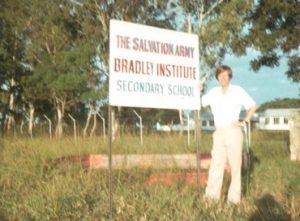
The Bradley Institute was founded in 1926 by Major James and Captain Bennett of the Salvation Army. It is located near the village of Madziwa, Mashonaland Central Province, about 100 km northwest of Salisbury (Harare) and 32 km north of Shamva. A central boarding school was soon opened for boys; girls were accepted later.

Bradley has had an acute water problem from its very inception that has threatened closure many times over the years. Even after a dam was built for the school, the water was muddy. During the tenure of Lt Col Gaughey Gauntlett, 1953 – 1962, the school was able to drill deep wells to produce a supply of water. Gaughey also arranged for building water storage tanks, which have been important as the water table sank. Nonetheless, Bradley was closed 1964 – 1966 due to severe water shortage.

In addition to Lt Col Gauntlett, other missionaries at Bradley have included Captain Jean Wylie (as of 1948 – 1949); Major Margretta Nelson (Headmistress as of 1954-1955, during which time the institute consisted of a boarding school for 200 boys); and following departure of Gauntlett in 1964, Major Hafford, who was soon replaced by Captain William Evans.

Bradley Institute was closed in 1976 during the Bush War in Rhodesia by authorities who feared the school would be a breeding ground for “terrorist.” At time of closure, the school was a primary boarding school teaching from Standard 4 to Standard 6. In addition to basic academics, the school also taught building, carpentry and agriculture. Bradley reopened in 1980 as a mixed boarding school and upgraded to a secondary school, Form 1 to Form 4 (“O” level). Captain Brian Knightley (with his wife Dorothy and daughter Helen) was Superintendent as of 1981 – 1984. During his tenure, enrollment increased from 220 to 320.

The mission currently consists of the Bradley Institute Secondary school.

References

Contributors
  • Mark Loomis

The Salvation Army: Usher Institute

The Salvation Army

Usher Institute

The Usher Institute was established by the Salvation Army at Leighwoods farm near Figtree, Southern Rhodesia in 1933 by then Staff Captain Salhus and his wife, but has its origins in the work of pioneer Salvationist James Henry Usher and his wife Jessie who informally began teaching Africans living in the area starting in 1906. The school was later named Usher Institute in their honor.

The first class in 1933 consisted of five boys and one girl. By 1935, enrollment had risen to thirty-four. A new classroom block was opened in 1939 with an enrolment of 101 students. Boys were taught “practical subjects” such as Metal work, Gardening, animal husbandry and carpentry while the girls learned needlework, cookery, child line and domestic sciences. Captain and Mrs. Morton came to Usher Institute in the mid-1950’s, establishing a post standard six course in Domestic Sciences in 1956. Major Brigadier Lavinia Benson later started the first Boys Secondary School. Between 1966 and 1970, Usher was under the leadership of Eva Burrows, who would go on to become the 13th General of the Salvation Army (1986 – 1993). It appears that during her tenure, Usher became a secondary boarding school for girls only.

Usher Institute witnessed the tragic murder of two women Salvation Army missionaries, Charon F. Swindells (age 25) and Diane B. Thompson (age 28), by guerrilla fighters on June 7, 1978 during the Bush War. Two other missionaries were injured. Their deaths led to the school’s closure and the Salvation Army withdrawing from the World Council of Churches (which supported the rebels’ cause against the Rhodesian government). As of its closure, Usher had 267 secondary boarding students and 260 primary students, of whom 60 were boarders. The school reopened March 1980 with 240 students.

The school is presently known as Usher Girls High School or Usher Secondary School.

References

Contributors
  • Mark Loomis

National Railways of Zimbabwe Museum

National Railways of Zimbabwe Museum

Raylton

The National Railways of Zimbabwe Museum was established in 1972 as the Bulawayo Railway Museum.

The Museum is situated in the old railway suburb of Raylton just three kilometers from the city center of Bulawayo. On display at the museum are various artifacts rich in Railway history and locomotives used by the NRZ over the years.

The museum also has the Rhodes funeral coach which was made specifically for Cecil Rhodes by an American company. The first locomotive to cross the Victoria Falls bridge the Jack Tar is among the major highlights of the rich historical collection.

Postcards

References

Contributors
  • Narendhra Morar

Glendale

Glendale

Mazoe


Glendale was named after a town in Northumberland, England. It is a small farming community village and administrative center with high yields of maize, cotton and horticultural products along with cattle and pigs.

The suburbs in Glendale include Valley Low Density, Tsungubvi Township, Sisk, Rujeko, Highway, Westville and Eastview residential suburbs.

Services

Postal Services

Also known as Glendale Station, the name was officially changed to Glendale on 30 May 1918. Mail service was by rail.

  • 1915.01.13 – First postal services under the name Glendale.
  • 1915.02.25 – Opened as a Post and Telegraphy Agency using the name Glendale Station.
  • 30.05.1918 – Upgraded to a Money any Telegraph Office.
  • 1931.01.01 – Renamed to Glendale.

Magwegwe

Magwegwe

Bulawayo


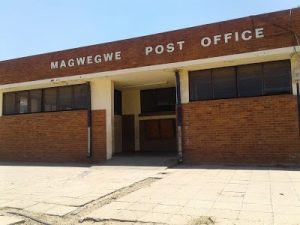
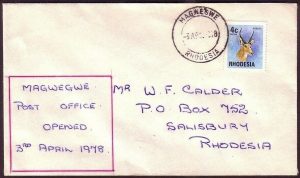
Magwewe is a high density suburb, east of Bulawayo.

Postal Services

  • 1978.04.03 – Opened as a money and telegraph office.

Postmarks

FB

J Ginsberg & Co Ltd

J Ginsberg & Co Ltd

Bulawayo

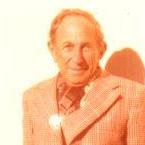
Joseph Ginsberg was born in London 10 November 1894. He left London to live in Rhodesia in 1920 where established J Ginsberg & Co Ltd in the same year. Previously married to Gertrude Ginsberg with two children, Faye and Louis, he later married Mabel Bones Ginsberg (b.1909) on 28 January 1952. Ginsberg died 28 November 1982.

The business provided services as a land and estate agent, business brokers, company secretaries and valuations.

Agent For

References

  • The City of Bulawayo: Official Guide

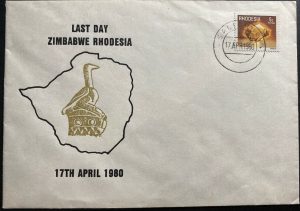
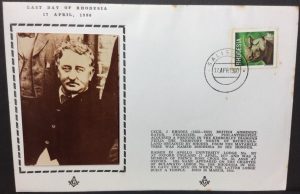
1980 – Last Day of Zimbabwe-Rhodesia

Last Day of Zimbabwe-Rhodesia

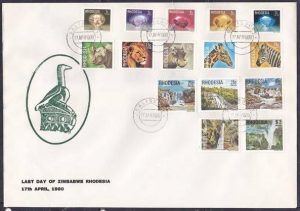
17 April 1980

Zimbabwe regained its independence from the United Kingdom on 17 April 1980.

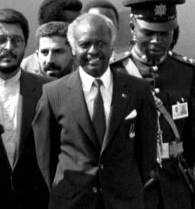
Canaan Banana, a Methodist minister and theologian, became the first President of Zimbabwe on 18 April 1980. He stepped down in 1987 so that Robert Mugabe, who reformed the presidency from ceremonial office into an executive one, could succeed him. Banana then worked as an Organisation of African Unity diplomat and also taught at the University of Zimbabwe.

Commemorative Covers

FB

Monomatapa Hotel

Monomatapa Hotel

Harare

Construction on The Monomatapa Hotel was opened in 1974 and was designed by Roy Densem of Roy Densem & Partners Architects. It has a unique crescent-shaped frontage that overlooks Harare Gardens. It was originally managed by Southern Sun Hotel Corporation (Pty) Ltd and later Meikles Southern Sun, then Zimbabwe Sun Limited. The hotel is currently under the management of African Suns Limited.

The hotel was called the Monomatapa when it was first opened. It contained a number of dining and drinking venues such as Prospectors, Bali Hai, The 12 000 Horsemen, The Homestead and others. In the early 2000s the hotel hosted for a time a well-known restaurant that moved in from the suburbs called Le Francais.

The hotel underwent renovations in 1997. Branding has changed too, with the hotel becoming Crowne Plaza Monomotapa in the 1990s and, more recently, becoming the Monomotapa again (but with new spelling). Management of the hotel was franchised out to Legacy Hotels of South Africa in 2015 but this was terminated in 2019. 

Events

Postcards

References

FB

1 2 3 4 6