
Category: Zimbabwe Rhodesia
Prince Edward School
Prince Edward School
Harare

Prince Edward was established in 1898 in Salisbury, Southern Rhodesia as Salisbury Grammar. It was renamed Salisbury High School in 1906 and adopted its current name in during the 1925 Royal visit of Edward VIII, who was Prince of Wales at the time. It is the second oldest boys school in Harare and in Zimbabwe after its main sporting rival, St Georges’ College.
The School’s badge is a crown and three feathers, granted to it by Prince Edward. The school’s colours are maroon and dark green. For its centenary, Prince Edward School adopted a new coat of arms which does not replace the school’s badge. The motto of the school “Tot Facienda Parum Factum” (“So much to do, So little done”) is attributed as Cecil John Rhodes’ last words.
In 2002, before the March 2002 presidential elections, the Ministry of Education announced plans to change names of all government schools that had colonial connotations. Scores of government schools were set to have their names changed to honour liberation war heroes, past national and African personalities and/or the suburban area in which the school is located. Prince Edward School was set to be renamed Murenga Boys High School after a Njelele high spirit said to have assisted the local heroes who fought the First Chimurenga of 1896–7. The change of names did not occur but in its wake, as a compromise, the Games Houses within the school had their colonial names changed to those of rivers in Zimbabwe.
The school is currently a public, boarding and day school for boys aged 13 to 19. It provides education facilities to 1200+ boys in Forms I to VI. The school is served by a graduate staff of over 100 teachers. It was ranked 6th out of the top 100 best high schools in Africa by Africa Almanac in 2003, based upon quality of education, student engagement, strength and activities of alumni, school profile, internet and news visibility.It was also ranked as one of the Top 10 High Schools in Zimbabwe in 2014.
Postcards
Contributors
- Geoff Brakspear
Roman Catholic Church: St Albert’s Mission
Roman Catholic Church
St Albert’s Mission

The East German province of Jesuits established St. Albert’s Mission in 1962, which became the center of their efforts in Southern Rhodesia. The mission is located near the village of Centenary in Mashonaland Central province, on the escarpment overlooking the Zambezi Valley.
St. Albert’s Mission Hospital was completed in 1963 with 85 beds. It was originally run by nurses from the Dominican Sisters. In 1983, Dr Elizabeth Tarira became the first resident doctor, building up the hospital to its present 140-bed capacity. A convent for the Little Children of our Blessed Lady (LCBL), who also worked in the hospital, was completed in 1968. St. Albert’s became a district (government funded) hospital in 1985. It is the only hospital serving the 120,000 people in the district. Today the hospital includes male, female and children’s wards, maternity and neonatal units, surgical theater, laboratory and pharmacy. It admits about 5,000 patients per year and treats approximately 40,000 outpatients.
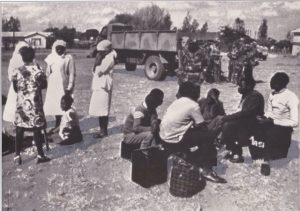
The Dominican Sisters opened a secondary school (St. Albert’s High School) in 1964. By 1973 the school had 197 students and there was a primary school of 261 pupils. In February 1973, the High School was closed by Rhodesian security forces as a ‘communal punishment’ after the discovery of a guerilla base nearby. The school reopened in April, but three months later a force from the Zimbabwe African National Liberation Army (ZANLA) captured approximately 300 pupils and staff and force marched them towards Mozambique to train as guerilla fighters. Before crossing the border, Rhodesian Security Forces were able to secure the release of all but eight of the children and staff. The school was later closed in the late 1970’s during the height of the “liberation struggle”, not opening again until 1981 with 120 students.
-
- 07.03.1985
References
- The Catholic Church and Zimbabwe, 1879-1979 – A.J Dachs & W.F. Rea
- On the Frontline, Catholic Missions in Zimbabwe – Janice McLaughlin,
- www.stalbertsmissionhospital.org
Contributors
- Mark Loomis
Zimbabwe-Rhodesia
Zimbabwe-Rhodesia

Zimbabwe Rhodesia was an unrecognised state that existed from 1 June 1979 to 12 December 1979. Zimbabwe Rhodesia was preceded by an unrecognised republic named Rhodesia and was briefly followed by the re-established British colony of Southern Rhodesia, which according to British constitutional theory had remained the proper government after Unilateral Declaration of Independence (UDI) in 1965. About three months later, the re-established colony of Southern Rhodesia was granted internationally recognised independence as the Republic of Zimbabwe.
Under pressure from the international community to satisfy the civil rights movement by blacks in Rhodesia, an “Internal Settlement” was drawn up between the Ian Smith’s administration of Rhodesia and moderate African nationalist parties not involved in armed resistance. Meanwhile, the government continued to battle armed resistance from both Soviet and Chinese backed Marxist liberation movements it referred to as “terrorists”- the Bush War was an extension of the Cold War, being a proxy conflict between the West and East, similar to those in Vietnam and Korea.
The “Internal Settlement” agreement led to relaxation of education, property and income qualifications for voter rolls, resulting in the first ever black-majority electorate. The country’s civil service, judiciary, police and armed forces continued to be administered by the same officials as before, of whom most were whites, due to the composition of the upper-middle class of the period.
Despite these changes, the new state did not gain international recognition, with the Commonwealth claiming that the “so-called ‘Constitution of Zimbabwe Rhodesia'” would be “no more legal and valid” than the UDI constitution it replaced.
Memoir 38: Encyclopaedia of Rhodesian and Zimbabwean Postage Stamps Since 1964
Memoir 38: Encyclopaedia of Rhodesian and Zimbabwean Postage Stamps Since 1964


The RSC was approached by the RSC Zimbabwe Group, with the Mashonaland Philatelic Society, to undertake an update of the Mashonaland Guide to Rhodesia’s Postage Stamps. In discussion with the Zimbabweans, I suggested that we need to go much further than what was achieved in the Guide. The first release of sections of the Encyclopaedia occurred in December 2016, and five years later the final section to the end of 2022 were completed. The release of the Encyclopaedia in digital format was made possible with the RSC website, the ideal format to distribute information across the world to all RSC
members. The advantage of a digital version of the entire work was that sections could be updated and improved as more information became available. For example, the section dealing with the Mardon printings of the 1966 definitive has been updated a further eleven times since it was first released.
members. The advantage of a digital version of the entire work was that sections could be updated and improved as more information became available. For example, the section dealing with the Mardon printings of the 1966 definitive has been updated a further eleven times since it was first released.
It is, of course, possible to print the entire contents out, but it is over 2,200 A4 pages long and would need five lever arched files to contain it. It is better to only print out was is needed for closer study. The Encyclopaedia will continue to be improved as more information becomes available, and it will continue to be added to periodically with new stamp issues from the Zimbabwe Post Office.
Please peruse the files and feedback comments, criticisms and, more specifically, more information and additional material. This has been a big project but one that goes to the heart of the Study Circle’s aims and objectives. Please contact me by email at geoff.brakspear@btopenworld.com.
Without the support of a great number of people the Encyclopaedia would not be the success that it apparently become. May I thank the following people for their assistance so far in preparing the issued files: (apologies to anyone not included in this list) Dave Trathen, Mike Hughes, Jeremy Jackman, Narendhra Morar, James Gavin, Dave Cooper, Jefferson Ritson, Stuart Sawyers, Otto Peetoom, Rob Burnett Tony Banks John Knight, Terry Cowlard, Adrian de Bourbon, Keith Harrop, Henk de Lange, Gordon Atkinson, Rod Kantor, Simon Peetoom, Milton Mutengezanwa, Bruce Kennedy, Buster Schemper, Dick Shurmer, Malte Luebker, Pat Flanagan, Mark Thomas, Terry Devine, Jamie Smith, Miguel Bernardo.
More particular thanks must go to James Gavin who first set up the Encyclopaedia within the RSC website, and to him, and later Sean Burke, for continuing to add new and updated material. Finally my thanks to Narendhra Morar for proofreading all the section as thy were being produced.
Many thanks
Geoff Brakspear
August, 2026
Geoff Brakspear
August, 2026
Contents
Printers
- Harrison & Sons (Updated! March, 2023)
- Mardon – Natprint local stamp production (Updated! September, 2025)
Southern Rhodesia
- 1964 Definitive Issue (Updated! April, 2026)
Rhodesia
- 1965-1979 (Updated! August, 2026)
Zimbabwe
Contributors
- Dave Trathen
- Mike Hughes
- Jeremy Jackman
- Narendrha Morar
- James Gavin
- Dave Cooper
- Jefferson Ritson
- Stuart Sawyers
- Otto Peetoom
- Rob Burnett
- Tony Banks
- John Knight
- Terry Cowlard
- Adrian de Bourbon
- Keith Harrop
- Henk De Lange
- Terry Devine
- Mike Jelbert
- Gordon Atkinson
- Rod Kantor
- Simon Peetoom
- Milton Mutengezanwa
- Bruce Kennedy
- Malte Luebker
- Jamie Smith
- Brian Eyre
- Patrick Flanagan
- Miguel Bernardo
- Dirk Kind
- Ian Firth
- Neil Smart
- Mark Thomas
Roman Catholic Church: St Francis Xavier College
Roman Catholic Church
St Francis Xavier College
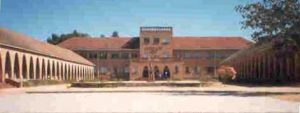
St Francis Xavier College (now Kutama College), is an all-boys high school located near Norton in the Zvimba area, 80 kilometres southwest of Harare. The school moto “Esse Quam Videri” is Latin meaning “to be, rather than to seem”.
Founded prior to the Second World War by Jesuit Priests, Kutama was one of the first institutions to offer high school education to students of African descent in colonial Rhodesia. Its Jesuit origins are reflected in its official name, St Francis Xavier College. The school is part of Kutama Mission, a Roman Catholic mission originally run by Jesuits but now run by the Marist Brothers, a Catholic order devoted to educational work.

The school’s first headmaster was Father Jerome O’Hea, an Irish-born priest after whom the local mission hospital is named. Its most famous headmaster was James Anthony (affectionately known as “Jachi”) Chinamasa, a Kutama College old boy and elder brother of Zimbabwean Justice Minister Patrick Chinamasa. The present headmaster is Br Jacob Mutingwende who took over from Br Bernard Chirombe, who served as deputy headmaster under Stephen Muchenje who retired at the end of 2008.
References
Contributors
- James Gavin
- Mark Loomis