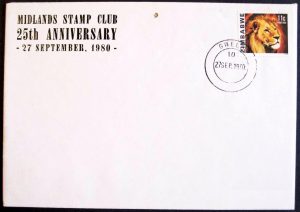
1980 – 25th Anniversary of the Midlands Stamp Club
25th Anniversary of the Midlands Stamp Club
27 September 1980
In 1980, the Midlands Stamp Club celebrated its 25th anniversary.

The Rhodesian Study Circle is a philatelic website for the areas of Rhodesia, Northern Rhodesia, Southern Rhodesia, British Central Africa and Nyasaland, Malawi, Zambia and Zimbabwe.
27 September 1980
In 1980, the Midlands Stamp Club celebrated its 25th anniversary.
Gwelo
The Midlands Stamp Club was established in 1955.
Matjinge Mission

There is currently little information on the formation and history of the Matjinge Mission. The mission hosts both a primary, secondary and boarding school.
The schools continue to service boarders and local children today.
Mutero Mission
Mutero Mission began as an outstation of Mukaro Mission. It became its own independent mission in 1956. Located in the Gutu Tribal Trust Land in Masvingo Province, Southern Rhodesia (among the Shona peoples), it was established by the Bethlehem Missionary Society (SMB) under the leadership of Bishop Haene.
Simon Mutero, the son of the local chief, persuaded his father to win the support of chief Chagwiza to permit the Roman Catholics to open a school in 1946. The area had previously been under the influence of the Dutch Reformed Church (DRC), but the local populace had become dissatisfied when the DRC closed down local schools. Mutero would go on to teach at the mission for over 20 years. When SMB missionary, Fr. Joseph Suter, first arrived, he saw “only a vista of treeless land without water or pasture. Water was obtained from a borehole; buildings were put up and primary and junior secondary schools established.”
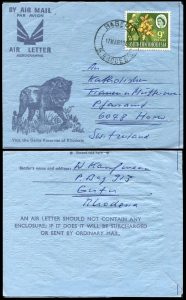
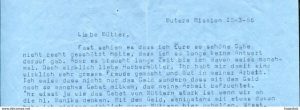

The Mutero mission community in the late 1970s consisted of Bethlehem Father Anthony Wey, the mission superior, Fr Walter Kaufmann, Fr James Bernet, Fr Winterhalder, and five sisters of the Diocesan Congregation of the Infant Jesus (SJI) under the leadership of Sr Tarcisia Gundani, the superior. The sisters ran the primary and the secondary school and the clinic. All stayed at the mission throughout “the war of independence, in spite of the dangers and hardships, and being cut off from all outside communication from April 1979 to April 1980. Father Urayai would later join the Mutero from Serima Mission,
The mission presently consists of Chatikobo Primary School, Mutero High school (with a current enrollment of 765 students and 35 staff), and the Mutero Mission Clinic.
The Albert Einstein Exhibition
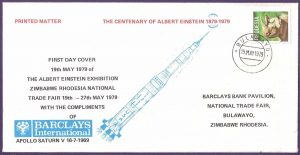
As part of Zimbabwe Rhodesia Trade Fair in 1979, Barclays Bank held The Albert Einstein Exhibition in the Barclays Bank Pavillion. To commemorate this event, they produced a First Day Cover for the stamp release, postmarked on the first day of the trade fair.
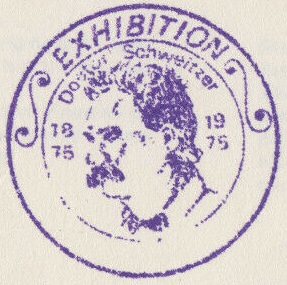
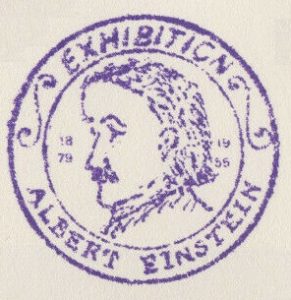
Covers can be found with special exhibition cachets. The Albert Schweitzer Exhibition cachet was reused from the 1978 Rhodesia Trade Fair and a modified version used for Albert Einstein.
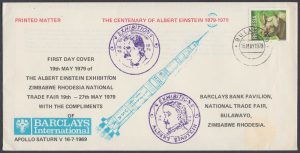
19-27 May 1979
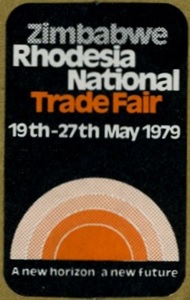
In 1979, Rhodesia Trade Fair, first established in 1969, changed it’s name to Zimbabwe Rhodesia Trade Fair.
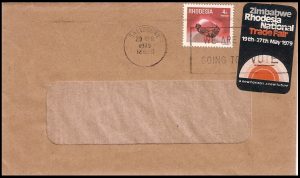
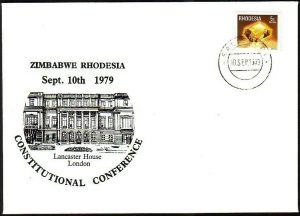
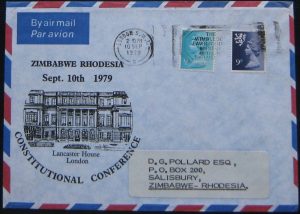
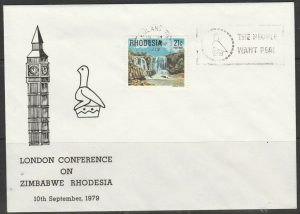
10 September 1979
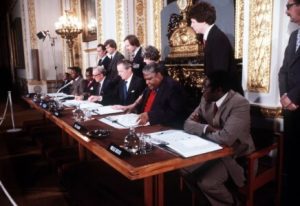
The Lancaster House Agreement, signed on 21 December 1979, declared a ceasefire, ending the Rhodesian Bush War; and directly led to the creation and recognition of the Republic of Zimbabwe. The Agreement would lead to the dissolution of the unrecognised state of Zimbabwe Rhodesia.
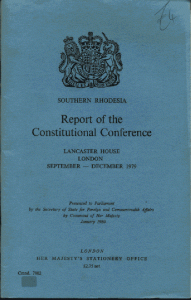
Lancaster House covered the Independence Constitution, pre-independence arrangements and the terms of ceasefire. The Agreement is named after Lancaster House in London, where the parties interested to the settlement attended the conference on independence from 10 September to 15 December 1979.
The parties represented during the conference were: the British Government, the Patriotic Front led by Robert Mugabe and Joshua Nkomo, ZAPU (Zimbabwe African Peoples Union) and ZANU (Zimbabwe African National Union) and the Zimbabwe Rhodesia Government, represented by the Prime Minister, Bishop Abel Muzorewa, and Ian Smith, minister without portfolio.
2 September 1979

In 1979, the country became known as Zimbabwe-Rhodesia and a new flag was adopted featuring the pan-African colours of red, black, yellow and green, and the Zimbabwe Bird.
However, under the terms of the Lancaster House Agreement, the country briefly returned to British rule under the Union Jack from 12 December 1979 although the Zimbabwe Rhodesia flag remained de facto in use.

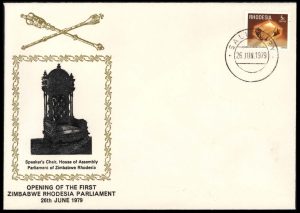
26 June 1979

On 1 June 1979, Muzorewa, the United African National Council (UANC) head, became Prime Minister and the country’s name was changed to Zimbabwe Rhodesia. The ceremonial opening of the first Black Parliament of the country of Zimbabwe-Rhodesia, took place on Wednesday, 26 June 1979, in Salisbury.