Memoir 47: Postcards of the Paris Missionary Society in Barotseland
Details
- Memoir: 47
- Author: Sean Burke and Ian Menzies
- Prices:
- PDF – £5 (Non Members £6)
- Print Copy – £10 (Non Members £12) plus P&H
To place an order, CONTACT US

The Rhodesian Study Circle is a philatelic website for the areas of Rhodesia, Northern Rhodesia, Southern Rhodesia, British Central Africa and Nyasaland, Malawi, Zambia and Zimbabwe.

To place an order, CONTACT US

To place an order, CONTACT US

To place an order, CONTACT US
Memoir 43: The Aviation History and Airmails of Bulawayo to 1940

To place an order, CONTACT US
Memoir 42 – Forging of Rhodesia’s “Independence” Overprinted Stamps

To place an order, CONTACT US
Memoir 36 – Luanshya: A Tale of Copper Mining, Labour Relations, People and Politics

To place an order, CONTACT US
Memoir 37 – The Rhodesian Remainders

To place an order, CONTACT US
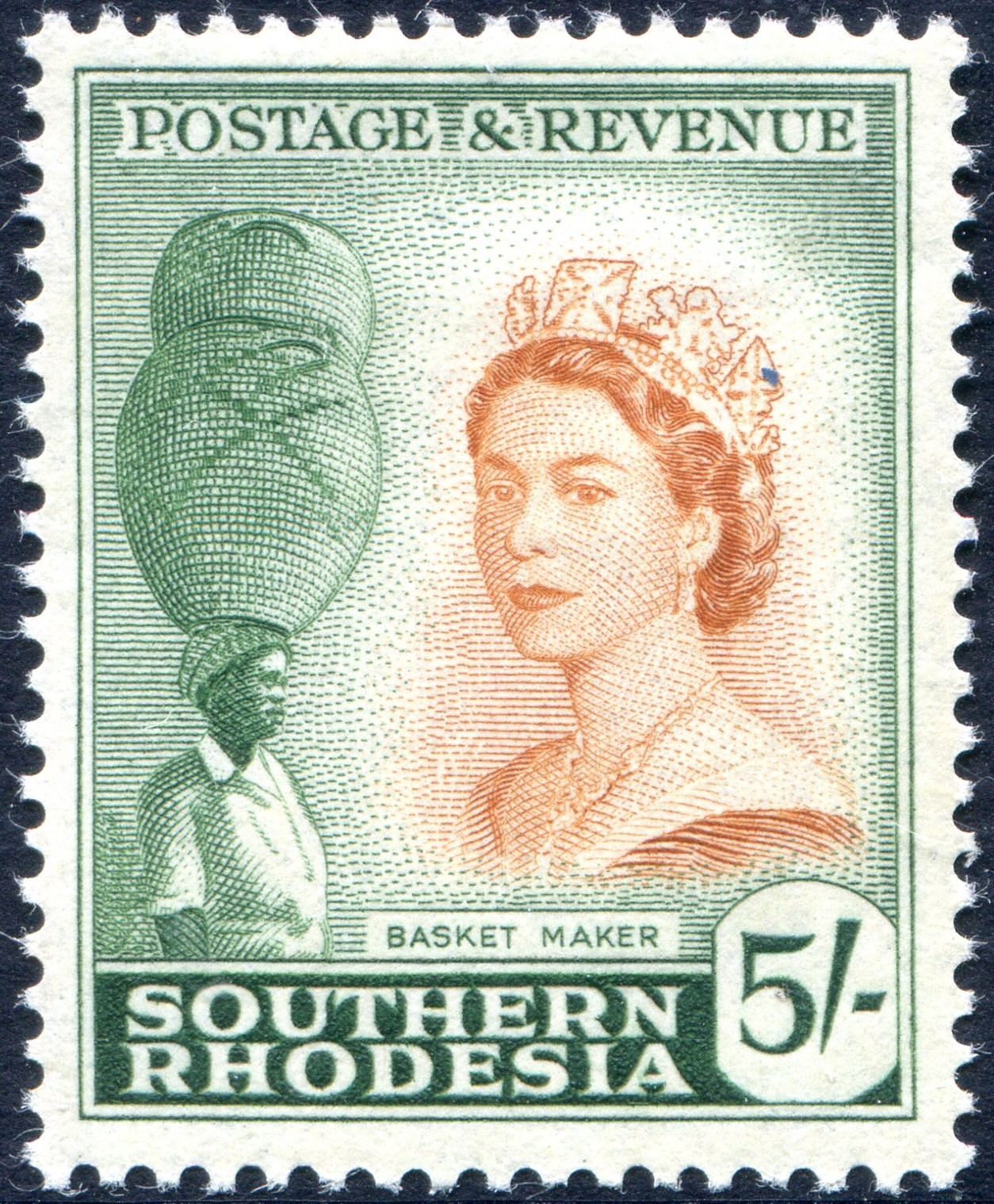
Prior to the Federation of Rhodesia & Nyasaland and following the death of King George VI, Southern Rhodesia issued these stamps in 1953. This work has been compiled by Geoff Brakspear and was last updated in April, 2026.
It is the aim of this current work to be a collector’s companion for those particularly interested in the 1910-1914 Rhodesia bi-colours called the Double Heads, thought by many to be the most attractive issue of the British Empire.
It must be made clear from the first that this work is not meant to degrade the previously published work of the Double Head Committee (DHC) in the Rhodesia Study Circle (RSC) Journals, which was based on the catalogues of Stanley Gibbons, the RM Gibbs collection of 1987, and the Sir Gawaine Baillie collection as represented in the 2006 auction catalogue. These were a pioneering work, suggesting all sorts of possibilities, but too complex and ambiguous to be used as a collector’s companion for all except the most undaunted.
The current work has preserved what has withstood the test of time, played down categories that have proved to be speculative, and attempted to rearrange all in what we think is their chronological order, based on head-plate type, head and frame flaw development, and usage dates, which we think is much more collector-friendly.
As a result, many listings have been simplified, a few have been added, and there has been a general improvement in the descriptions of colours, printing texture, gums and papers, etc. And, colour pictures have been added. The records of numbers printed, of those sent to the Stamp Registry in Salisbury (Rhodesia), of those remaindered, or of those claimed by the marginal dates on the Waterlow files sheets have been reconciled, to the extent possible. (But, beware that only fiscal or proper postal frankings can be used to date printings; the CTO’s, which show in-period dates from 1911 to 1913, were not applied until 1924, and can be misleading. In a number of cases such cancels actually predate the printing of the stamps.)
For the first time, fiscal usage has been given equal consideration with those postally used and mint – as being a very essential part of the complete story. In fact, fiscally used stamps are not only more affordable but often have superb colour if kept for their duration on a fresh document.
The distribution of printings that we see in post-marked and fiscal examples from 1910 to, say, 1917 is often very different from the distribution we see today in collections and auctions owing to low vs high survival rates and the fact that some printings, despite their frankings, were never sent to Rhodesia. Some items are almost unknown postally used; others are scarce mint. Rarity today has little to do with the number printed. Quite often the profile they present of stamps in 1910-1913 Rhodesia is very different from the survival pattern we see today.
We have avoided, to a large extent, the description of proving Plate flaws except the most obvious or essential. Though they are worth something of a premium, they are a separate and very complex subject, which is addressed elsewhere.
Finally, this is not meant to be the final word on anything; the aim has been to put the collector in the position of taking part in a meaningful dialogue about final words.
A Word About Certificates and Lists
Certificates do three things that must be kept separate in the collector’s mind:
(1) They appraise condition, detect flaws or repairs, and ascertain fakes.
(2) They forensically identify printings based on special knowledge.
(3) They offer opinions.
In the first, (1), the detection of flaws, repairs, and fakes, most services do a reasonably good job. But expertisation, (2), and opinions, (3), are done outside the scene, for some reason, and in secrecy — so that the “expert” is mythologized and cloaked in mystery. There is no excuse for this. The reason for coming to some conclusion re: identity, (2), should be made plain and the operations involved should be delineated.
Opinions, (3), on the other hand, occur in those situations where the forensic criteria are not visible or not available—in which case, a comparison must be made to a known, proven example, but comparisons introduce the possibility of error; or where it is just a question of shades, or e.g. where one must make a call between anilinity and ink-run. These are not expertisations and should not be confused with them.
In the list that follows, whole numbers indicate categories that can be forensically expertised, (2). The collector is entitled to query the basis in any given case. But, (3), letters after numbers — -A, -B, -C, etc — indicate subcategories from the same Plate state that are becoming more or less distinct but cannot be forensically separated. (These are fairly clear and not so much matters of opinion.) But, shades and variants are vaguer still, and in these, opinion plays an even greater role; they are not facts and should not be given the status of expertisations. Many certification practices do not keep these distinctions clear.
There are over a dozen services that sometimes do Double Heads: the R.P.S. (Royal Philatelic Society), the B.P.A Expertising (U.K.), David Brandon (U.K.), Sergio Sismondo (Canada), Peter Holcombe (Switzerland), Alberto Diena (Italy), the Philatelic Foundation (New York), A.P.E.X. (American Philatelic Expertizing Service), the P.F.S.A. (Philatelic Federation of Southern Africa, Chris Ceremuga (Australia), and even Gibbs himself. Of these, the most reliable has been the B.P.A., which almost always got it right, and Gibbs, who always got it right and wrote certificates well worth reading. Descriptions in auction catalogues have often proven less reliable. Even major catalogues can also be misleading — check the 8d SG 146 vs SG 148, our No.3; or the 2/- SG 154a, our 1A. Furthermore, the DHC can add to the confusion — check the 10/- SG 163 and RSC-A, both our No. 3, Hook III.
A Word About Ultra Violet Lamps
The use of U.V. lamps is another point of confusion. It has never been understood until recently that knowing the filter used by U.V. lamp manufacturers (or whether there is a filter at all) is of utmost importance. A standard short-wave lamp without a filter (as is most commonly found in the philatelic trade) shows dramatic differences in reaction as compared to a short-wave lamp with a filter (as is more commonly found in the forensic/mineral trade). It is the latter that is far more beneficial (if not essential) to help sort a number of double head printings. Conversely, where long-wave lamps and their reactions are cited, it is those lamps that are without a filter that are more helpful. The role of U.V. lamps has its place in the DH picture, but we caution against depending too much on the perceived U.V. property, except for gross differentiations.
Conclusion
There is nothing wrong with developing ever longer lists of shades and variants ad infinitum, based on ever finer differentiations of degrees of anilinity, nuances in U.V. light, or of colour. The collector must decide for himself whether he wants to accept these, or indeed, if he wants to build a list of his own. The list that follows may supply a base from which such an enterprise might take off.
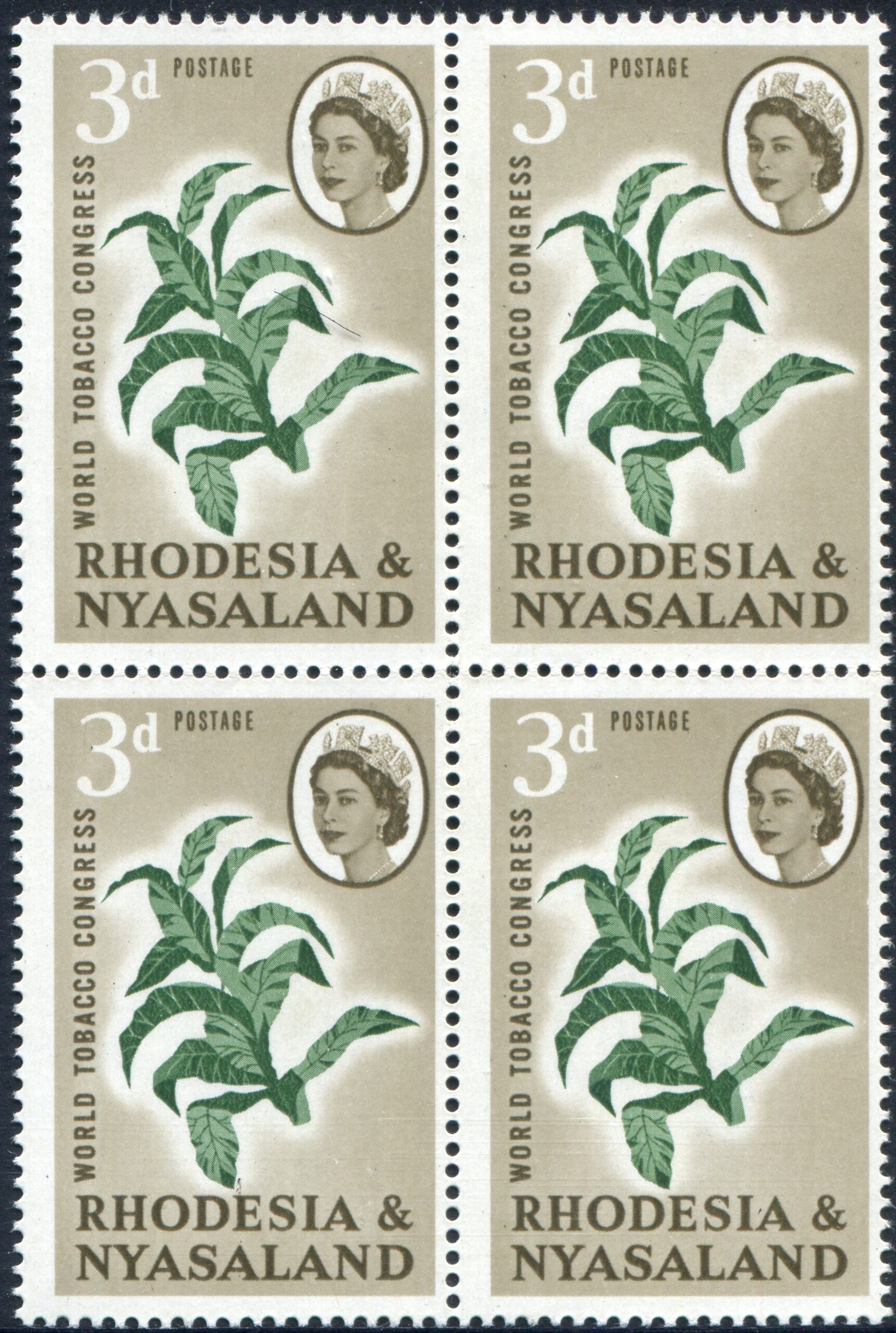

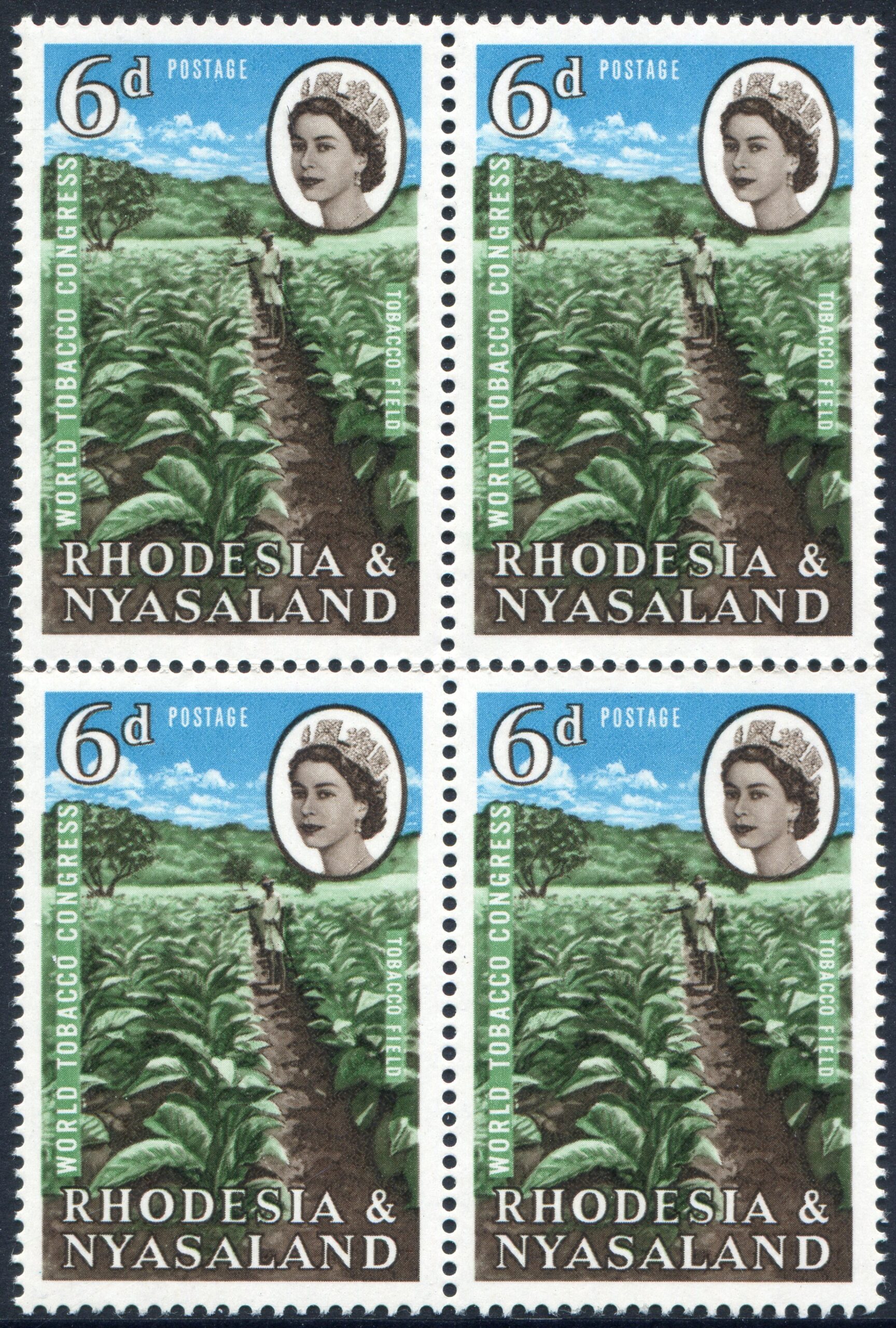
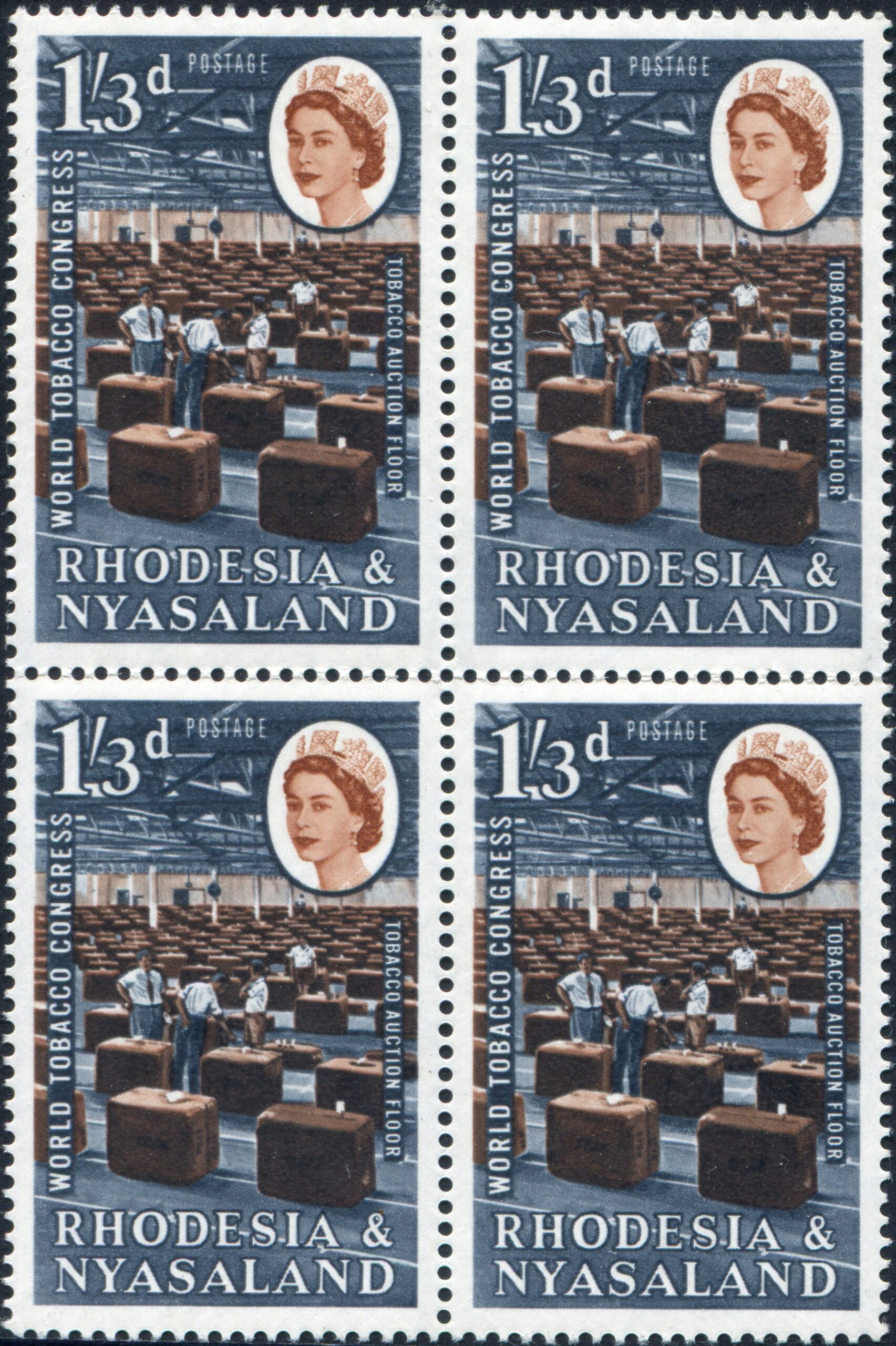
Following the completion of the Rhodesia and Zimbabwe Encyclopaedia, I was “persuaded”
to go further back and look at the issues during the reign of Queen Elizabeth II. My collection is almost entirely centred around the territory of Southern Rhodesia, and not to any great extent the other two territories. It was therefore logical that the issues of the Federation should be handled together collectively.
For many of the RSC members who were brought up in any of the three territories the first
stamps they would have seen on a regular basis would be those issued during the Federal
period. I can well recall the excitement that was generated when a new issue about to be
released. On one issue, in particular, was released on my tenth birthday!
There were only eleven issues of stamps (including two postage dues) during this period, with a further one planned, but never issued. Researching the issues during this period has been a challenge. Whilst there is a fair amount of published material for the 1954 definitive, this is not the case for the 1959 definitive. The Mashonaland Guide has been a useful source of material but here are gaps that have been identified.
Whilst I, personally, have a fairly extensive collection of the varieties found in all the issues, I had not built up a collection of imprints, cylinder blocks and other important information. I am therefore very reliant of being able to study material held in members collections. I know that the material as it is being released will have gaps and I would therefore be very grateful if members can provide additional this material.
I have had a significant amount of material provided already and am most grateful to the
following members that have assisted:
Pat Flanagan, Keith Harrop, Adrian de Bourbon, Jamie Smith, Christopher Cooksey, Phil Clarke, Dave Trathen, Dave Cooper, Andrew Wilson, James Gavin, Mark Thomas, Jefferson Ritson.
I, also, thank Sean Burke who downloaded this material on to the RSC website.
Please peruse the files and feedback comments, criticisms and, more specifically, more
information and additional material. This has been a big project but one that goes to the heart of the Study Circle’s aims and objectives. Please contact me by email at
geoff.brakspear@btopenworld.com.
Many thanks
Geoff Brakspear
August, 2026