The Institute of Cultural Affairs: Zambia

The Institute of Cultural Affairs

Zambia

The ICA became active in Zambia in 1978. The mission in Zambia is to promote sustainable agricultural methods in order to achieve household and community food security among resource poor farmers.

Salisbury Club

Salisbury Club

Salisbury

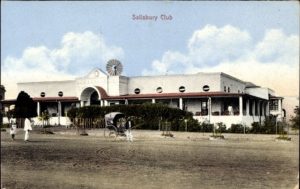
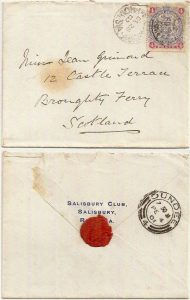
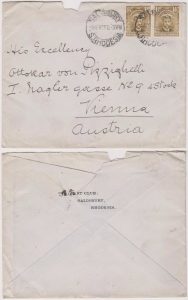
The Salisbury Club was opened 20th May, 1893. The club was a gentleman’s club based on the Pall Mall clubs of London. The club was mostly frequented by businessmen, civil servants, and European politicians as well as senior members of the Rhodesian forces.

It was not easy to join the club. A proposer and a seconder was required to join, as well a vote from membership. Women were not allowed to become members, although later, a ladies restaurant was added (although women could not enter via the front and entered via a separate entrance). Jews were also not welcome, although the club held some exceptions. Africans were not permitted.

Revenue

References

  • The Story of Steve: An Immigrant’s Tale – Dan Remenyi
Contributors
  • James Gavin

FB

Frames & Coghlan

Frames & Coghlan

Bulawayo

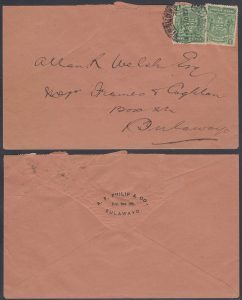
In 1899, Charles Coghlan’s friend Percy Ross Frames invited Coghlan to Bulawayo where Frames was a partner in the firm Frames & Grimmer. Coghlan was receptive to the idea, but was compelled to stay in Kimberley by the outbreak of the Second Boer War in October 1899.

Finally, in 1900, Charles Coghlan arrived in Bulawayo and gained admission to the Rhodesian bar. He entered into partnership with Frames to create Frames & Coghlan. However, in 1902 Frames left for Johannesburg citing the poor economic conditions in Rhodesia and dissolved the partnership with Coghlan.

Allan Ross Welsh became a partner of the firm on 1st January, 1903 and the practice became known as Coghlan & Welsh.

Contributors
  • James Gavin

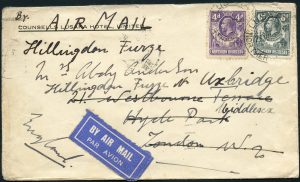
Counsell’s Lusaka Hotel Ltd

Counsell’s Lusaka Hotel Ltd

Lusaka

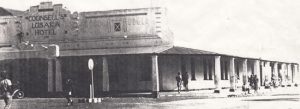
In 1914, Canadian Couple Mr.& Mrs. Councell’s, registered the Counsell’s Lusaka Hotel. The Councell’s family seized the opportunity in the hospitality business due to the economic boom in Lusaka emanating from the opening up of the first hospital built south of Villa Elizabetta in 1918. In the same year the financial sector saw Standard Bank opening its doors and Barclay followed suit in 1924 and thus increasing the customer base for the Counsell’s Lusaka Hotel.

Some of the guests who where enjoying the Lusaka hotel’s comfortable rooms in 1920 where given a unique wake up call made by the noise from the aeroplane that flew over Lusaka air space for the first time in history. In 1921, The Lusaka Hotel food and beverage services became a popular centre for refreshment to the workers who were involved in the Flamboyant tree planting project along Cairo road.

In 1926, the hotel suffered a setback as a result of the Lusaka Floods which caused damage to the drainage system on Cairo Road. The Flooding of the city and the Hotel may have been among the reasons why the Councell’s family decided to abandon and sell the Hotel Business.

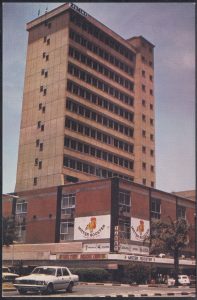
As the city of Lusaka grew, the need for a prestigious hotel in town became increasingly apparent. Lonrho Africa seized the hotel and it is currently known as the Lusaka Hotel.

References

Contributors
  • Walter Herdzik
  • James Gavin

Zambia Industrial and Mining Corporation Ltd.

Zambia Industrial and Mining Corporation Ltd.

Lusaka

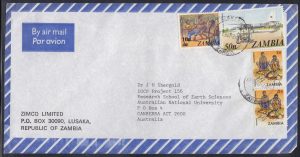
The Zambia Industrial and Mining Corporation Ltd. (ZIMCO), a holding company for all Zambian state interests, is one of the largest concerns in sub-Saharan Africa. It controls 125 principal companies relating to every major industrial activity in Zambia, including mining, consumer goods manufacturing, finance, transportation, agriculture, energy, and hoteliery.

Created through a batch of reforms in 1969 to extend state interests into the giant copper mining industry, ZIMCO was incorporated in 1970. It was also designed to minimalise political interference in the running of state-owned businesses by serving as a buffer between the government and its investments. In reality, government officials exercised direct control over Zimco, which was a company on paper only and had no executive management. Managers of sub-holding companies reported directly to the relevant government ministries, which in turn reported to President Kaunda, who retained the title of chairman.

Zimco faced problems almost from the start. Its genesis marked the end of the high world copper prices that had characterized the 1960s. In the financial year 1971 to 1972, prices fell drastically. The decline that began in 1971 was to dominate the next two decades signalled economic ruin for the nation.

During this period, Zimco went through a metamorphosis. In 1978, in an attempt to streamline Zimco, Kaunda abolished all the sub-holding companies other than the Industrial Development Corporation of Zambia Ltd (INDECO) and the National Import and Export Corporation Limited.

Amid one of many economic stabilization programs launched under the advice of the International Monetary Fund, Kaunda for the first time gave the company a full-time board of directors, with former government minister Jameson Mapoma appointed director general. Kaunda, who remained chairman, filled Zimco’s ranks with civil servants and trade unionists. Over the years, Zimco’s management positions continued to be filled by political appointees, a feature that was later to bring the company under attack.

The depressed copper prices of the 1980s, and the resulting economic chaos, led to further changes. In the early 1980s, in one of several austerity programs, Zimco sold off its smaller companies to private interests. In 1986, after six years of mining copper at a loss, Zimco began to lay off employees. By March 1988, thousands of jobs had been lost.

All the while, Zimco ostensibly attempted to diversify its interests and reduce its dependence on copper. Kaunda targeted agriculture early on as one of the primary areas in which Zimco was to expand. Zimco ventures into agriculture had yielded poor results. Export restrictions, price controls, inadequate financing and recurrent drought constrained its tea processing and packaging plants, and its farms, dairies, and ranches, all of which consistently operated at a loss.

As it had done with manufacturing, in the late 1980s Zimco sought foreign investment to stimulate growth. Partnerships with several European nations—coupled with the relaxation of state restrictions and controls –  fostered a turnaround. Increased productivity helped Zambia meet its food requirements for the first time in 1989.


The latter part of the 1980s brought other encouraging signs for Zimco. In mid-1987, copper prices began to rise again and hit a record high in 1988. For the first time since it was formed, the company announced a dividend for that financial year. In the following year, the company showed a record net profit. The good news was not to last. Copper prices took a further downward turn in 1991.

In May 1990, Kaunda announced plans to set up a stock market in Zambia, on which up to 49% of shares in Zimco would be sold to private interests. Three months later, a parliamentary committee looking into Zimco’s affairs resolved that Kaunda’s proposal had not gone far enough. Lambasting the company for inefficiency and top-heavy management, and saying that it was a company that did not produce anything, had no relevant function, and was an unneccessary drain on resources, the committee called for its dissolution.  The outcome of these recommendations is unclear. Zimco is still in existence, its partial privatization waiting for the establishment of a Zambian stock market.

Postcards

Reference

Contributors
  • James Gavin

Rhodesian Printing & Publishing Co., Ltd: Ndola

Rhodesian Printing & Publishing Co., Ltd

Ndola


Rhodesian Printing & Publishing Co., Ltd: Salisbury

Rhodesian Printing & Publishing Co., Ltd

Salisbury

Postcards

Revenue

Rhodesian Printing & Publishing Co., Ltd: Bulawayo

Rhodesian Printing & Publishing Co., Ltd

Bulawayo

Postcards

Revenue

Rhodesian Printing & Publishing Co., Ltd

Rhodesian Printing & Publishing Co., Ltd

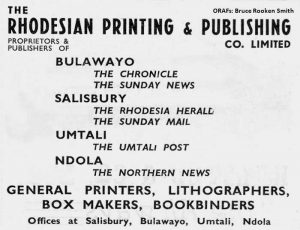
Bulawayo, Ndola, Salisbury, Umtali

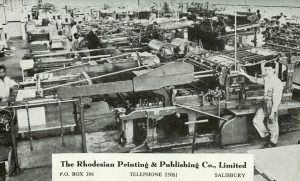
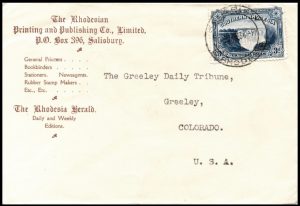
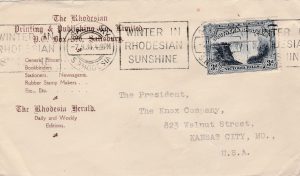
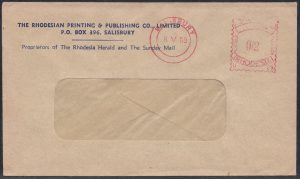
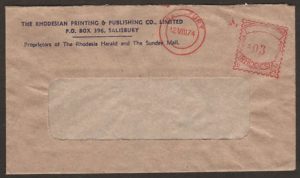
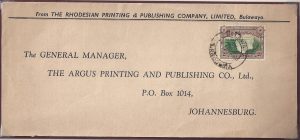
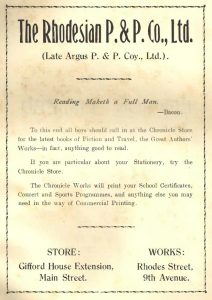
The Rhodesian Printing & Publishing Co., Ltd. was floated on 8th March, 1927. It was a subsidiary of the Argus Printing & Publishing Company and was established to run Argus’ newspapers in Southern Rhodesia which included the Rhodesia Herald and Umtali Post.

After Rhodesia unilaterally declared independence on 11th November, 1965, it started censoring The Rhodesia Herald. The newspaper responded by leaving blank spaces where articles had been removed, enabling readers to gauge the extent of the censorship.

In 1981, after Zimbabwe became independent, the government bought The Herald and other papers from the Argus group, using a US$20 million grant from Nigeria, and established the Zimbabwe Mass Media Trust to operate them.

The Trust created Zimbabwe Newspapers, Ltd., as the publisher of the papers.

Branches

References

  • Salisbury, Southern Rhodesia (1952)
Contributors
  • Keith Brodovcky
  • James Gavin
  • Walter Herdzik
  • Keith Harrop
  • Jeremy Jackman

FB

Chimanimani Hotel

Chimanimani Hotel

Melsetter

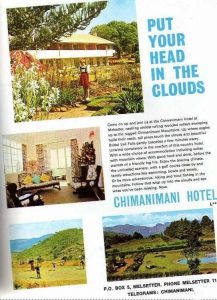
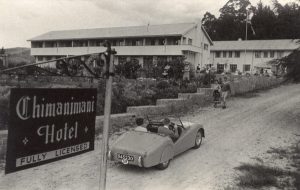
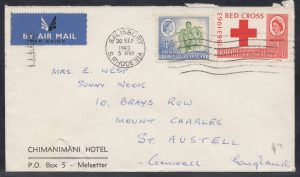
The Chimanimani Hotel is based at the foothills of the Chimanimani Mountains, surrounded by beautiful gardens. Mr and Mrs Townsend-Green began construction in 1951 and the hotel was officially opened as the Chimanimani Arms on 21st March, 1953. However, issues with the construction of the new main road leading into Melsetter, resulted in few visitors staying at the hotel. After six months, the hotel closed and would remain so for 18 months.

When the hotel re-opened, the Townsend-Greens had relinquished their interest in the hotel and the name was changed to Chimanimani Chalet and later the Chimanimani Hotel.

In 1991, the Zimbabwe Tourism Investment Commission (ZITC) was formed to manage tourism interests under the name Rainbow Tourism Group (RTG). The hotel fell under the management of RTG until 2000 when the group disposed of the hotel.

In 2014, Hotels and Leisure Africa signed a 10 year deal to the run the hotel and casino and injected $500,000 into its refurbishment. The hotel continues to operate today as a hotel and casino, and the grounds are used for camping.

Postcards

References

Contributors
  • James Gavin
1 29 30 31 32 33 51