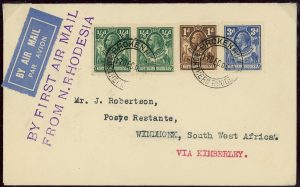
1932 – First Regular Mail Service to Cape Town (From Mpika)
First Regular Mail Service to Cape Town
From Mpika

The Rhodesian Study Circle is a philatelic website for the areas of Rhodesia, Northern Rhodesia, Southern Rhodesia, British Central Africa and Nyasaland, Malawi, Zambia and Zimbabwe.
From Mpika
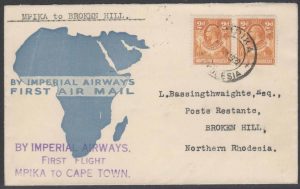
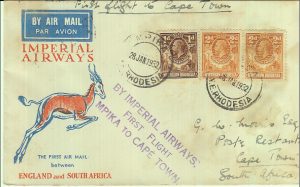

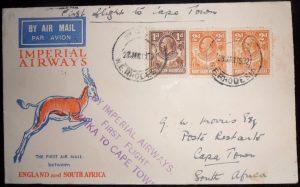
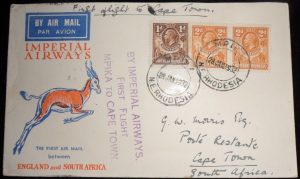
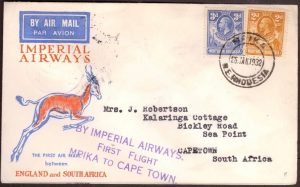
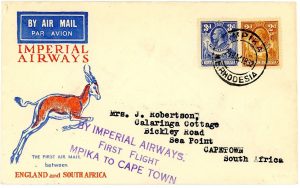


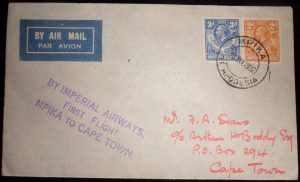
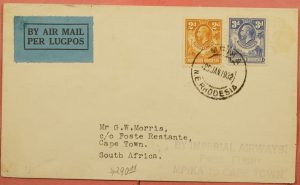
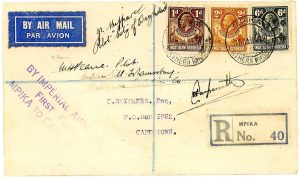
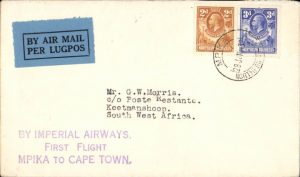
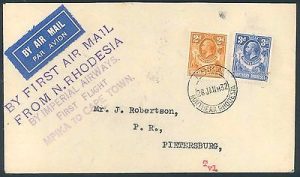
| Date | Dep. City | Via | Arr. City | Plane | Pilot |
|---|---|---|---|---|---|
| 20.01.1932 | Croydon, UK | Paris, France | Helena | A Youell | |
| 20.01.1932 - 22.01.1932 | Paris, France | Brindisi, Italy | By train * | ||
| 22.01.1932 | Brindisi, Italy | Athens, Greece | Scipio | F J Bailey | |
| 23.01.1932 | Athens, Greece | Alexandria, Egypt | Scipio | F J Bailey | |
| 23.01.1932 | Alexandria, Egypt | Cairo, Egypt | By train * | ||
| 24.01.1932 | Cairo, Egypt | Assuit, Egypt Aswan, Egypt | Wadi Halfa, Sudan | City of Arundel | R O Taylor |
| 25.01.1932 | Wadi Halfa, Sudan | Atbara, Sudan | Khartoum, Sudan | City of Arundel | R O Taylor |
| 26.01.1932 | Khartoum, Sudan | Kosti, Sudan | Malakal, Sudan | City of Swanage | R O Taylor W N Cumming |
| 27.01.1932 | Malakal, Sudan | Juba, Sudan Butiaba, Uganda Kampala, Uganda | Kisumu, Kenya | City of Swanage | R O Taylor W N Cumming |
| 28.01.1932 | Kisumu, Kenya | Nairobi, Kenya Moshi, Tanganyika | Dodoma, Tanganyika | City of Baghdad | J S Sheppard |
| 29.01.1932 | Dodoma, Tanganyika | Mbeya, Tanganyika | Shiwa, Northern Rhodesia | City of Baghdad | J S Sheppard |
| 30.01.1932 | Shiwa, Northern Rhodesia | Mpika, Northern Rhodesia | Broken Hill, Northern Rhodesia | City of Baghdad | J S Sheppard |
| 31.01.1932 | Broken Hill, Northern Rhodesia | Salisbury, Southern Rhodesia | Puss Moth | H Pearce | |
| 01.02.1932 | Salisbury, Southern Rhodesia | Bulawayo, Southern Rhodesia Pietersburg, South Africa | Johannesburg, South Africa | Puss Moth | H Pearce |
| 02.02.1932 | Johannesburg, South Africa | Kimberley, South Africa Victoria West, South Africa | Cape Town, South Africa | City of Karachi | R S Caspareuthus |
Flight Plan
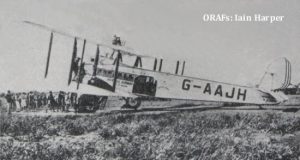
| Date | Dep. City | Via | Arr. City | Plane | Pilot |
|---|---|---|---|---|---|
| 09.12.1931 | Croydon, UK | Paris, France | Heracles | W.Rogers | |
| 09.12.1931 - 11.12.1931 | Paris, France | Brindisi, Italy | By train * | ||
| 11.12.1931 | Brindisi, Italy | Mirabella, Crete | Athens, Greece | F J Bailey | |
| 12.12.1931 | Athens, Greece | Alexandria, Egypt | Scipio | F J Bailey | |
| 12.12.1931 | Alexandria, Egypt | Cairo, Egypt | By train * | ||
| 13.12.1931 | Cairo, Egypt | Assuit, Egypt | Aswan, Egypt | City of Arundel | C G Lumsden |
| 15.12.1931 | Aswan, Egypt | Wadi Halfa, Sudan Atbara, Sudan | Khartoum, Sudan | City of Arundel | C G Lumsden |
| 16.12.1931 | Khartoum, Sudan | Kosti, Sudan Malakal, Sudan Juba, Sudan | Butiaba, Uganda | City of Swanage | A R Prendergast |
| 17.12.1931 | Butiaba, Uganda | Kampala, Uganda | Kisumu, Kenya | City of Swanage | A R Prendergast |
| 17.12.1931 | Kisumu, Kenya | Nairobi, Kenya | City of Basra | E H Attwood | |
| 18.12.1931 | Nairobi, Kenya | Dodoma, Tanganyika Moshi, Tanganyika | Mbeya, Tanganyika | City of Basra | E H Attwood |
| 19.12.1931 | Mbeya, Tanganyika | Mpika, Northern Rhodesia Broken Hill, Northern Rhodesia | Salisbury, Southern Rhodesia | City of Basra | E H Attwood |
| 20.12.1931 | Salisbury, Southern Rhodesia | Bulawayo, Southern Rhodesia Pietersburg, South Africa | Germinston, South Africa | City of Basra | E H Attwood |
| 21.12.1931 | Germinston, South Africa | Kimberley, South Africa Victoria West, South Africa | Cape Town, South Africa | City of Karachi | H Alger |
Postal Rates

| City | Country | Date | First Half Ounce | Per Half Ounce | Parcels |
|---|---|---|---|---|---|
| Khartoum | Sudan | 14.12.1931 | 5d. | 4d. | 4s. 6d. per lb. |
| Nairobi | Kenya | 16.12.1931 | 5d. | 4d. | 6s. 0d. per lb. |
| Uganda | 5d. | 4d. | 6s. 0d. per lb. | ||
| Dodoma | Tanganyika | 17.12.1931 | 7d. | 6d. | 6s. 0d. per lb. |
| Zanzibar | 7d. | 6d. | 6s. 0d. per lb. | ||
| Broken Hill | Northern Rhodesia | 18.12.1931 | 9d. | 8d. | 7s. 0d. per lb. |
| Salisbury | Southern Rhodesia | 18.12.1931 | 9d. | 8d. | 7s. 0d. per lb. |
| Bulawayo | Southern Rhodesia | 19.12.1931 | 9d. | 8d. | 7s. 0d. per lb. |
| Johannesburg | South Africa | 19.12.1931 | 1s. 0d. | 1s. 0d. | 7s. 0d. per lb. |
| Kimberley | South Africa | 20.12.1931 | 1s. 0d. | 1s. 0d. | 7s. 0d. per lb. |
| Cape Town | South Africa | 20.12.1931 | 1s. 0d. | 1s. 0d. | 7s. 0d. per lb. |
9 – 21 December 1931
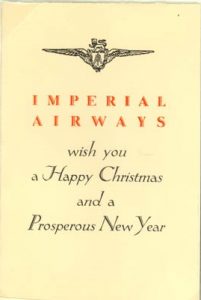
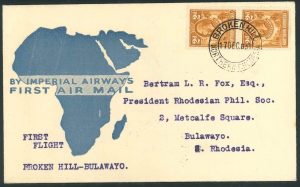
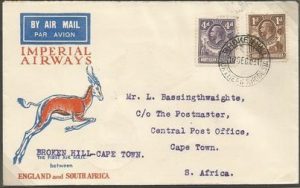
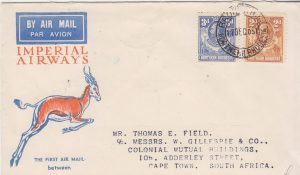
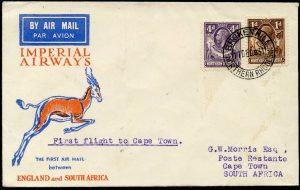
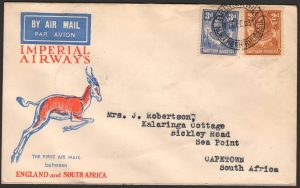
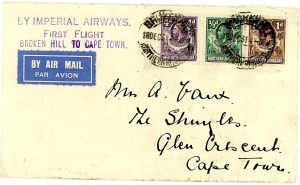
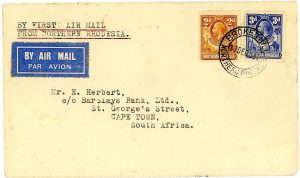
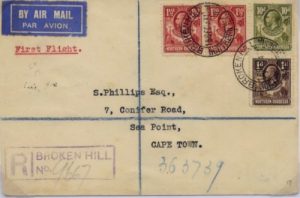
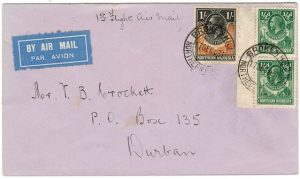
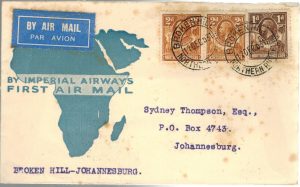
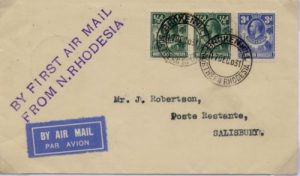
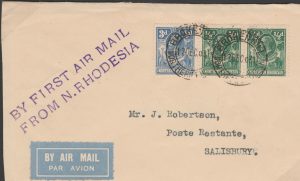
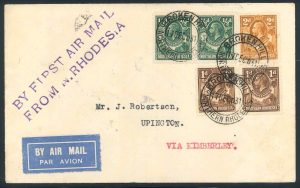
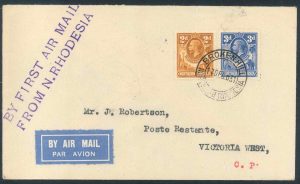
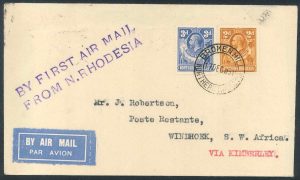
On the 30th November, 1931, the British Post Office announced there would be a special Christmas flight from London to Cape Town. Imperial Airways Ltd left London on 9th December, arriving in Cape Town 21 December. Mail was forwarded to England via the Union Castle Line.







1952 – First Flight

On 2nd May, 1952 the first regular jet flight, with a de Havilland Comet, left London with 36 passengers on board.
Flying 450-500 m.p.h. at 35 – 40,000 feet, these first pure jet airliners in the world completed the 6,700-mile flight in 23 hours, 20 minutes, including stops at Rome, Beirut, Khartoum, Entebbe and Livingstone. Actual flying time was only 18 hours, 40 minutes. An alternate routing via Cairo instead of Beirut reduced the total distance by 450 miles and the journey by an hour.
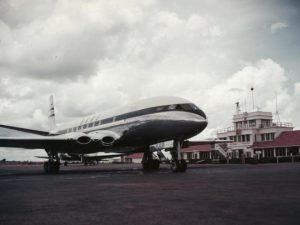
The Comet, built by de Havilland, a British firm, was the backbone of the British commercial fleet. The early Comet was a four-engine aircraft, roughly the size of a small Boeing 737. It carried between 36 and 44 passengers, depending on its cabin configuration.
Despite the line’s overall success and longevity, the first Comets suffered from structural problems and the plane was involved in a number of accidents during the early and mid-’50s. The plane that made that first London-Johannesburg flight, designated G-ALYP by BOAC (a forerunner of British Airways), was also among the first passenger jets to be lost.
9 September 1960
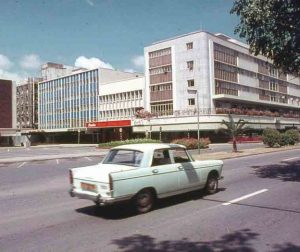
On 9th September, 1960, Lusaka obtained city status. Lusaka became the capital of Northern Rhodesia in 1935. In this year, the colonial administration decided to move the capital from Livingstone in the Southern Province, to a more centrally located area.
Lusaka derives its name from a headman Lusaaka, who according to history, settled around this swampy area many years ago. Lusaka is also the procapital of Lusaka Province, one of the country’s 10 provinces.
Lusaka
The Industrial Development Corporation of Zambia Ltd. (Indeco) attempted to energize the Northern Rhodesia’s industry, which lagged behind that of neighbouring southern Rhodesia. With only limited success, Indeco vacillated between state and private control. It finally re-emerged as a state-owned company in August 1964. That momentous event, on October 24, brought to power nationalist leader Kenneth D. Kaunda. Facing enormous disparities of wealth, owing to the amassing of fortune by a small minority of white settlers who exploited the country’s rich mineral resources, Kaunda set about transforming the economy. In keeping with his socialist philosophy of “humanism,” wealth generated by industry and mining was to be used for the nation’s overall development. Indeco was to be the vehicle for accomplishing this.
The plan got off to a slow start. Kaunda allowed Indeco’s management, comprising conservative white bureaucrats, to remain unchanged. The company’s industrial profile remained static. However, dramatic changes took place in June 1965, when Kaunda appointed Greek businessman Andrew Sardanis chairman and chief executive of Indeco. Sardanis, who became a Zambian citizen at the country’s independence, was one of the few white settlers to have actively supported the black liberation movement.
As head of Indeco, Sardanis attempted to launch new ventures and encourage foreign investment. But he found that foreign companies, fearing political instability and restrictions on profit, were wary of investing in a socialist African nation.
Kaunda gave Indeco a major boost in 1968 with the Mulungushi reforms, under which the government manipulated 25 leading companies into selling it 51% of their shares. Indeco absorbed the government’s investment in those companies, which fell into four main categories: department stores, breweries, transport companies, and suppliers of building materials. These same reforms made it illegal for non-Zambian citizens to trade outside the city centers, forcing hundreds of Indian residents to sell or shut their rural-based businesses.
A second batch of reforms in 1969 extended state interests into the giant copper mining industry and led to the creation of Zimco. Under the Matero Reforms, under which Zambia’s mines were partly nationalized, the government bought a controlling interest in the two largest mining concerns, one owned by Anglo American Corporation (Anglo) and the other by Roan Selection Trust Ltd. (RST), then a subsidiary of AMAX of the United States. ITM International, a company founded by Sardanis, has since acquired RST. The government subsequently reorganized the companies under the new names of Nchanga Consolidated Copper Mines (NCCM) and Roan Consolidated Mines Ltd, (RCM).
Now, for the first time since white colonials in the 1920s began mining the copper belt stretching along Zambia’s northern border, the majority of the country’s population was to benefit from its most lucrative industry. Moreover, the government’s move came during a record year for copper production, in which 12% of the worlds’s copper—more than 700,000 tons—came from Zambia, making it the third-largest producer.
A new company, the Mining Development Corporation (Mindeco), sprang up to manage the state’s mining investments. With two major holding companies, Indeco and Mindeco, the government wanted to put an overall holding company in charge. Zimco was created to fulfill that function. As the government expanded into even more industries, it created new sub-holding companies to manage related businesses, all under the authority of Zimco.

Lusaka
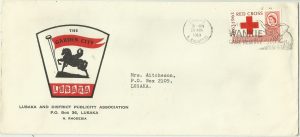
The Lusaka and District Publicity Association was a municipally-supported organisation directed by a secretary, Mrs Eva Muntz.