Norwich Union Life Insurance Company

Norwich Union Life Insurance Company

Salsibury

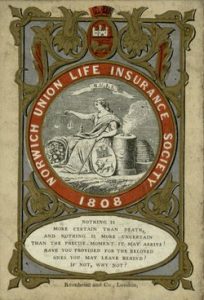
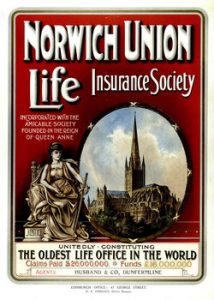
The Norwich Union Life Insurance Company was established in 1808 as a mutual life insurer. The company was originally known as the Norwich Union Society (or Union Office) for Insurances on Lives and Survivorships. It was incorporated on May 10 1893 when it changed its name to the Norwich Union Life Insurance Society.

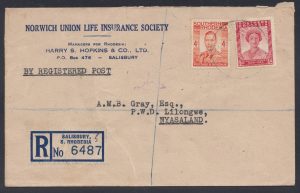
An agency was established in Rhodesia in 1903.From the 1920’s, Harry S Hopkins & Co., Ltd were the managers in Salisbury and Ndola.

On June 16 1997, the company was renamed the Norwich Union Life Insurance Company Ltd. On 21 February 2000, Norwich Union plc, the holding company, announced that it was merging with CGU plc to form CGNU plc, which was rebranded as Aviva plc in July 2002.

Norwich Union Life was registered as dormant on December 23 2003.

Revenue

Reference

Contributors
  • James Gavin

Amarsi Vithaldas

Amarsi Vithaldas

Port Herald

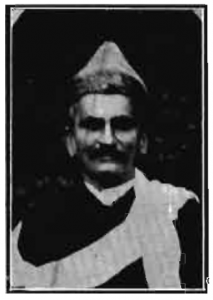
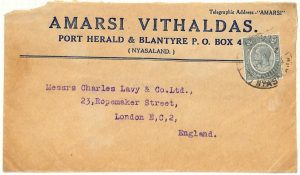
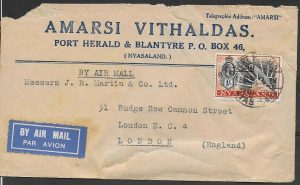
Amarsi Vithaldas (b.1880) arrived in Nyasaland in 1908 and settled in Port Herald. In 1910, he began trading as a general dealer.

In 1915 he opened a wholesale business in Blantyre as an importer. The business eventually opened multiple stores across Nyasaland and became a large landholder.

FB

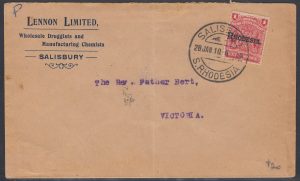
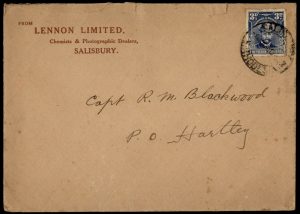
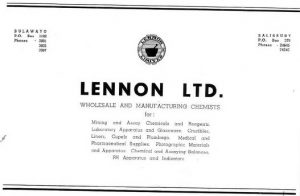
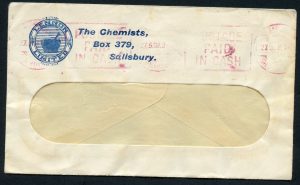
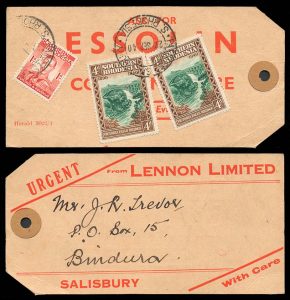
Lennon Limited: Salisbury

Lennon Limited

Salisbury

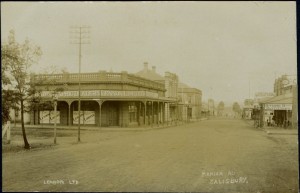
The Salisbury branch of Lennon Ltd was opened by Mr Percy W Skerrett in 1905. He remained in charge of the branch until 1922 when he left Lennon Ltd to open his own pharmacies in Nyasaland called The Nyasaland Pharmacies.

Postcards

Revenue

References

  • Chemist and Druggist: The Newsweekly for Pharmacy, Volume 106 1927
Contributors
  • James Gavin
  • Walter Herdzik

FB

Lions International

Lions International

Bulawayo

In 1917, Melvin Jones, a 38-year-old Chicago business leader, told members of his local business club they should reach beyond business issues and address the betterment of their communities and the world. Jones’ group, the Business Circle of Chicago, agreed.

After contacting similar groups around the United States, an organizational meeting was held on June 7, 1917, in Chicago, Illinois, USA. The new group took the name of one of the invited groups, the “Association of Lions Clubs,” and a national convention was held in Dallas, Texas, USA in October of that year. A constitution, by-laws, objects and a code of ethics were approved.

Within three years, Lions became an international organization. Rhodesia was part of District 412.

Cinderellas

Clubs

Conventions

References

Contributors
  • James Gavin

FB

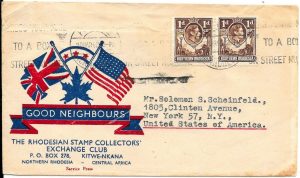
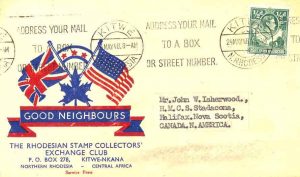
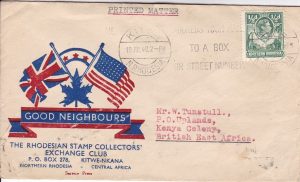
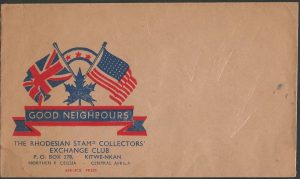
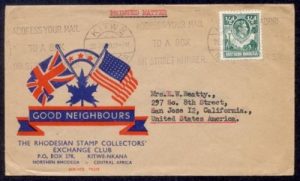
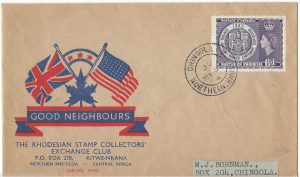
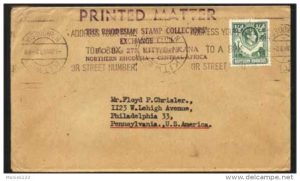
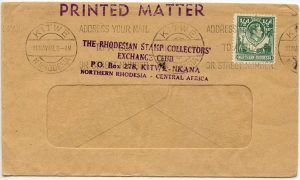
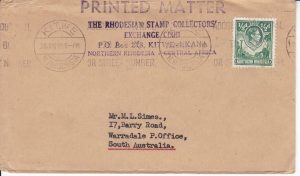
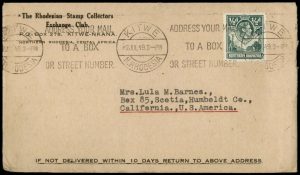
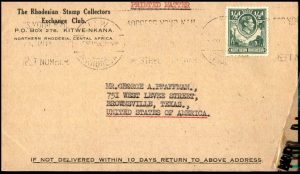
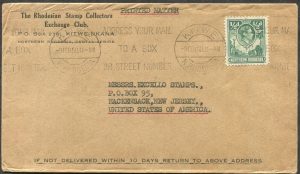
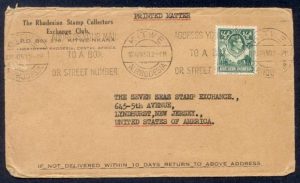
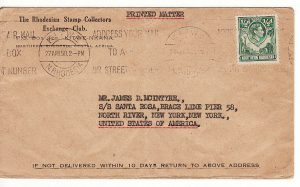
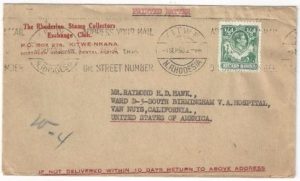
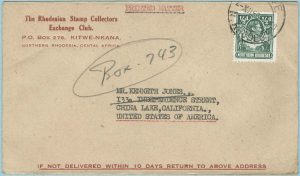
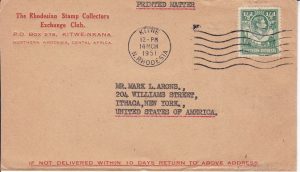
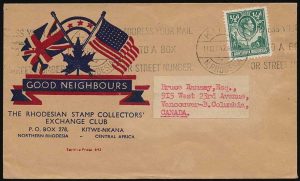
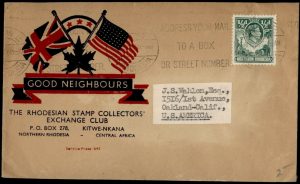
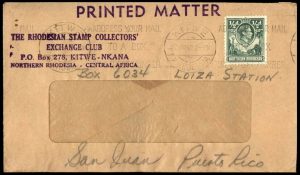
The Rhodesian Stamp Collector’s Exchange Club

The Rhodesian Stamp Collector’s Exchange Club

Kitwe-Nkana


First Day Covers

FB

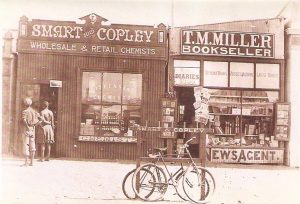
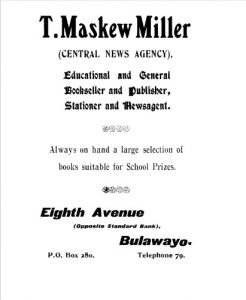
Thomas Maskew Miller

T.M. MILLER

Bulawayo

Thomas Maskew Miller was a South African publisher that established a publishing firm in Cape Town in 1893. Initially they imported books and stationery but later began publishing their own. In 1897 a branch was established in Bulawayo (the Bulawayo business went into liquidation sometime in 1910). The shop was situated on the corner of 8th Avenue and Fife Street with Ellis Allen as Manager.

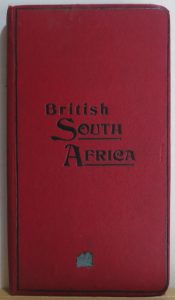
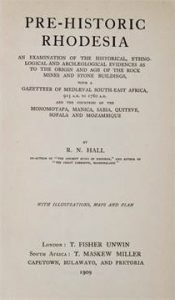
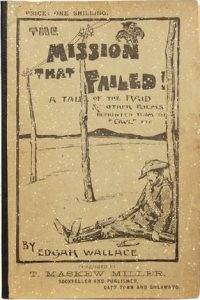
The business published books and maps including: The Mission that Failed! (1898), Science in South Africa: A Handbook and Review prepared under the auspices of the South African Governments and the South African Association for the Advancement of Science (1905), Miller’s New Map of British South Africa (c.1905), Pre-historic Rhodesia (1909) and The Bulawayo Cookery Book (1909)

T. M. Miller also published a series of postcards. The first series published was a collection of twelve vignettes advertised in The Bulawayo Observer, 16th May 1903. A second series was published c.1909.

In 1924, the firm became a limited company known as Maskew Miller Ltd. In 1983, the company merged with Longman to become Maskew Miller Longman and today forms part of Pearson Education.

Postcards

References

Contributors

  • Kieth Harrop
  • Jefferson Ritson
  • Andrew Wilkie

Industrial Development Corporation of Zambia Ltd.

Industrial Development Corporation of Zambia Ltd.

Lusaka


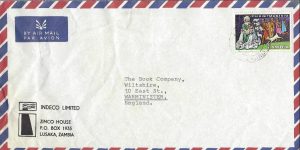
The Industrial Development Corporation of Zambia Ltd. (Indeco) attempted to energize the Northern Rhodesia’s industry, which lagged behind that of neighbouring southern Rhodesia. With only limited success, Indeco vacillated between state and private control. It finally re-emerged as a state-owned company in August 1964. That momentous event, on October 24, brought to power nationalist leader Kenneth D. Kaunda. Facing enormous disparities of wealth, owing to the amassing of fortune by a small minority of white settlers who exploited the country’s rich mineral resources, Kaunda set about transforming the economy. In keeping with his socialist philosophy of “humanism,” wealth generated by industry and mining was to be used for the nation’s overall development. Indeco was to be the vehicle for accomplishing this.

The plan got off to a slow start. Kaunda allowed Indeco’s management, comprising conservative white bureaucrats, to remain unchanged. The company’s industrial profile remained static. However, dramatic changes took place in June 1965, when Kaunda appointed Greek businessman Andrew Sardanis chairman and chief executive of Indeco. Sardanis, who became a Zambian citizen at the country’s independence, was one of the few white settlers to have actively supported the black liberation movement.

As head of Indeco, Sardanis attempted to launch new ventures and encourage foreign investment. But he found that foreign companies, fearing political instability and restrictions on profit, were wary of investing in a socialist African nation.

Kaunda gave Indeco a major boost in 1968 with the Mulungushi reforms, under which the government manipulated 25 leading companies into selling it 51% of their shares. Indeco absorbed the government’s investment in those companies, which fell into four main categories: department stores, breweries, transport companies, and suppliers of building materials. These same reforms made it illegal for non-Zambian citizens to trade outside the city centers, forcing hundreds of Indian residents to sell or shut their rural-based businesses.

A second batch of reforms in 1969 extended state interests into the giant copper mining industry and led to the creation of Zimco. Under the Matero Reforms, under which Zambia’s mines were partly nationalized, the government bought a controlling interest in the two largest mining concerns, one owned by Anglo American Corporation (Anglo) and the other by Roan Selection Trust Ltd. (RST), then a subsidiary of AMAX of the United States. ITM International, a company founded by Sardanis, has since acquired RST. The government subsequently reorganized the companies under the new names of Nchanga Consolidated Copper Mines (NCCM) and Roan Consolidated Mines Ltd, (RCM).

Now, for the first time since white colonials in the 1920s began mining the copper belt stretching along Zambia’s northern border, the majority of the country’s population was to benefit from its most lucrative industry. Moreover, the government’s move came during a record year for copper production, in which 12% of the worlds’s copper—more than 700,000 tons—came from Zambia, making it the third-largest producer.

A new company, the Mining Development Corporation (Mindeco), sprang up to manage the state’s mining investments. With two major holding companies, Indeco and Mindeco, the government wanted to put an overall holding company in charge. Zimco was created to fulfill that function. As the government expanded into even more industries, it created new sub-holding companies to manage related businesses, all under the authority of Zimco.

Reference

Contributors
  • James Gavin

Albert James Storey

Albert James Storey

1874-1941

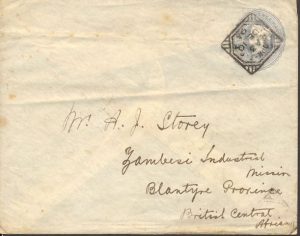
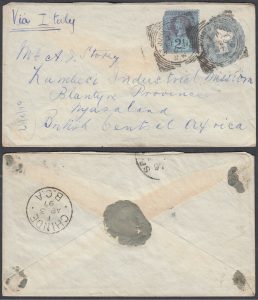
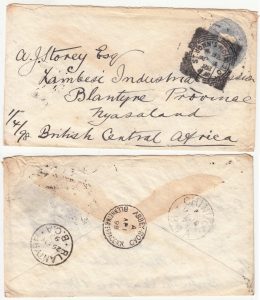
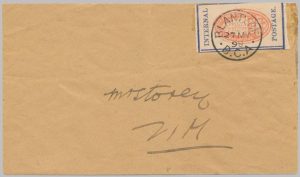
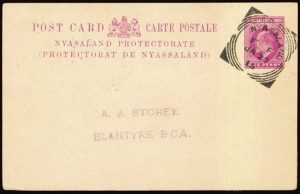
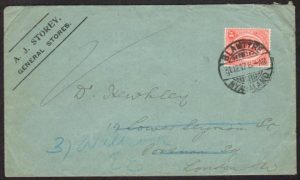
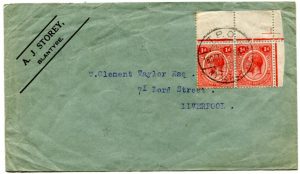
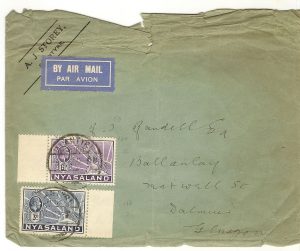
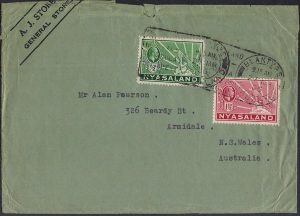
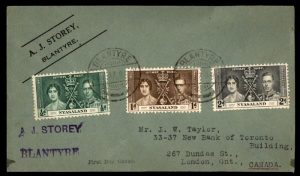
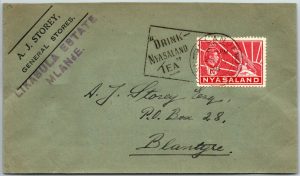
Albert James Storey was born in England on 26th August, 1874 and went to British Central Africa in 1896 working as a book-keeper to the Zambesi Industrial Mission. Around 1900, he went into business establishing A J Storey General Stores.

In 1901, Storey attempted to marry a local native woman, Alice Ndumei, of Kuligowe’s village in Southern Angoniland. However, the woman was considered ‘of ordinary type’ and ‘excessively stupid.’ Therefore, she was considered unable to enter into a contract of marriage with Storey.

He had established himself as a photographer, auctioneer, commission agent, accountant, and auditor dealing in general store goods by 1908 and in 1922 he had stores in Zomba, Port Herald and Fort Johnston. He also had garages in Blantyre and Zomba.

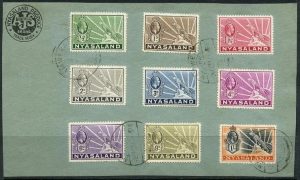
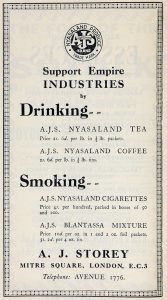
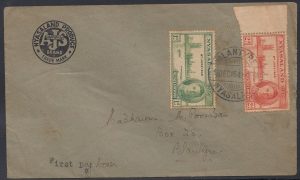
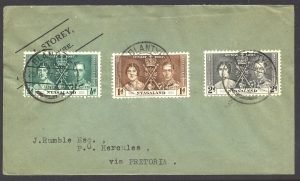
In 1932 he moved to Limbe and establish a cigarette factory producing A J S Cigarettes. Around this time he appears to have given up the retail industry and his photography business and by 1938 he was working for the Nyasaland Tea Marketing Expansion Board. He was considered an ardent philatelist.

Postcards

References

Contributors
  • Andrew Wilkie
  • Keith Harrop
  • James Gavin
  • Peter Gorton
  • Ian MacDonald

FB

Osman Adam Ltd

Osam Adam Ltd

Blantyre

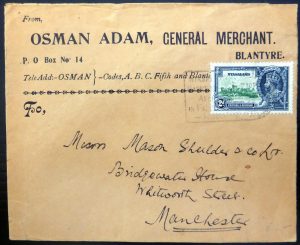
Osman Adam arrived in Africa in 1885, and established a general merchant’s store known as Osman Adam in 1894. He was the first Indian businessman in Nyasaland. With stores throughout Portuguese East Africa, British Central Africa and Northern Rhodesia he became the largest Muslim merchant businessman in the region.

He was the founding member of the Nyasaland Indian Traders Association and rose to leader of the Nyasaland Indian Association. He and C K Dharap financed the first Indian primary school in Blantyre. He died in 1914.The business continues to survive today.
1 44 45 46 47 48 51