Cairns Ltd

Cairns Ltd

Salisbury

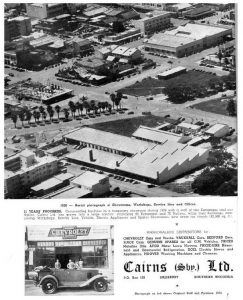
Established in 1929, Cairns Ltd originally was a show room employing two Europeans and an native African. It was owned by Bernard Moverley “Bunny” Cairns. Cairns was born on the 24th September, 1895 in Durban, KwaZulu/Natal, South Africa.

In 1936, Cairns Ltd lent ‘one of the earliest motor cars in Southern Rhodesia’ for the 1936 Empire Exhibition in Johannesburg.

By 1950, the business catered for workshops, service lines, vehicle, electrical appliances and spares showrooms. They were the distributors in Mashonaland for Bexford, Vauxhall Chevrolet, Buick, Hoover and Frigidaire home appliances.

Revenue

FB

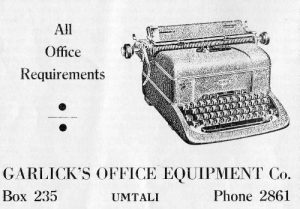
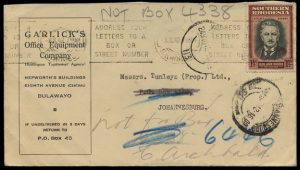
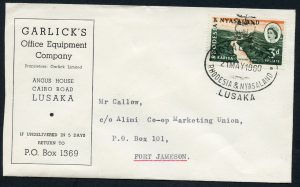
Garlick’s Office Equipment

Garlick’s Office Equipment

Bulawayo/Salisbury/Umtali/Lusaka

John Garlick moved to South Africa in 1872 where he founded the department store that was known as Garlick’s. In 1875 he opened his first store called J.Garlick selling “General Drapery, Hosiery, Haberdashery, Millinery, Boots, etc, etc” in Cape Town. He eventually expanded with branches in Kimberley, Johannesburg and Pretoria.

Business grew rapidly, he expanded into the wholesale business supplying merchandise to many stores such as John Orr, Spracklens and Markhams. Early in the 1880s he imported machinery and created a  very successful boot-making factory. His furniture store, initially in the name H.E. Richold became Garlick’s Furniture Store. Bicycles and Typewriters were imported and separate businesses created to manage these agencies.The cycle store became Garlicks Motor and Cycle Supply importing the first car to Cape Town and expanding the range of sole agencies for cycles to include cars and motor bikes.

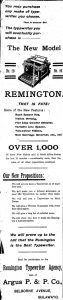
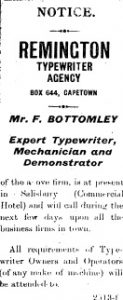
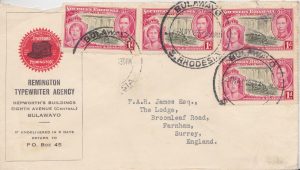
The Remington Typewriter Agency developed into Garlicks Office Equipment and finally became Garlicks Office Machines, a thriving company operating quite separately from the department stores.

There were two offices in Rhodesia, one in Bulawayo and another in Umtali. There was also a branch of Garlick’s Wholesale business in Bulawayo, opened in 1895, managed by a Scot named George Fortune, who started with Garlick in Cape Town in 1889. Fortune remained in charge in Bulawayo until his death in May 1936.

References

  • The Garlick Papers, University of Cape Town
  • The Rhodesia Herald (1910-11)
Contributors
  • Sherry Garlick Stanton
  • Walter Herdzik
  • James Gavin

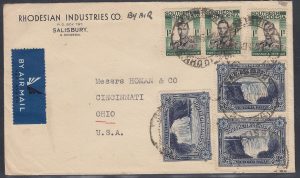
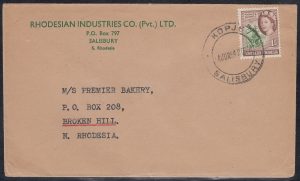
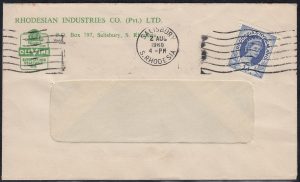
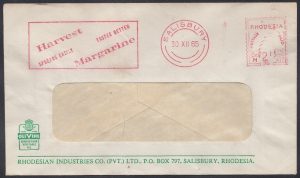
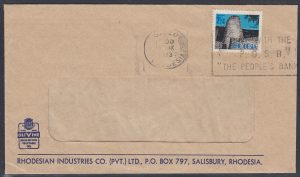
Rhodesian Industries Co. (PVT) Ltd.

Rhodesian Industries Co. (PVT) Ltd.

Salisbury/Umtali

Rhodesian Industries was established by the Margolis family in 1931 in Nyazura, Manicaland, before a moving to Salisbury.

The Margolis family originated in Lithuania. Of the nine children born between 1875 and 1898, three brothers ended up in Rhodesia: Harry, Salman and Berel. Harry and Salman originally established Rhodesian Industries as a family partnership.

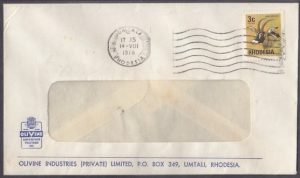
In the early days, the company only processed groundnuts for the family’s oil factory and used tallow in the soap business. However, in the 1940’s it developed it’s most prestigious product – Olivine oil. The famous Big Ben laundry bar was produced soon after. Both products are still being produced and are huge brands.

In 1950 it became incorporated. Later, in the 1950’s, it added a candle factory and the business expanded in line with the development of Rhodesia, later processing cottonseed oil for margarine and bakers’ fats.

In the 1970’s the business changed its name to Olivine Industries and in 1982 the business became a joint venture with Heinz. The business continues today but experiences issues with Heinz, who refuses to source food from farms seized by the Government.

Reference

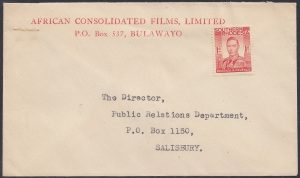
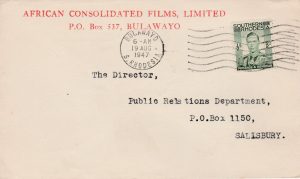
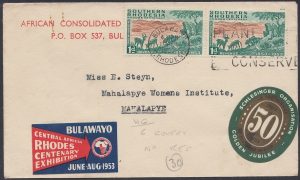
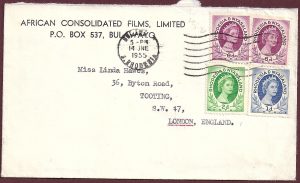
African Consolidated Films Ltd

African Consolidated Films Ltd

Bulawayo/Salisbury

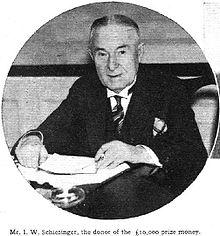
Isadore William Schlesinger arrived in South Africa from America in 1894. Penniless at first, Schlesinger began working in the insurance industry and by 1904 he became a significant figure in the insurance world and eventually developed massive interests in land and real estate.

During the Ango-Boer War, he began a series of newsreel productions called The African Mirror (the world’s longest running newsreel). By 1913, through his company African Theatres Trust Ltd, he had acquired all distribution rights to films in Southern Africa.

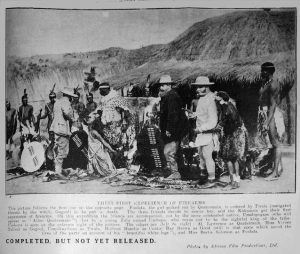
His interests extended even further, when he established African Film Productions Ltd. Studios were built at Killarney, South Africa. Between 1916 and 1920, several major films were shot there. By 1923, local film production ceased due to poor performance.

However, Schlesinger continued to hold monopoly over local distribution from Cape Town to the Zambesi through African Consolidated Films Ltd. American interests were distributed African Consolidated Films Ltd and into African Consolidated Theatres (Ltd). In 1956, 20th Century Fox bought the Schlesinger monopoly.

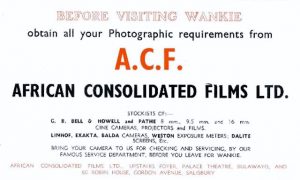
African Consolidated Films Ltd had an office in the Palace Theatre in Bulawayo,and another in Gordon Ave, Salisbury. From here they also sold and serviced photographic equipment.

References

  • Critical Approaches to African Discourse – Nwachukwu Frank Ukadike
  • South African Cinema 1896-2010 – Martin Botha
Contributors
  • James Gavin
  • Keith Harrop

FB

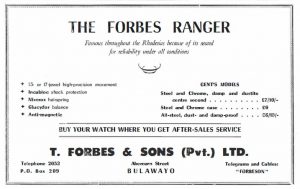
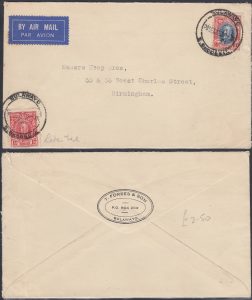
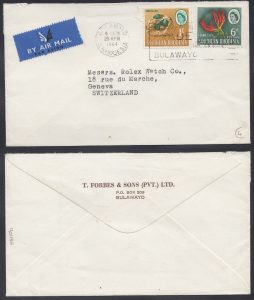
T.Forbes & Sons (PVT.) Ltd.

T.Forbes & Sons (PVT.) Ltd.

Bulawayo

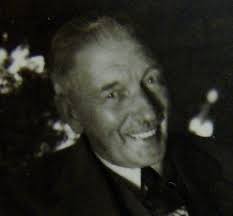
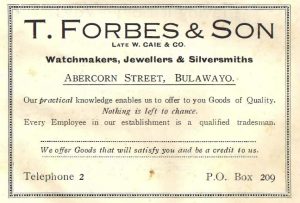
Thomas Forbes was born at Alford, near Aberdeen, 1879. Receiving a liberal education in the town of his birth, he served his apprenticeship with Mr. John Watt, watchmaker, of Alford. Proceeding to Peterhead in 1901, he was for two years with Mr. Stephen, watchmaker and jeweller, of that town, and later went to Messrs. James Smith and Son, of Aberdeen.

Leaving Scotland in 1905, Mr. Forbes came to Cape Town, and proceeding to Bulawayo, arrived in that town on the 12th April, where he joined the well-known firm of Mr. William Caie, one of the leading watchmakers and jewellers in the town. Held the position of head of the watch and clock repairing department.

Around 1927, it appears William Caie passed away (potentially upon return to Scotland) and Forbes took over the business.

Thomas Forbes died in 1971.

Reference

  • Southern Rhodesia: An Account of its Past History, Present Development, Natural Riches, and Future Prospects: With special particulars for intending settlers, numerous illustrations and much general information – South African Publishing Syndicate – 1907
  • The Miltonian, June 1928
  • The Miltonian, November 1961

Rhodesian Milling & Manufacturing Co., Ltd

Rhodesian Milling & Manufacturing Co Ltd

Bulawayo/Salisbury 

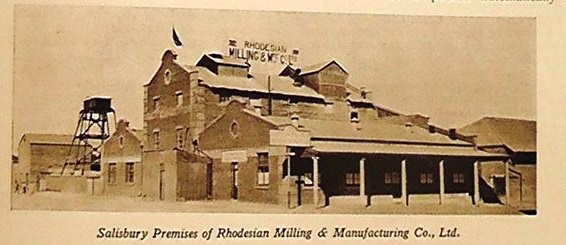
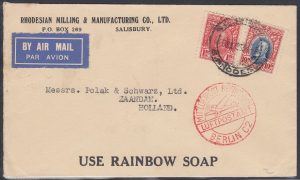
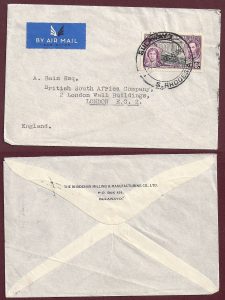
In 1915 Mark Harris established Mark Harris Manufacturing in what was then Salisbury, using the trade name Atlas. In 1920 he sold his shares to the British South Africa Company (now Anglo American Corporation). In 1924, the name was changed to The Rhodesian Milling and Manufacturing Co., Ltd.

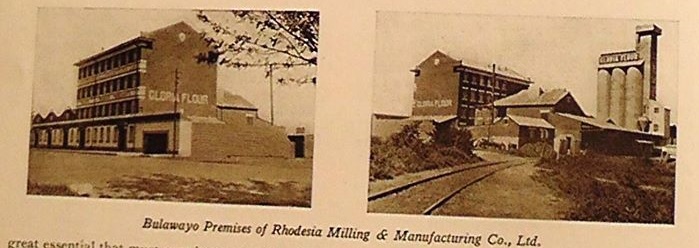
The Bulawayo Mill was expanded in 1930 to accommodate greater production and had a railway running through the business. The mill also had its own laboratory to check on the quality of the product. The Salisbury plant was located on two acres with a railway track running by it, allowing 15 trucks to load. The Salisbury mill was devoted too maize production.

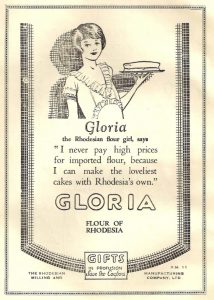
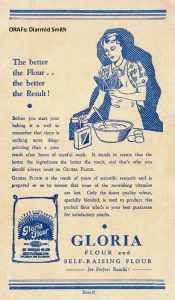
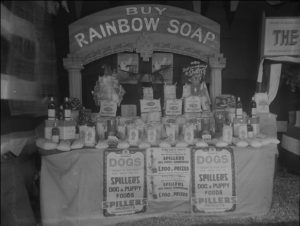
One of its most famous products was the ‘Gloria’ flour, was released in 1920. However, the company also handled farm produce, including ground nuts, or monkey nuts. The company also produced soaps including Rainbow and Reliance brand soaps.

In 1956 the Rhodesian Milling and Manufacturing Company purchased Harris Brothers & Co.

In 1975, the company merged with Palte Harris Industrial Holdings to form National Foods (part of the Innscor Africa Ltd group).

Cinderellas

Revenues

Reference

Contributors
  • James Gavin
  • Keith Harrop

FB

Noel P. Hunt (Rhodesia) (PVT.) Limited

Noel P. Hunt (Rhodesia) (PVT.) Limited

Salisbury


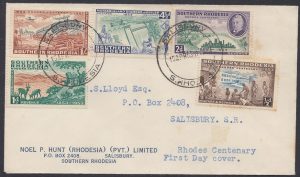
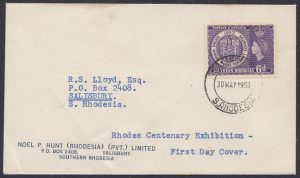
Noel P. Hunt (Rhodesia) (PVT.) Limited was a cotton grower in Salisbury. In the late 1950’s the business contracted with the Grain Marketing Board to export the small marketable surplus of cotton produced in Rhodesia.

In 1966, the business partnered with Anderson Clayton and Company, the world’s foremost cotton grower, ginner and service organisation. The partnership became known as the Rhodesian Cotton Corporation.

References

Contributors
  • James Gavin
  • Walter Herdzik

McCullagh & Bothwell

McCullagh & Bothwell

Bulawayo/Salisbury

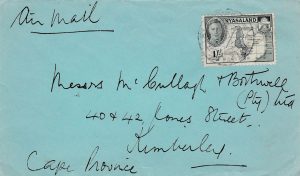
Isaac McCullagh and Samuel Bothwell, both from Northern Ireland, started their partnership in Kimberley in 1893 as “Men’s and Boy’s Complete Outfitters and Boot Merchants.” In 1897, Sam Bothwell was on the first train to Bulawayo and opened his first store there within weeks of arriving.

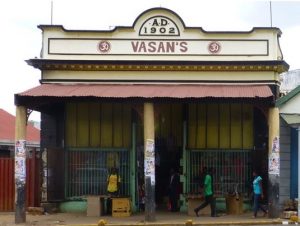
In 1902, Bothwell bought land in Salisbury for £850 establishing his first shop. McCullagh and Bothwell occupied the shop until 1912 when they sold the building.

It appears by 1906, the business expanded into Bulawayo and began expanding into the school uniform business.

In 1969 he sub-divided the land into three portions; selling one to the Bank of Africa and one to Charles Duly for a cycle shop.

McCullagh & Bothwell has remained a family business, with descendents of Sam Bothwell owning and running the company to this day.

Reference

Contributor
  • James Gavin

FB

Johnson & Fletcher Ltd.

Johnson & Fletcher Ltd.

Bulawayo

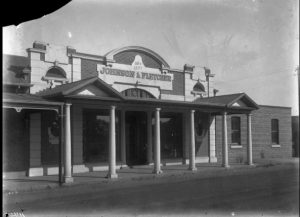
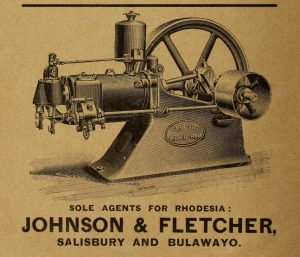
In 1897 Harold Clarkson Fletcher (1869-1950) and George Johnson (1869-1947) opened a consulting and general engineering business in Southern Rhodesia, under the name Johnson & Fletcher, with branches in Bulawayo, Salisbury and Beira. The business began by supplying parts and equipment to the gold mining companies. George Johnson was personally responsible for the first A.C. generating plant in Rhodesia and the firm erected the first cyanide plant for the extraction of gold.

Fletcher appears to have managed the Bulawayo office, for he represented the firm in that city for the rest of his career. In 1898 he became a member of the South African Association of Engineers and Architects (also its successor, the South African Institution of Engineers) and in 1901 he joined the Rhodesia Scientific Association, established in Bulawayo in 1899.

During the 1930’s, it appears the firm expanded its interests as they were now listed as Timber Merchants. In 1940 Fletcher was a corresponding member of the council of the Chemical, Metallurgical and Mining Society of South Africa and by 1944 he was Managing Director of the firm.

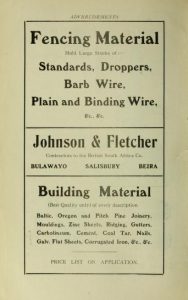
The business had also further developed and was noted for Mining, Electrical and Building Requisites. In 2010, the last branches were closed by PG Industries.

Branches

Reference

Contributors
  • James Gavin
  • Keith Harrop

FB

Spencer’s Airways and Garage

Spencer’s Airways and Garage

Victoria Falls

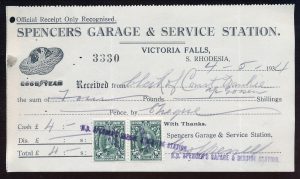
In 1923, Edward Herbert (Ted) Spencer was stationed at the Victoria Falls with the British South Africa Police when he spotted a business opportunity as increasing numbers of tourists began to arrive by road from Bulawayo. This resulted in an increased demand for motor garage facilities. Spencer thought a car hire service would capture the tourist trade as passengers stepped off the train. He started a business Spencer’s Garage and Service Station.

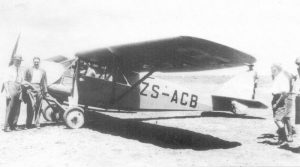
Spencer’s Garage and Service Station soon developed into Spencer’s Garage and Air Service when Spencer acquired his first aeroplane – a second hand DH.82 Puss Moth, purchased in 1935 from Union Airways in Durban, South Africa.

Originally it started as a small charter company called Spencer’s Airways. He originally operated a de Havilland Puss Moth aircraft providing short flights over Victoria Falls from a self-made airstrip (which would grow to become the Victoria Falls Aerodrome). The flight became known as ‘the flight of angels.’

Spencer’s Air Service was born when Puss Moth ZS-ACB became VP-YBC on the Southern Rhodesia registry.

Spencer also ran a passenger and mail service to remoter parts of Barotseland in Northern Rhodesia using a de Havilland 83 Fox Moth biplane.

During the Second World War, judged too old for volunteer service, Spencer occasionally piloted a DH89A Dragon Rapide on the weekly run to Mongu.

Towards the end of the War Spencer’s Airways, Victoria Falls, were using one Avro Anson, one de Havilland Fox Moth, one Tiger Moth and one Fairchild UC.61A to provide short pleasure flights over the Falls. It is also believed Ted Spencer was the only person (possibly the first) to fly a fixed wing plane under the Victoria Falls Bridge.

It is also recorded that Spencer had hoped to establish a flying boat service to Barotseland after the war, but he died tragically in a crash in London in 1947. Spencer was piloting the Dakota plane which stalled and crashed soon after take off from London on the 25th January with 18 passengers, eleven of who also died.

Reference

1 42 43 44 45 46 51