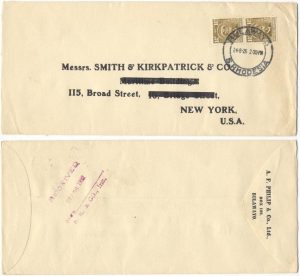
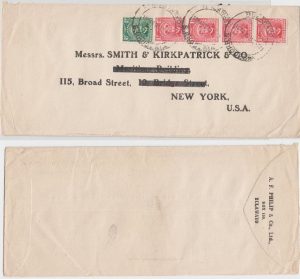
Mobil (Rhodesia)

Mobil (Rhodesia)

Salisbury

Originally founded in 1866 as the Socony-Vacuum Oil Company, Mobil is a major American oil company which merged with Exxon in 1999 to form a parent company called ExxonMobil. It was previously one of the Seven Sisters which dominated the global petroleum industry from the mid-1940s until the 1970s.

During the UDI period, allegations were aimed at the Mobil Oil Company that they fashioned an elaborate and secret chain of bogus companies to disguise the flow of gasoline and other oil products from South Africa to Rhodesia. The story charged that Mobil, by developing a string of dummy companies, post office addresses, and phony order sheets and invoices was able to set up a circuitous “paper chase” thereby disguising the fact that Mobil was selling Rhodesia as much as $ 20 million a year in oil products, including specialized aviation fuel for Rhodesia’s air force.

Mobil (Rhodesia) was asked in the mid-sixties by a secret Rhodesian government agency called Genta to set up a ‘paper-chase’ of intermediary companies, through which Genta could import all of Rhodesia’s gasoline and diesel requirements from Mobil (South Africa). Mobile South Africa would sell its oil to Freight Services which would then sell the consignment to Genta. Genta would sell the oil to Mobil Rhodesia. Payment would go along the same channel.

Mobil dispatched a team of senior executives overseas to check the report soon after it was released but did not dispute the claims.

References

Contributors
  • James Gavin
FB

Falcon College

Falcon College

Esigodini (Essexvale)

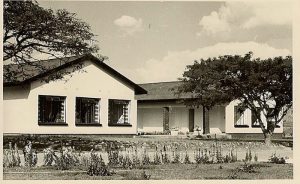
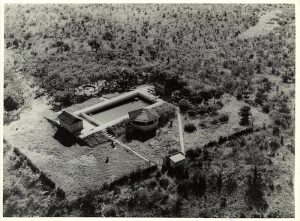
Falcon College is an independent boarding school for boys and girls aged 12–18. It was founded on 3rd February, 1954, near Essexvale during the Federation of Rhodesia and Nyasaland (now Esigodini, Zimbabwe), southeast of Bulawayo on the remains of the Bushtick Mine. It was opened by the Governor General of the Federation of Rhodesia and Nyasaland, Lord Llewellin, on Saturday 10 April 1954.

Homes that had housed miners and their families now house teaching staff and boarding school boys. Mine offices would become administration offices and classrooms. Mine facilities such as tennis courts and a swimming pool would become school facilities. Since that time, the school has flourished to become one of Zimbabwe’s leading education establishments.

The college’s graduates include a British member of parliament, surgeons and doctors, leaders of industry and commerce, soldiers and educators.


Falcon College was ranked as one of the Top 10 High Schools in Zimbabwe in 2014. It is a member of the Association of Trust Schools (ATS) and the Headmaster is a member of the Conference of Heads of Independent Schools in Zimbabwe (CHISZ).

In December 2015 Falcon became a co-educational school accepting girls in January 2016.

References

Contributors
  • James Gavin
Rhodesian Tin and Steelware Manufacturers Ltd

Rhodesian Tin and Steelware Manufacturers Ltd

Bulawayo

Rhodesian Tin and Steelware Manufacturers Ltd was established in 1911. In the mid 1940’s a factory was commissioned at their existing site on Khami Rd and the business became known as Monarch Steel. By 1947 all steelware goods had been transferred to the factory. In 1953, the company opened a branch in Salisbury.

The company is now a division of Treger Products (Pvt) Ltd and continues to trade Monarch Steel.

References

Contributors
  • James Gavin
FB

Mozambique Company

Mozambique Company

Bulawayo

The Mozambique Company (Companhia de Moçambique) was a royal company operating in Portuguese Mozambique that had the concession of the lands in the Portuguese colony corresponding to the present provinces of Manica and Sofala in central Mozambique.

The company was established on 11th February, 1891 with acapital stock from financiers from Germany, the United Kingdom and South Africa. Its headquarters was located in Beira, where it controlled the public administration and the post offices. The company also founded a private bank, the Banco da Beira, which issued currency in pounds.

The concession was granted for a period of 50 years, during which the company could not only exploit the resources and existing manpower but also grant sub-concessions. The company was granted the exclusive right to collect taxes, but was itself granted a 25-year tax exemption. In return the Portuguese state would receive 7.5% of the company’s profits and 10% of the sold shares. The company was also required to settle 1,000 Portuguese families and provide education and public administration in its territory.

In practice, the company made only partial use of the prerogatives with which it had been bestowed; but this was balanced by the fact that it also met very few of its obligations. Having only limited capital, the company did little to develop the area, deriving most of its income from its ability to tax and its power to use conscripted labour on its plantations and for lease to adjacent estates.

Resistance to the forced labour regime was a major cause of rebellions against the company which occurred in 1902 and 1917. Despite the company’s obligation under its charter to provide forces to maintain law and order, it was unable to meet these crises, and on both occasions Portugal had to mount expensive interventions.

Because of its bad performance and because of the shift, under the Salazar regime, towards Portuguese control and away from international control of the economy, the company’s concession was not renewed when it ran out in 1942. On 18 July 1942, the territory of Manica and Sofala passed to the Portuguese colonial authorities and the Mozambique Company continued to operate in the agricultural and commercial sectors.

On 20 October 1961, The Mozambique Company became the Grupo Entreposto Comercial de Moçambique, which transformed itself into a holding on 6 September 1972, with the participation of capital from other companies, including Entreposto-Gestão e Participações (SGPS) SA.

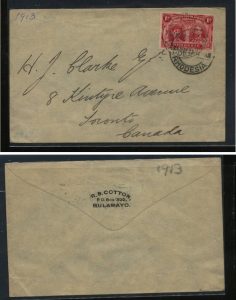
R.S. Cotton was the local representative in Bulawayo and was a major player in the building in the Limpopo Railway.

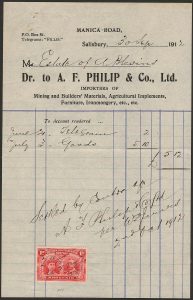
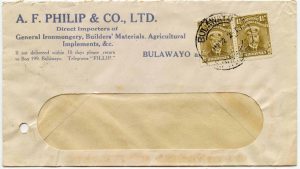
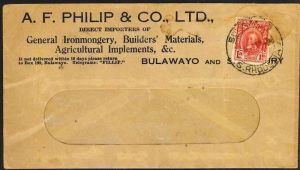
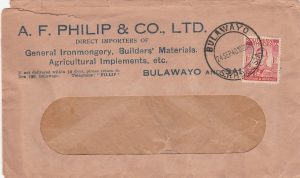
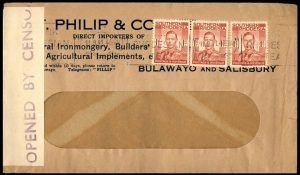
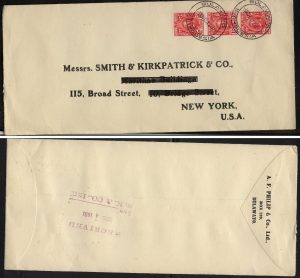
A. F. Philip & Co Ltd: Salisbury

A. F. Philip & Co Ltd

Salisbury

Stationery

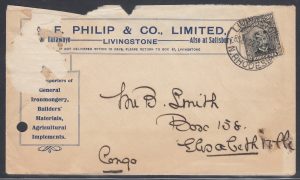
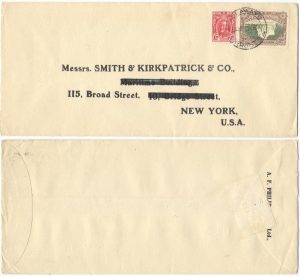
A. F. Philip & Co Ltd: Livingstone

A. F. Philip & Co Ltd

Livingstone

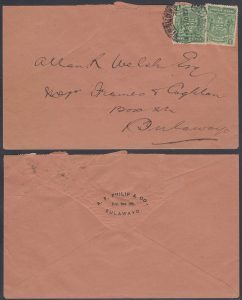
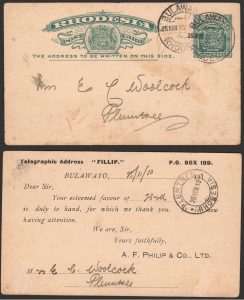
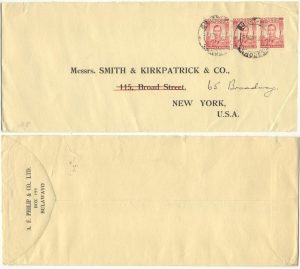
A. F. Philip & Co Ltd: Bulawayo

A. F. Philip & Co Ltd

Bulawayo

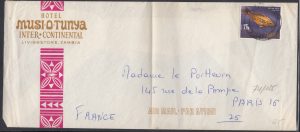
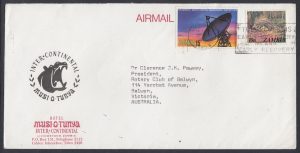
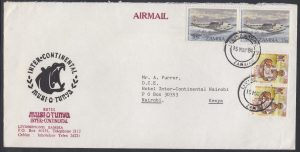
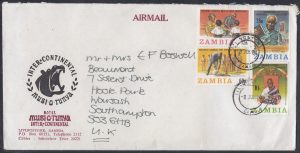
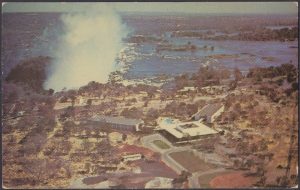
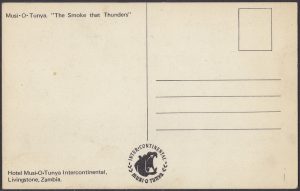
Hotel Musi-o-Tunya Inter-Continental


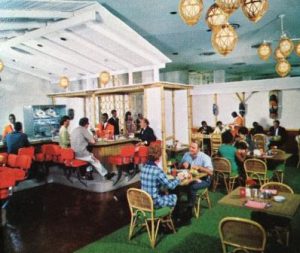
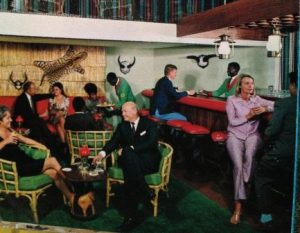
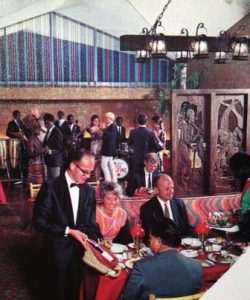
Musi-o-Tunya Inter-Continental Hotel was officially opened on 19 October 1968 by Dr Kabaleka Konoso, Minister of Natural Resources and Tourism. Robert Huyot, Presdient of Inter-Continental, and Mario di Genova, Senior Vice-President of Operations, were also present. It was located just 300 yards, on a 35 acre site, adjacent to the eastern cataract of the Victoria Falls (Musi-O-Tunya or The Smoke That Thunders), and seven miles from Livingstone.

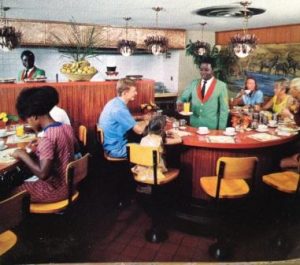
Musi-o-Tunya Inter-Continental Hotel was designed by the same team and based in Livingstone. Also built in 1968, it had 100 air-conditioned rooms, a specialty restaurant, two informal restaurants, a cocktail lounge, and a bar.

The hotel was managed by a German Rotarian couple by the name of Ernest and Maria Mueller.

Postcards

References
Contributors
  • James Gavin
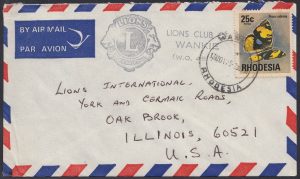
Lions International: Lions Club of Wankie

Lions International

Lions Club of Wankie

Lions International: Lions Club of Salisbury

Lions International

Lions Club of Salisbury


1 33 34 35 36 37 51