1980 – 1st Commissioner’s Conference in Zimbabwe

Scout Stamp Collectors Club

1st Commissioner’s Conference in Zimbabwe

With the achievement of independence in 1980, the Zimbabwe Boy Scout Association was able to register directly with the World Scout Bureau (WOSM) and not through the United Kingdom, as in the past.

In the Scout Movement, a commissioner is the person whose role it is to oversee a Scout association’s programs, usually within a particular geographic area. Normally, commissioners are volunteers. In some Scout associations, the term Executive Commissioner is used to refer to a paid staff member.

The 1st Commissioner’s Conference in Zimbabwe was held on 5th July, 1980 in Harare.

Commemorative Covers

References

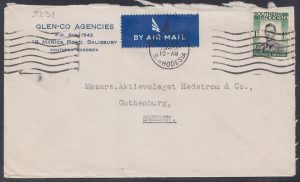
Glen-Co Agencies

Glen-Co Agencies

Salisbury


Although little is known of Glen-Co Agencies, it appears they were established in 1949 and represented companies that wanted to export building materials, sanitary articles, roof tiles etc.

Contributors
  • James Gavin

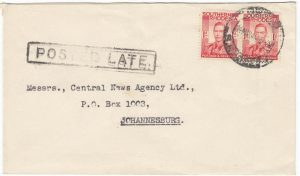
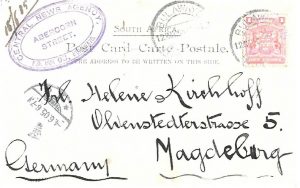
Central News Agency

Central News Agency

Bulawayo/Salisbury


In 1896 two entrepreneurs, Michael Davis and Albert Lindbergh, paired up to sell newspapers in Johannesburg. By coordinating teams of newsboys who delivered papers by foot and on bicycles, the Central News Agency (CNA) was founded. The first newspapers sold were The Star, The Standard and Diggers News.

Davis and Lindbergh were continually trying to increase their shares of street sales. They soon moved into the sale of books, periodicals and stationery and began acting as advertising agents. Newspapers, however, were their greatest interest. By 1899, the business had outgrown the Harrison Street base. Bigger premises were needed and the choice was a large building on the Corner of Commissioner and Rissik Streets.

In 1901 the partners began opening bookstalls at railway stations across the Cape. In 1902 the business secured a huge deal with the Argus and the Cape Times who placed their entire publishing contracts with CNA. CNA experienced phenomenal growth and in 1903 was floated as a public company.

By 1904, the company was nationwide and the business signed a deal with Gordon & Gotch to become their sole agents in Great Britain while their branches in Cape Town and Natal would be taken over by CNA. It paved the way for Davis’ acquisition of the sole agency in South Africa, for a number of important and popular overseas newspapers and periodicals.

Around 1905, Geo C Brown was an agent for the CNA and managed his branch in Sauer’s Chambers on the corner of 8th Avenue and Abercorn Street, Bulawayo.

After WWI, a new range of “fancy goods” was introduced into the stores – toys, cutlery and leather goods and after WWII, CNA mirrored this phase and established itself in Rhodesia with one of their partially-owned subsidiaries, Kingstons Ltd.

In 1983 CNA merged with Gallo Africa and in 1990 CNA Gallo acquired 50% shares in Nu Metro. In 1992 the remaining 50% shares were bought out and Nu Metro became a wholly-owned subsidiary under Gallo Africa.

In 2002 it was bought by retail group Edcon.

Postcards

CNA also held trademarks for The SASCo and S.A.P.S.C.O.

Reference

Contributors
  • James Gavin
  • Andrew Wilkie
  • Keith Harrop
National Federation of Women’s Institutes

National Federation of Women’s Institutes

Harare (Salisbury)

The Women’s Institute (WI), a community-based organisation for women, was founded in Ontario, Canada, by Adelaide Hoodless in 1897. It was based on the British concept of Women’s Guilds, created by Rev Archibald Charteris in 1887 and originally confined to the Church of Scotland. It later spread to other countries. Many WIs belong to the Associated Country Women of the World organisation.

The WI was established in Rhodesia in 1925 and was a European-based women’s organisation. During WWII, it contributed to the war effort by raising resources for the soldiers (such as clothing); domestic responsibilities such as cooking and washing for the uniformed forces; as well as establishing child care facilities to help release more women. The Federation of Women’s Institutes of Southern Rhodesia (F.W.I.S.R.) was one of two major women’s organisations that stood out because of the nature and extent of their contributions.
References

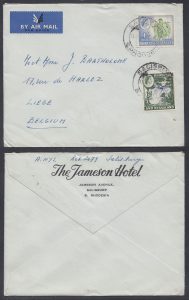
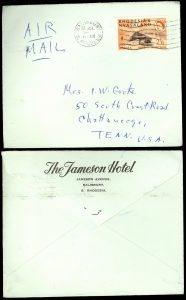
The Jameson Hotel

The Jameson Hotel

Harare (Salisbury)

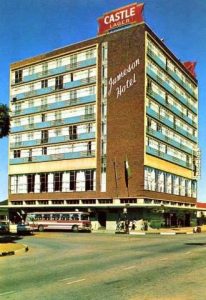
The Jameson Hotel is one of the grand old dames that have been part of Harare’s history and social scene since 1958. It was original part of the Ridgeway Group.

The Jameson employed, served and accommodated all and was thus not only the most hospitable hotel to non-European populations but one of the most liberal in the whole of Southern Rhodesia. The Jameson provided an elite option for important non-European guests.

Refurbished and enlarged in 1995, the Jameson Hotel still offers elegant and luxurious accommodation reminding one of bygone days.

Postcards

Reference

Contributors
  • Geoff Brakspear
  • James Gavin

FB

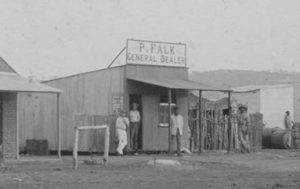
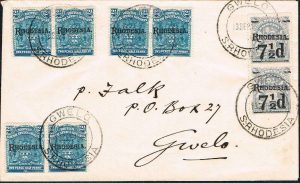
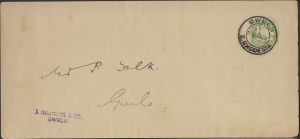
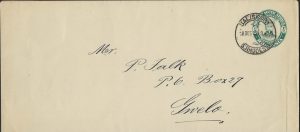
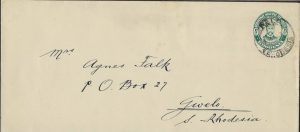
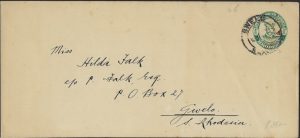
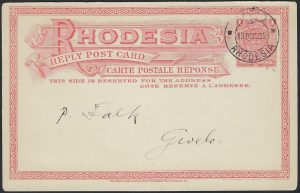
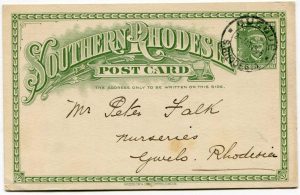
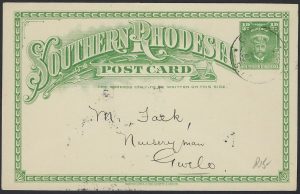
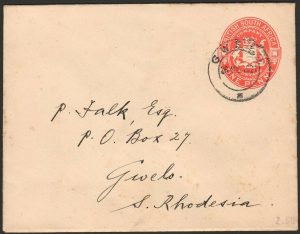
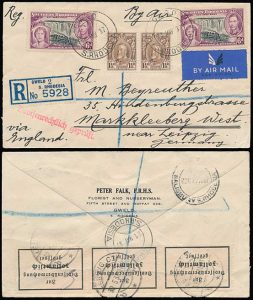
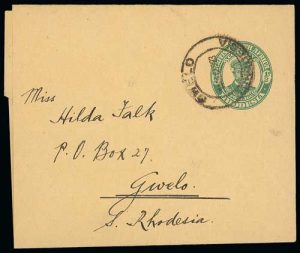
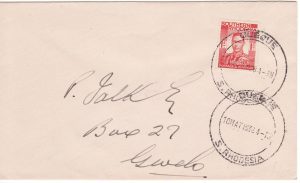
Peter Falk

Peter Falk

Gwelo

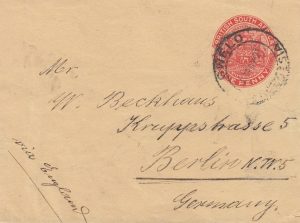
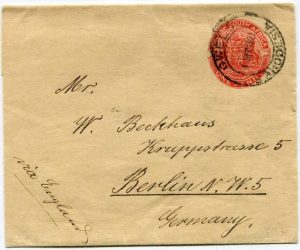
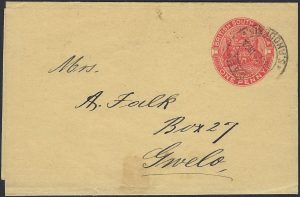
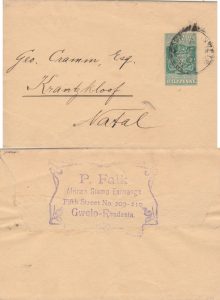
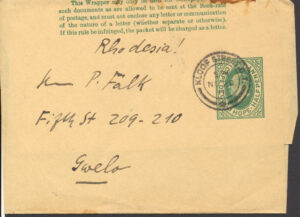
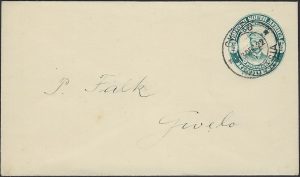
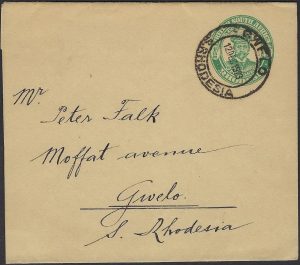
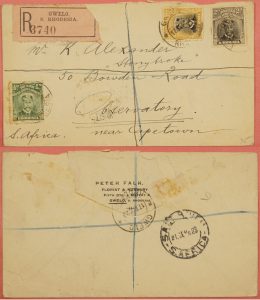
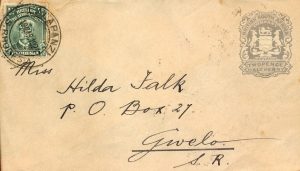
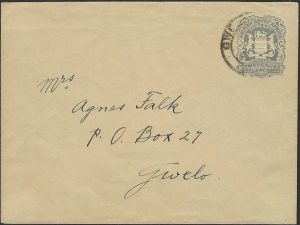
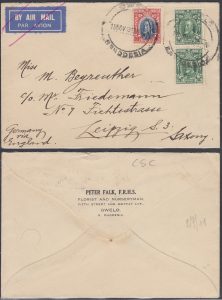
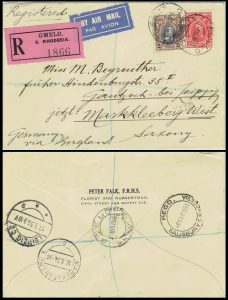
Peter Falk immigrated from Germany to Pietersburg, South Africa in 1892 with his wife Agnes. In 1894 he moved to Gwelo where he eventually opened a florist and nursery business.

References

Contributors
  • Geoff Brakspear
  • Adrian de Bourbon
  • James Gavin
  • Peter Gordon

FB

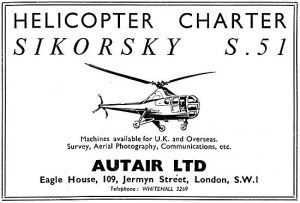
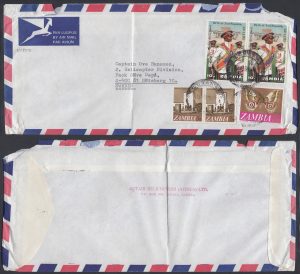
Autair Helicopters (Africa) Ltd

Autair Helicopters (Africa) Ltd

Lusaka

Autair Helicopters was established by William H Armstrong in 1953. By 1955, Armstrong established contracts for helicopter operations in Central Africa.

They established a branched in Lusaka, Zambia in the early 1970’s. The business was acquired by Court Line on 2nd July, 1970 and by 26th October, 1986 the company was wound-up following liquidation.

Contributors
  • James Gavin

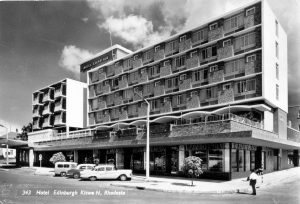
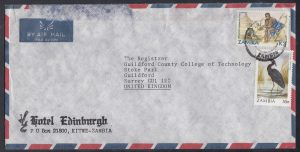
Hotel Edinburgh

Hotel Edinburgh

Kitwe

The Hotel Edinburgh was built and opened in 1960 just before independence. The hotel continues to trade today.

Contributors
  • James Gavin
1 32 33 34 35 36 51