Eagle Star Insurance Co., Ltd

Eagle Star Insurance Co., Ltd

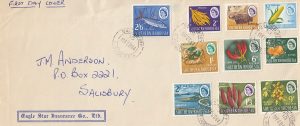
Eagle Star Insurance Co., Ltd was founded by Edward Mountain in 1904 as the British Dominions Marine Insurance Company, which operated as a marine insurance office in the five principal overseas Dominions. It started writing fire and accident policies in 1911 and life assurance policies in 1916.

It expanded rapidly in its early years acquiring the Eagle (founded by Sir William Rawlins in 1807) in 1916 and both the Sceptre(founded in 1864) and the Star (founded in 1843) in 1917. It was renamed the Eagle Star & British Dominions in 1917 and Eagle Star in 1937.

Eagle Insurance was born out of a merger between African Guarantee and Eagle Star to form Rhodesian Eagle in 1965.

Until 2010, Eagle Insurance was an Associate company of Zurich Insurance Company South Africa Limited.The company provides innovative and comprehensive insurance solutions for risks related to Motor, Marine, Aviation, Property, and Health Insurance.

References

Contributors
  • James Gavin

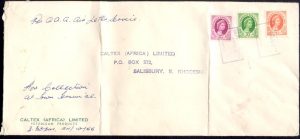
Caltex (Africa) Ltd

Caltex (Africa) Ltd

Salisbury


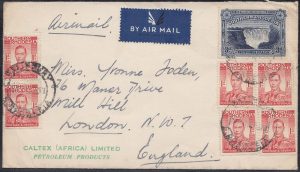
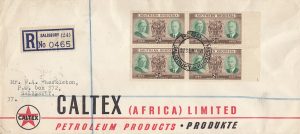
Caltex is a petroleum brand name of Chevron Corporation used in more than 60 countries in the Asia-Pacific region, the Middle East, and Southern Africa. It started in Southern Africa as the Texas Company (S.A.) Ltd before changing to Caltex (Africa) Ltd in 1941, then to Caltex Oil (S.A.) Ltd in 1964.

With the Unilateral Declaration of Independence (UDI), sanctions imposed by the United Nations Security Council on Rhodesia on 16th December, 1966 (extended in 1968 to a total economic boycott) saw oil directed from South Africa into Rhodesia in violation of the sanctions by British companies Shell and BP in arrangement with Caltex and Mobil. In 1972, the name changed to Caltex Oil (S.A.) Pty Ltd.

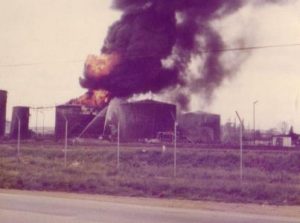
On 11th December, 1978, the Caltex refinery in Salisbury caught fire. A ZANLA unit penetrated the outskirts of Salisbury and fired a volley of rockets and incendiary device rounds into the main oil storage depot – the most heavily defended economic asset in the country. The storage tanks burned for five days, giving off a column of smoke that could be seen 80 miles (130 km) away. Half a million barrels of petroleum product (comprising Rhodesia’s strategic oil reserve) were lost.

Postcards

Radio Cards

Contributors
  • James Gavin
  • Keith Harrop

FB

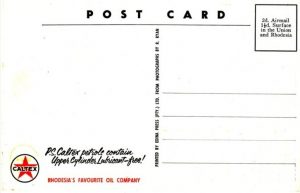
Postcards: Caltex (Africa) Ltd – Rhodesia’s Favourite Oil Company

Caltex (Africa) Ltd

Rhodesia’s Favourite Oil Company

No.sDescriptionEarliest PMK Date
N/ABridge over Kafue River.
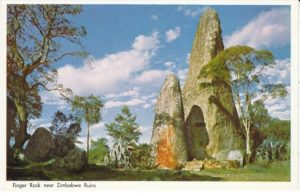
N/AFinger Rock near Zimbabwe Ruins.
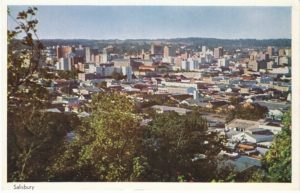
N/ASalisbury.
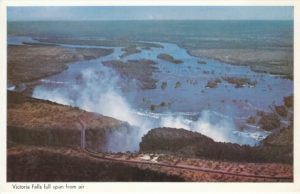
N/AVictoria Falls full span from air.

FB

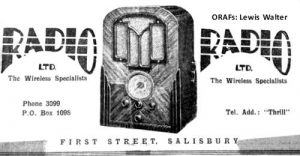
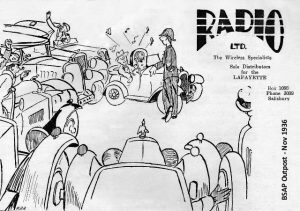
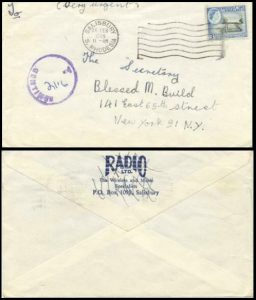
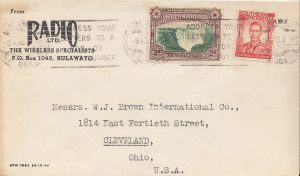
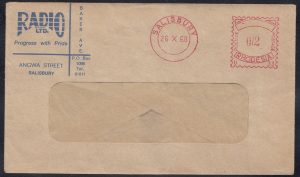
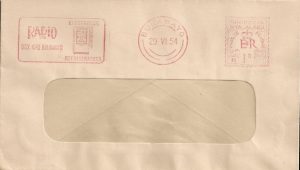
Radio Ltd

Radio Ltd

Salisbury

FB

Troutbeck Inn

Troutbeck Inn

Inyanga

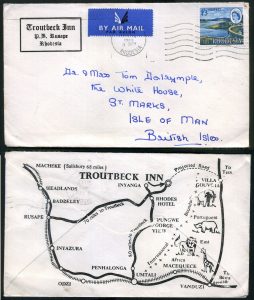
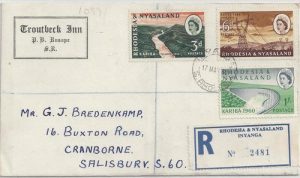
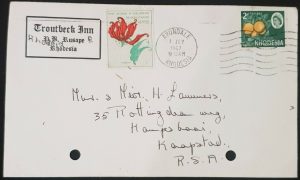
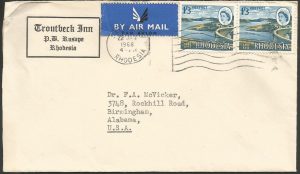
Built by Major Alfred Herbert MacIlwaine, a keen trout fisherman, in 1951 Troutbeck Resort comprises a country hotel (previously known as Troutbeck Inn) and adjacent time share chalets. It has a distinct mountain resort feel with a 9 hole golf course, bowling greens, volleyball, horse riding, tennis and squash courts, swimming pool, canoeing, children’s playground and a deep blue trout lake.

Troutbeck has been well maintained and visitors seeking to explore the scenic beauty off Nyanga are warmly welcomed. Thankfully some things never change and the fire in the deep set fireplace in the entrance hall, which has been burning since 01 March 1951, still burns bright thus embodying the spirit of Troutbeck and all it stands for.

Postcards

References

Contributors
  • James Gavin

FB

Midlands Hotel

Midlands Hotel

Gweru (Gwelo)

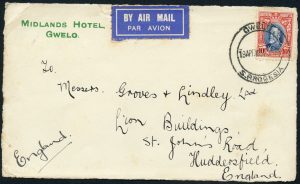
The Midlands Hotel was built in the year 1927 by the Meikle brothers and is one of the oldest hotels in Gweru (Gwelo).

During the 1970’s, management of the hotel passed over to the Southern Sun Hotel Pty Ltd.

By 2008, the hotel was about to be demolished. Due to the challenges faced by the hotel, the Zimbabwe Tourism Authority, which oversees the hospitality industry in the country, withdrew its three star recognition. However, after much protest, it was spared. The hotel is currently owned by Patrick Kombayi, a prominent Gweru businessman, ex-mayor, and politician known for his highly publicised criticism of the current government.

As a result of improvements, The Midlands Hotel clinched second position in the Zimbabwe National Chamber of Commerce’s Best Business enterprise of the year for 2011. The hotel has established adjacent bars to cater for the needs of locals and clients from outside the city including a state-of-the art Casino in a separate bar, while those who enjoy sports can watch it live in the sports bar.

References

Contributors
  • James Gavin
  • Walter Herdzik

FB

American Board Mission: Mount Selinda

American Board Mission

Mount Selinda

The American Board Mission (ABM or American Board) opened its first mission in Southern Rhodesia (Zimbabwe) in 1893. Two years earlier, ABM missionaries Rev. Wilcox and Dr. W.L. Thompson were on an exploratory trip from South Africa.  As fate would have it, on the boat to Beira, Portuguese East Africa (Mozambique), fellow passenger Cecil Rhodes overheard them talking about a site for a mission.  He responded by giving them a track of land on Zimbabwe’s eastern boarder.  On subsequent arrival to the designated area, the missionaries mistook the native African enunciation of the Chirinda forest as Silinda and called the mission site the Mount Silinda (Selinda) Mission.

Rev. and Mrs. John Marsh, arriving at Mt. Selinda in 1924, provided the following description:

“[W]e soon realized that the Mission was located in a U-shaped clearing which was surrounded by those soaring trees of mahogany…  They covered Mt. Silinda to the south and Gungunyana to the north, and the bottom of the U to the West.  But the U opened to the East upon a great view of the Zona valley, through which ran a small stream, which had its origin in the forest. … The Mission buildings were distributed on the grassy hillsides of the U clearing or opening. The road running down through the U to the school buildings in the center, and eventually the beautiful brick church.  … It was a fair-sized self-contained community.”

A significant early contribution of the American Board in Zimbabwe was establishing medical facilities and providing medical care to the surrounding area.In 1912, the dispensary became a full-fledged hospital, “Willis F. Pierce Memorial Hospital” (Mt. Selinda Hospital).

Another contribution was in the area of agriculture. Emory D. Alvord, a trained agriculturist, joined Mt. Silinda in 1919 and introduced western farming practices including use of fertilizers and irrigation schemes. In 1926, he left the mission to take up the position of Director of Native Agriculture for Southern Rhodesian.

Mail service to Mt. Selinda was initially every two weeks by postal runner to Melsetter (letters prior to 1924 often have a Melsetter a back stamp).  A branch post between Melsetter and Mount Selinda was established in 1897.  That same year Dr. Thompson, who had been appointed postal agent, received the first Mount Selinda date stamp canceler.  It incorrectly spelled Silinda – “Selinda,” and despite protests from Dr. Thompson, subsequent cancelers continued to use both spellings. In time, “Selinda” became the dominant spelling.  Motorized mail service began in 1929.

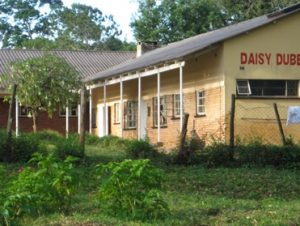
Today, under the direction of the United Church of Christ in Zimbabwe (UCCZ), Mt. Selinda comprises a church, primary and secondary schools with boarding facilities for boys and girls (Mount Selinda High School), farm, the Daisy Dube Children’s Home and the Willis F. Pierce Memorial (Mount Selinda) Hospital.

Covers

Facilities

References

Contributors
  • Mark Loomis
  • Paul Peggie
  • James Gavin

FB

American Board Mission: Chikore Mission

American Board Mission

Chikore

Rev. and Mrs. Wilder of the American Board Mission (American Board or ABM) opened Chikore Mission in 1895.  Chikore is located in Manicaland Province, Southern Rhodesia (Zimbabwe), 18 miles northwest of its sister mission station at Mount Silinda (Selinda).  Chikore initially consisted of three farms on a total 18,000 acres on which were located eleven kraals (small villages) and a small school.

Dr. William T. Lawrence joined Rev. and Mrs. George Wilder at Chikore in 1900.  Dr. Lawrence soon opened up a small hospital there and would go on to serve in Zimbabwe for the next 46 years.  A Secondary School was opened at Chikore In 1955.

Before 1927, letters to or from the Chikore Mission were generally mailed through Mt. Selinda. A post office was established in the small village of Craigmore, a little over a mile from the Chikore Mission, in 1927. Thereafter, missionary mail was generally posted at Craigmore, with service by runner from Chipinga (24 miles away).

In the 1960s and 1970s, missionaries from the American Board (now known as the United Church of Christ – UCC) promoted racial integration of education and hospital services and many publicly opposed the policy of apartheid.  This resulted in the deportation of three UCC missionary families in the 1960s. One of those families was Rev. and Mrs. Abbott (at the time Chikore Mission school superintendent) who were deported in 1966.

“One source of trouble for the school and mission station at Chikore where Mr. Abbott and his family were located, was the racial integration of the entire establishment. Chikore had six missionary teachers and 18 Africans.  The secondary school program was headed by an African and was “integrated as much as possible.” This didn’t sit well with the European community at Chipinga, 25 miles away, he explained. “They didn’t like the secondary school because they felt we were educating the Africans beyond their abilities.”.

Today – The United Church of Christ in Zimbabwe (UCCZ) operates a school and 50-bed hospital at Chikore serving a remote area of Zimbabwe consisting of 44 villages.

Stationery

References

Contributors
  • Keith Harrop
  • Mark Loomis

FB

Cecil Hotel

Cecil Hotel

Umtali

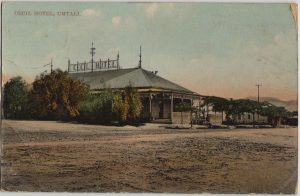
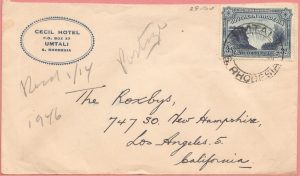
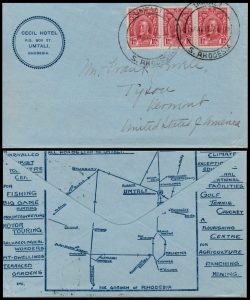
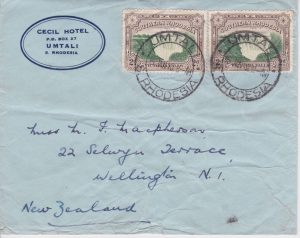
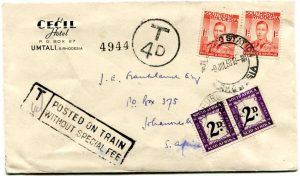
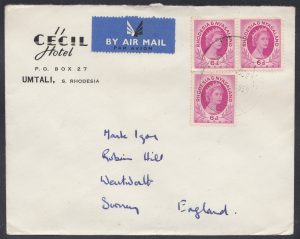
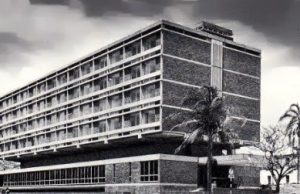
Cecil Hotel was originally opened c.1890. In 1897 a new building was erected (as above) by Mssrs Snodgrass and Mitchell in preparation for the railway. The first Cecil Taxi, a 1929 Dodge, was used solely to go from the Cecil Hotel to the railway station and back. The hotel eventually became part of Miekle’s Associated Hotels.

In the 1950’s a third version of the hotel was built and in November, 1974, at a cost of $1.7m.

References

Contributors
  • Keith Brodovcky
  • James Gavin
  • Walter Herdzik

FB
Meikle’s Associated Hotels

Meikle’s Associated Hotels

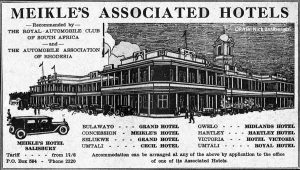
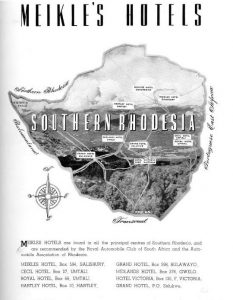
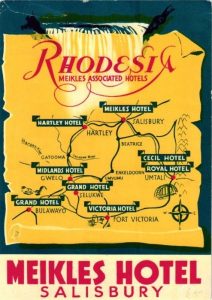
Meikle’s Hotel was established in 1915.  It was the brainchild of Thomas Meikles who envisioned a commitment to the “highest possible standard of service and product” – something that has become enshrined in the Meikles culture.

Branches

Reference:

Contributors
  • James Gavin
  • Walter Herdzik

FB

1 87 88 89