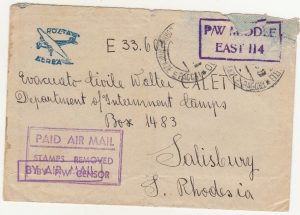
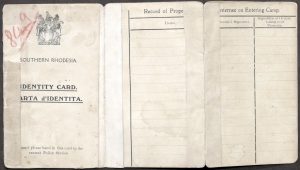
Internment Camps: Southern Rhodesia – Hartley Temporary Camp

Southern Rhodesia

Hartley Temporary Camp


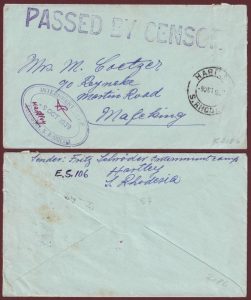
The declaration of war against Germany on 3 September 1939 by Britain triggered off the internment process, as the former was accompanied by a proclamation, whose message was repeated in the colonies newspapers: Warning all enemy subjects within the colonies to register details of their birth, passport and property owned, surrender all arms, ammunition and yourself to the Member-in-Charge of the nearest police station.

Following this announcement, internment on the African continent proceeded apace. In Tanganyika, 4 000 Germans in the Iringa region, were quickly rounded up and dispatched to the Union of South Africa. Their women and children were destined for Southern Rhodesia.

On the night of 3-4 September, the Department of Ministry of Justice and Defence,
through the Police Criminal Investigations Department (CID) and army, moved swiftly on all ‘Starred Germans’, capturing 508 who were then gathered at Chikurubi Prison. After a few days interrogation, many were released on parole leaving 52 men and a woman under restriction. These were moved to a temporary holding camp and former primary school in Hartley, 100 kilometres west of the Salisbury, where they were joined by 64 aliens from
Northern Rhodesia.

At this time, the first selected site in Salisbury, east of KG VI Barracks, was still under construction. It became ready on 12 October, when it was opened as Internment Camp No. 1 (General).

Markings

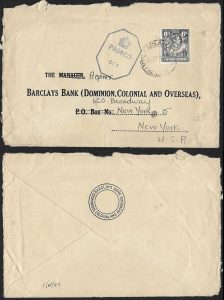
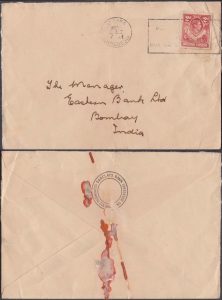
Covers

Contributors
  • Keith Harrop

FB

British Empire Service League

British Empire Service League

Bulawayo

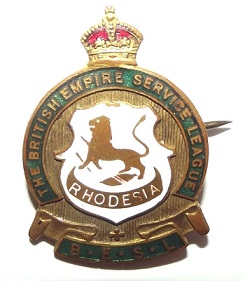
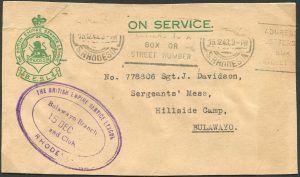
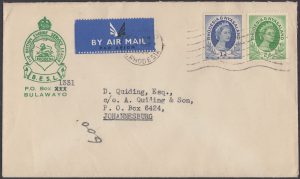
The British Empire Service League (BESL) was originally formed in Rhodesia in 1918 as Comrades of the Great War. The BESL was also present in Northern Rhodesia and Nyasaland. The league, established by Lord Haig in the Dominions, was a counterpart of the Royal British Legion that was established in 1921 to support Service men and women, ex-serving personnel and their families.

Contributors
  • James Gavin

FB

Maison Lentin Ltd

Maison Lentin Ltd

Kitwe


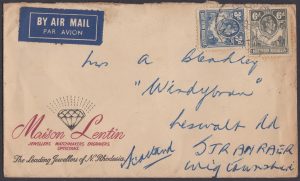
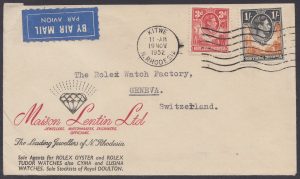
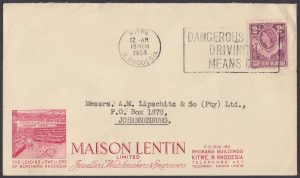
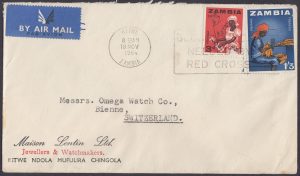
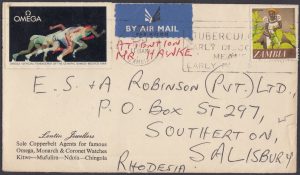
Maison Lentin Ltd (Lentin Jewellers) was a jeweller, watchmaker, engraver and optician. During the 1960’s they were the sole agent in the Copperbelt for Omega, Monarch and Coronet watches.

Contributors
  • James Gavin

FB

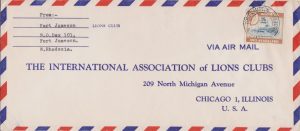
Aerogrammes of British Central Africa

Aerogrammes of British Central Africa

This listing will deal with the special printed forms used in the three countries of British Central Africa as a means of providing an inexpensive air mail service using a custom designed air letter form. It is not confined to postal stationery (that is stationery produced bearing an imprinted valid postage stamp and sold by or on behalf of a postal authority) but will include air letter sheets and aerogrammes issued without an imprinted stamp, provided there is evidence of the use of that form of air letter sheet or aerogrammes in one or more of the countries.

As and when new information is received the relevant chapters will be updated and republished. Please note that this could involve the renumbering of the items within a chapter. Be sure to always use the latest update, which will be dated.

If you would like to contribute any information, please Contact Us.

Many thanks,
Adrian de Bourbon
November 2019

Chapters

Contributors

  • Hugh Amoore
  • Sean Burke
  • Geoff Brakspear
  • Tony Banks
  • James Gavin
  • Keith Harrop
  • Barry Horne
  • Narendrha Morar
  • Dave Trathen
  • Otto Peetoom
  • Allan Rendle
  • Stuart Ross
  • Mark Thomas

South African Breweries Ltd: Ndola

South African Breweries Ltd

Ndola

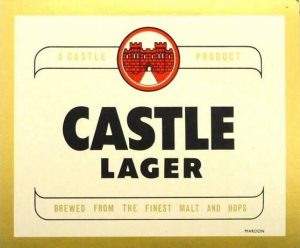
After World War II, South African Breweries Ltd looked to expand into Rhodesia. In 1951, the company opened up a new brewery in Ndola to serve the Northern Rhodesia, Belgian Congo and East African markets. This was the Castle Brewery.

Contributors
  • James Gavin

FB

South African Breweries Ltd

South African Breweries Ltd

South Africa

The South African Breweries Limited was founded in 1895 as Castle Brewery to serve a growing market of miners and prospectors in and around Johannesburg. Two years later, it became the first industrial company to list on the Johannesburg Stock Exchange and the year after (1898) it listed on the London Stock Exchange.

In 1950, it relocated its headquarters and control from London to South Africa. In 1955, Castle Brewing purchased the Ohlsson’s and Chandlers Union breweries, and the group was renamed South African Breweries.

From the early 1990s onward, the company increasingly expanded internationally, making several acquisitions in both emerging and developed markets. In 1999, it formed a new UK-based holding company, SAB plc, and moved its primary listing to London. In May 2002, SAB plc acquired Miller Brewing, forming SABMiller plc.

It is now a major brewery headquartered in Johannesburg, South Africa and was a wholly owned subsidiary of SABMiller until its interests were sold to Anheuser-Busch InBev on 10 October 2016. After the deal closed, the new company’s name changed slightly, to Anheuser-Busch InBev SA/NV (abbreviated as AB InBev).

Breweries

  • Bulawayo
  • Ndola
  • Salisbury

References

  • Multinationals and the Restructuring of the World Economy – Michael Taylor and Nigel Thrift.
Contributors
  • James Gavin

FB

Barclays Bank: Northern Rhodesia – Luanshya

Barclays Bank

Northern Rhodesia – Luanshya

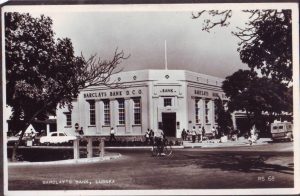
Barclays Bank: Northern Rhodesia – Lusaka

Barclays Bank

Northern Rhodesia – Lusaka

World War 2: Internment Camps – Southern Rhodesia

Internment Camps

Southern Rhodesia

During World War 2, Southern Rhodesia interned over 12,000 German, Austrian and Italian ‘enemy aliens’. In addition, they also hosted Polish and Persian refugees. The internees came in two waves: first wave were Camps No.1 & No.2, and second wave were the other camps. The first were nationals from the Axis nations, and second were the Italian internees and Polish refugees.

Initially, the Union of South Africa was to be the largest host of internees including those taken from Southern and Northern Rhodesia, and Nyasaland. However, General Smuts was cautious of the large local support of Nazi Germany and eventually compromised on only taking men. Southern Rhodesia welcomed the role of interning women and children and had been secretly preparing for the role in the mid-1930’s.

At the outbreak of war, 709 enemy aliens were identified in Southern and Northern Rhodesia. This role was administered by the Ministry of Justice and Defence through the Police Criminal Investigations Department (CID) and a small ‘Agricultural’ army unit. Inmates were sent from Tanganyika and on the night of 3 September 1939, the CID rounded up 508 prisoners in Southern Rhodesia and placed them in Chikurubi Prison. Many were released on parole although 52 were placed on restriction. These inmates were later moved to the internment camps along with 64 persons from Northern Rhodesia.

Sites chosen for internment camps and refugee camps were considered to faster development of rural towns along rail lines, as well as to contribute to commercial farming and construction projects. The sites were managed by The Southern Rhodesia Internment Camp corps drawn exclusively from Medical Category B and supported by African Askaris. The camps were run under guidelines sent from Britain. The camps were directed to be cheaply made – similar to camps used for the mines and were intended to each hold 500 inmates. The first camp was opened on 12 October 1939.

Early in 1941, London instructed Salisbury to prepare to receive some 5,000 Italian internees from Abyssinia and Somalia as well as 1,000 refugees from Poland. Following this request, the Rhodesian Treasury authorised the establishment of another three internment camps and three refugee settlements.

In October 1943, the Mussolini regime collapsed and repatriation began by ship through South Africa and as the defeat of Germany loomed closer, it became a torrent. By 1945 Treasury began closing camps and dispersing the remaining inmates and refugees.

After the war in 1946-1947, Southern Rhodesia inherited the benefits of these camps including Vengere Township in Rusape, Diggleford School near Marondera, Beatrice Cottages in Mbare, certain structures in the King George VI Barracks in Salisbury, a government farm in Gatooma (later converted to the Cotton Research Board Training Institute), fully equipped workshops in Umvuma and buildings outside Masvingo (including an Italian church).

Internment Camps

References

1 3 4 5 6 7 37