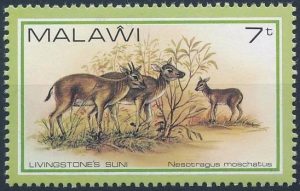
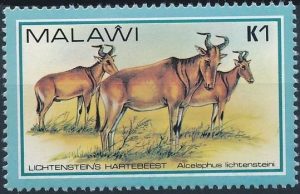
1981 – Wildlife

Malawi

1981 – Wildlife

Details

  • Date of Issue: 4th February, 1981
  • Date Withdrawn:
  • Date Invalidated:
  • Designer: G. Drummond
  • Printer: House of Questa
  • Process: Lithographed
  • Paper: 
  • Watermark: Cockrels (sideways)
  • Perf: 14
  • Cylinders:
  • Sheet:
  • Booklet: N/A
  • Quantity:

First Day Covers

Maxim Cards

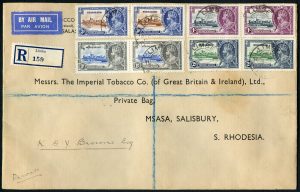
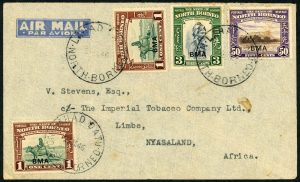
The Imperial Tobacco Company

The Imperial Tobacco Company

Limbe

The Imperial Tobacco Company was created in 1901 through the amalgamation of 13 British tobacco and cigarette companies: W.D. & H.O. Wills (the leading manufacturer of tobacco products at that time), John Player & Sons, and 11 other independent family businesses, which were in competition with companies from the United States by the American Tobacco Company.

In 1902, the Imperial Tobacco Company and the American Tobacco Company agreed to form a joint venture: the British-American Tobacco Company Ltd. The parent companies agreed not to trade in each other’s domestic territory and to assign trademarks, export businesses, and overseas subsidiaries to the joint venture.

In the same year, Sharrer’s landholdings in Cholo district were sold to the British Central Africa Company Ltd. For the first two decades of the 20th century, the area remained undeveloped and relatively under-populated. With the construction of the Shire Highlands Railway from Port Herald to Blantyre, the estates began to grow Flue-cured tobacco, and The British Central Africa Company Ltd was able to interest the Imperial Tobacco Company in Nyasaland tobacco.

The Imperial Tobacco Company imported good quality seed and brought in experts, at first aiming to produce cigar leaf, but later concentrating on flue-cured leaf for cigarettes. By 1907, the British Central Africa Company had 14 barns for flue-curing tobacco, out of a total of 119 such barns in the protectorate. In 1908, the Imperial Tobacco Company opened a buying and packing station at Limbe.

At the end of the First World War, the company started a scheme for settling ex-servicemen on its undeveloped land as tobacco growers. About 50 men took up farms, usually of 1,000 acres. The largest tobacco farm was owned by I. Conforzi (Tea and Tobacco) Ltd.

Between 1920 to 1924, many servicemen failed as none had a farming background or any farming training. Some survived until a drastic fall in prices for flue-cured tobacco after 1927, but then took up whatever employment they could find. After 1927, the production of dark-fired tobacco by African farmers, either estate tenants or on Crown lands, overtook that of flue-cured tobacco, and the British Central Africa Company, which already had a scheme for its tenants to grow tobacco under supervision, became mostly a broker for the tobacco those tenants produced.

In 1973, the Imperial Tobacco Company, having become increasingly diversified by acquisition of (amongst others) restaurant chains, food services and distribution businesses, changed its name to Imperial Group.

Contributor
  • James Gavin
  • Walter Herdzik

FB
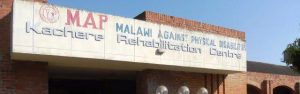
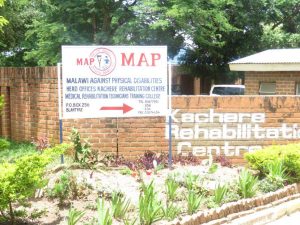
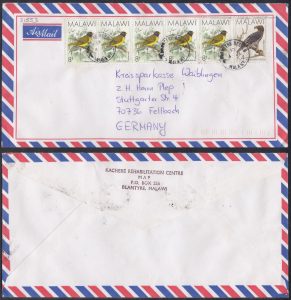
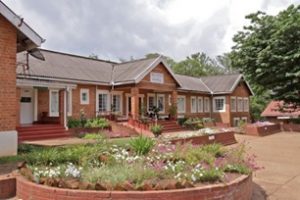
Kachere Rehabilitation Centre

Kachere Rehabilitation Centre

Blantyre

Kachere Rehabilitation Centre is part of the Malawian non-Government organisation called Malawi Against Physical Disabilities (MAP). MAP was already running outreach rehabilitative services by the early 1980’s reaching both the urban and rural communities throughout Malawi.  As the organisation carried out these services, in the mid 80’s they realized that some clients needed intensive rehabilitation, and that just the monthly visits they were making to each place were not sufficient for those with acute rehabilitation needs.

This is when the idea of building a rehabilitation centre came in. Various individuals, local companies and international organisations were approached to assist with the construction of the Centre’s funding. Among the international organizations that were approached with constructing the Centre were Christoffel Blindenmission the European Community, Christoffelblinden Mission and the Beit Trust.

Construction of the Centre took approximately two years, and in August 1992 the Centre was completed and was ready to start its operations.  Unfortunately Christoffel Blinden mission who offered to provide  the initial staffing took time to identify the staff until 1994. In 1994 therefore Christoffel blindenmission took up the full financing of the Centre. Until 1998 when they phased out.

Kachere Rehabilitation Centre is Malawi’s only medical facility designed to provide intensive medical rehabilitation to people who have met with a disabling condition such as stroke, road traffic accident, industrial accident, tumours and disease.The Centre is situated along Chipatala Avenue opposite the country’s main referral hospital, Queen Elizabeth Central Hospital, in the commercial city of Blantyre.

Since the target group of the Centre is the poor, all rehabilitation and nursing services are provided at no cost to all admitted patients.  Food is also provided at no cost to 90% of the patients.  However, there are a few patients who can afford to pay for their meals and other private room facilities; these are asked to pay an appropriate fee.  These make up only 10% of the clients.

Reference

Contributors
  • James Gavin

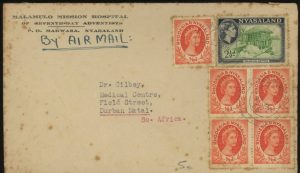
Malamulo Mission: Malamulo Mission Hospital

Malamulo Mission

Malamulo Mission Hospital

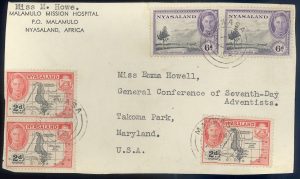
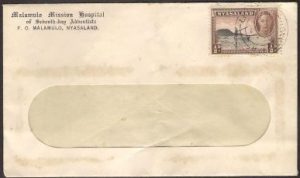
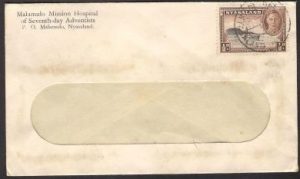
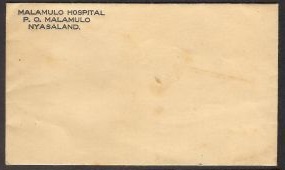
Medical work at Malamulo Mission began in 1915 with the opening of a medical clinic by Irene Fourie, a hydro therapist from the United States. The level of medical service significantly increased in 1925 with the arrival of Dr. Carl Birkenstock from South Africa and construction of new buildings.  One of Dr. Birkenstock’s largest contributions was in the treatment of lepers.  In response to the increasing number of leper patients, a separate facility (“leper colony” or leprosarium) was built on the mission site.  By 1962, the leprosarium was treating 300 in-patients and 250 outpatients.  The facility was closed in 1979.

The lack of trained medical staff led to the founding of what is now the Malamulo Medical School (Malamulo College of Health Sciences).  A 3-year hospital assistant course was opened in 1935.  A 4-year medical assistants program and training for nurses and midwifery were later added.

Malamulo Hospital today is a 200-bed facility providing preventative health care services and specialized services in women’s and child’s health, infectious diseases, chronic disease and general surgery.  Typical cases include pneumonia, malaria, TB, HIV complications, dehydration and meningitis.  The hospital is managed by Adventist Health International and hosts the Loma Linda University Field Station.  The hospital also has a 5-year surgical training program accredited through the Pan-African Academy of Christian Surgeons (PAACS).

References

Contributors
  • James Gavin

FB

Seventh-Day Adventist Church: Malamulo Mission

Seventh-Day Adventist Church

Malamulo Mission

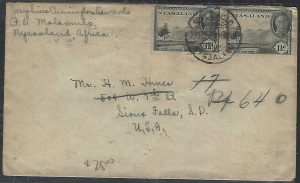
Malamulo Mission originally started as Plainfield Mission in 1899. Located 40 miles South of Blantyre in Makwasa, Southern Thyolo District of Malawi (formerly Nyasaland), Malamulo has served as an important base from which SDA missionary efforts have expanded to other parts of Malawi and surrounding countries.

Administration of Plainfield Mission and school passed to Joel C. Rodgers in 1907 and the mission changed its name in to “Malamulo” from the Chichewa word for “laws” or “the commandments.” Thomas Branch, who was fundamental in establishing the workings of Plainfield Mission, returned to the United States in 1908 due to his wife’s ill health. By 1910, the farm had expanded to 2000 acres with a heard of cattle.  There were 12 “out-schools” with a total enrollment of over 400 students. A teacher-training course was introduced in 1925.

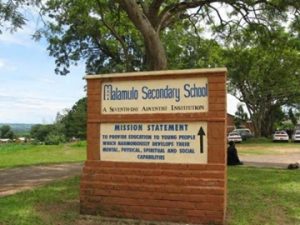
In 1947-48, secondary education and a 2-year ministerial training program were begun.  As a consequence of these developments, the school became known as the Malamulo Training Institute, later Malamulo College.  The training and ministerial schools were closed in 1972 for lack of funds.  The school’s name was changed to “Malamulo Secondary School” in 1991.

Malamulo Press was established in 1926 by printing tracts and other materials on a small hand press.  In the 1930’s the press moved to a larger building and operations were expanded to include commercial printing.  The name changed in 1965 to Malamulo Publishing house.

The other, and perhaps most significant, contribution of Malamulo has been the development of the Malamulo Hospital, which began as a clinic in 1915.

References

Contributors
  • Mark Loomis

FB

United Nations

United Nations

The name “United Nations”, coined by United States President Franklin D. Roosevelt was first used in the Declaration by United Nations of 1st January 1942, during the Second World War, when representatives of 26 nations pledged their Governments to continue fighting together against the Axis Powers.

In 1945, representatives of 50 countries met in San Francisco at the United Nations Conference on International Organization to draw up the United Nations Charter. Those delegates deliberated on the basis of proposals worked out by the representatives of China, the Soviet Union, the United Kingdom and the United States at Dumbarton Oaks, United States in August-October 1944.

The Charter was signed on 26 June 1945 by the representatives of the 50 countries. Poland, which was not represented at the Conference, signed it later and became one of the original 51 Member States.

The United Nations officially came into existence on 24 October 1945, when the Charter had been ratified by China, France, the Soviet Union, the United Kingdom, the United States and by a majority of other signatories. United Nations Day is celebrated on 24 October each year.

Agencies

Permanent Missions

Programmes

Stamp Issues

Reference

Contributors
  • James Gavin

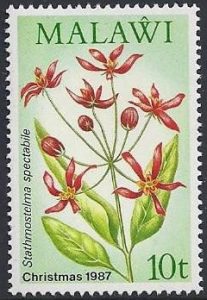
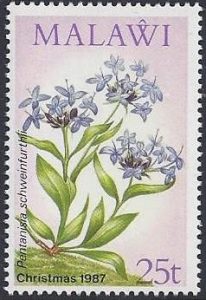
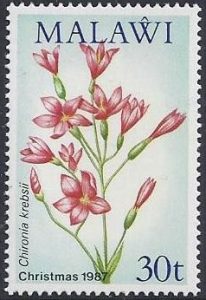
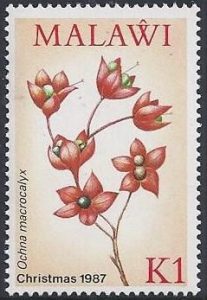
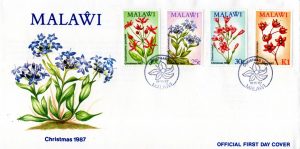
1987 – Christmas (M)

Malawi

1987 – Christmas

Details

  • Date of Issue: 19th October, 1987
  • Date Withdrawn:
  • Date Invalidated:
  • Designer: 
  • Printer: Harrison & Sons Ltd, London
  • Process: Lithographed
  • Paper:
  • Watermark: N/A
  • Perf: 14
  • Cylinders:
    • 1A 1A 1A 1A/1B 1B 1B 1B
    • 1C 1C 1C 1C/1D 1D 1D 1D
  • Sheet: 
  • Booklet: N/A
  • Quantity:

Production Details

First Day Covers

1987 – Hippopotamus

Malawi

1987 – Hippopotamus

Details

  • Date of Issue: 24th August, 1987
  • Date Withdrawn:
  • Date Invalidated:
  • Designer: Courvoisier
  • Printer: Courvoisier
  • Process:
  • Paper: Granite
  • Watermark: N/A
  • Perf: 12.5
  • Cylinders:
  • Sheet:
  • Booklet: N/A
  • Quantity:

Production Details

First Day Covers

Other Covers

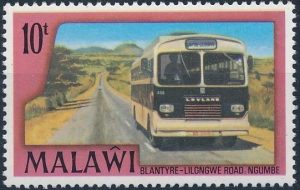
1977 – Transport

Malawi

1977 – Transport

Details

  • Date of Issue: 12th July, 1977
  • Date Withdrawn:
  • Date Invalidated:
  • Designer: Harrison and Sons Ltd
  • Printer: Walsall
  • Process: Lithography
  • Paper:
  • Watermark: Cockerels (sideways)
  • Perf: 14.5 x 14
  • Cylinders:
  • Sheet:
  • Booklet: N/A
  • Quantity:

Production Details

First Day Covers

FB

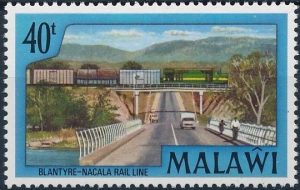
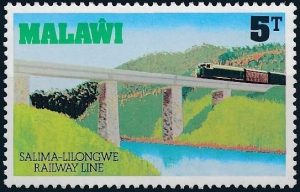
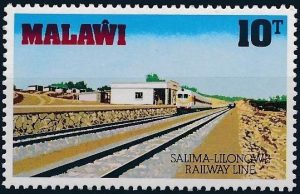
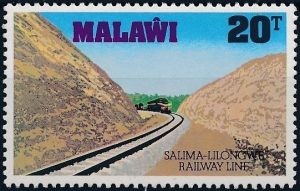
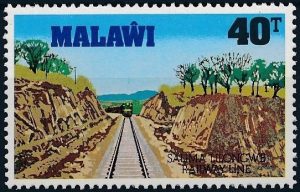
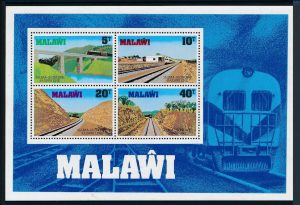
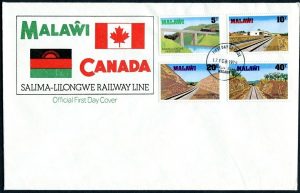
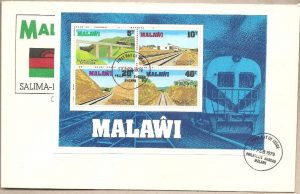
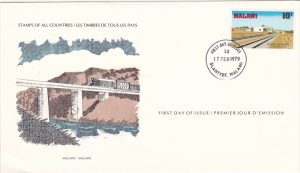
1979 – Salima-Lilongwe Railway Line

Malawi

1979 – Salima-Lilongwe Railway Line

Details

  • Date of Issue: 17th February, 1979
  • Date Withdrawn:
  • Date Invalidated:
  • Designer: J.W.
  • Printer: House of Questa
  • Process: Lithography
  • Paper:
  • Watermark: Cockerels (sideways)
  • Perf: 14.5
  • Cylinders:
  • Sheet:
  • Booklet: N/A
  • Quantity:

First Day Covers

Other Covers
1 16 17 18 19 20 27