Solomon Samuel Grossberg

Solomon Samuel Grossberg

1890-1964

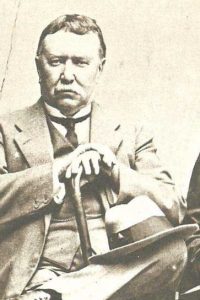
Solomon Samuel Grossberg was born in 1890. His place of birth is listed as a number of places including Latvia, Lithuania and Russia. He was the younger son of Abraham Grossberg of Plumtree and he was a prominent Jewish member in the Rhodesian community.

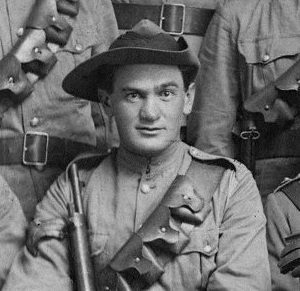
Solomon was a financier and businessman who ran a successful wholesale business in Bulawayo, S. S. Grossberg. During WWI he was part of the Jewish Rhodesian Reserves. On 13th June, 1946 he made the King’s Birthday Honours for services in connection with benevolent and social welfare movements.

Solomon died of heart related issues on 4th July, 1964.

References

  • An African Trading Empire: The Story of the Susman Brothers and Wulfsohn 1901-2005 – Hugh Macmillan

Coghlan & Welsh

Coghlan & Welsh

Bulawayo

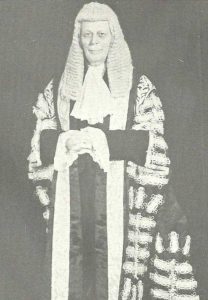
In 1902, the firm of Frames & Coghlan was dissolved after Percy Ross Frames left for Johannesburg citing the poor economic conditions in Rhodesia. Allan Ross Welsh became a partner of the firm on 1st January, 1903 and the practice became known as Coghlan & Welsh.

Coghlan & Welsh continues today and is one of the oldest and most established firms in Bulawayo in particular and in Zimbabwe as a whole.

Revenue

References

Contributors
  • James Gavin

Zambia Geographical Association

Zambia Geographical Association

Lusaka


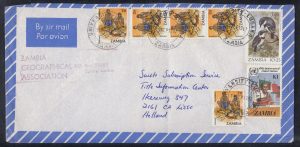
The Zambia Geographical Association was founded in August, 1967 to encourage scientific research and stimulate interest in geography among the general public. The first Annual Conference was held between 21st – 23rd June, 1968 at the University of Zambia in Lusaka.

Contributors
  • James Gavin

Rhodesian Publications Ltd

Rhodesian Publications Ltd

Salisbury

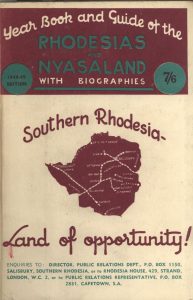
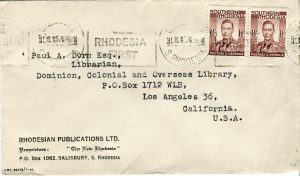
Rhodesian Publications Ltd was established in 1937 and was the printer of the Year Book and Guide of the Rhodesias and Nyasaland.

Contributors
  • James Gavin
  • Sean Burke

Premier Silk Bazaar Ltd

Premier Silk Bazaar Ltd

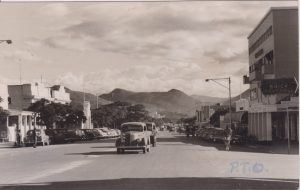
Umtali

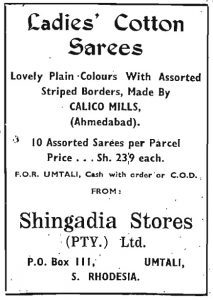
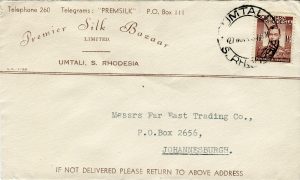
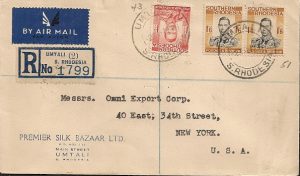
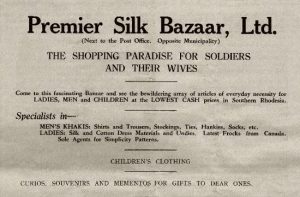
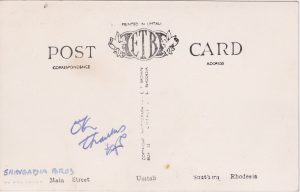
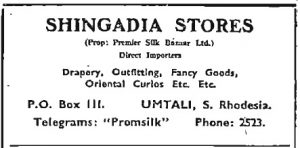
Premier Silk Bazaar Ltd was established in 1912 by Jadavjee Kanjee Shingadia (1883-1971). The business dealt in drapery, outfittings, fancy goods and oriental curios.

Jadavjee had arrived in Rhodesia from India in 1900, eventually settling in Umtali. In 1913 he was joined by his wife Malee Shingadia (1889-1954). He had two sons; Laljee (b.1917), Arjun (b.1921-2005) and three daughters; Ladoo (b.1920), Seeta (b.1928), Lalita (b.1927) – all whom were shareholders in the firm. In 1935 his eldest son, Laljee, and his wife (Keshar) moved to Southern Rhodesia where he became a director of the company.

In 1954, Jadavjee’s wife, Malee Shingadia died. By 1956, Laljee had established Laljee Shingadia Pvt Ltd opposit Hodgson & Myburgh in Main Street, Umtali. The business offered drapery, outfitting, kitchen hardware and tailoring services.

By 1957, Premier Silk Bazaar Ltd was now trading as Shingadia Stores Pty Ltd.  In addition, it ran Premier Wholesalers for the African trade. This part of the business dealt with prints, khaki, calico, blankets, shoes and fancy goods.

Jadavjee was the official Indian interpreter in Umtali, secretary for the Umtali Hindu Association and secretary for the British Indian Association.

Postcards

References

Contributors
  • James Gavin
  • Sean Burke
  • John Irving
  • George Stewart

FB

Ludgates

Ludgates

Gwelo

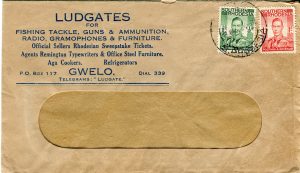
Ludgates was a department store in Gwelo, owned and operated by brothers Ted Prior Morgan and Fred Hilton Morgan after WWII. Ted’s wife Georgina Daisy Morgan also worked in the store. In the 1960’s Ludgates was sold to OK Bazaars.

References

Contributors
  • Sean Burke

The Rhodesia Trading Company

The Rhodesia Trading Company

The Rhodesia Trading Company was registered on the London Stock Exchange in 1903, originally as The Rhodesia Cold Storage and Trading Company Limited. It changed its name to the Rhodesia Trading Company Limited in October 1908, and was put into voluntary liquidation in August 1926.

The company was the creation of Major (later Sir) Frank Johnson (1866-1943). He had two objects in view: firstly, the amalgamation of a number of cold storage and trading companies in the new colony and Portuguese East Africa and, secondly, their association with a ranch in North Western Australia whence they could draw on supplies of fresh meat, transported in their own refrigerated ship.

The chief participants in the amalgamation were two Rhodesian trading companies, H.J. Deary & Company Ltd. and Arthur Suter & Company Ltd. Other African businesses involved were the Beira Cold Storage Company and the Rhodesia Supply and Cold Storage Company. The Australian company was the North West Australian Land and Cold Storage Company Limited.

It was the intention of the Rhodesia Cold Storage Company to start a subsidiary company wholly owned by itself, the Austral-Rhodesian Steamship Company, to carry meat from Australia as well as general cargo on the return trip from Africa with Beira as the principal port of entry for Southern Rhodesia. The extensive cold storage plant at Beira owned by the Mashonaland Railway Company (and formerly leased to the Beira Cold Storage Company) was brought into the new company. Cecil Rhodes had suggested the connection with Australia taken up by Frank Johnson. It was hoped that Australia might one day be a source of live as well as dead stock.

It was also hoped that the greater availability of meat would alleviate problems encountered in the recruitment of native labour for work in the mines. It had been found that money payments were an insufficient incentive to the Africans, but that improved rations might persuade them to stay for longer periods. It was therefore proposed that cold stores should be erected at the mines, supplied by the Rhodesia Cold Storage Company, so that meat could be regularly included in the labourers’ diet.

Each company in the merger were given a large block of shares. However, the valuation placed on these separate businesses was excessively high. The payments made for good-will were in all cases too much. As the company recorded increasing deficits, the original agreements came under increasing criticism which resulted in a court dispute that the Rhodesia Cold Storage Company had been deliberately misled as to the Beira Cold Storage Company’s profitability.

The commercial record of the Rhodesia Cold Storage Company, later the Rhodesia Trading Company was poor. After the company had been reconstructed in various ways, its name was changed in 1908 to the Rhodesia Trading Company to reflect the shedding of its cold storage business. A new debenture issue was planned for 1909 to afford the company a fresh start. A profit was not returned until 1908-9, when it was only £1,452. From 1909 to 1912 the company showed a profit, the best figure being £12,991 made during the eighteen months from September 1910 to March 1912. This trend was not maintained during the years 1913-15 with only small profits recorded during 1916-19. Adequate controls over stock and accounting were not developed until 1915.

Blunders in purchasing policy, inflated salaries, lack of capital for infrastructure, no systems required for the proper functioning of a business that had as many as thirteen branches at one time, all led to the company’s downfall.

Postcards

Revenue

References

FB

The Imperial Tobacco Company

The Imperial Tobacco Company

Limbe

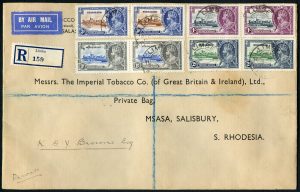
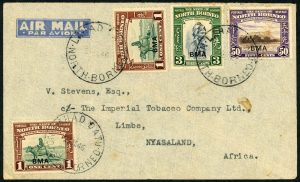
The Imperial Tobacco Company was created in 1901 through the amalgamation of 13 British tobacco and cigarette companies: W.D. & H.O. Wills (the leading manufacturer of tobacco products at that time), John Player & Sons, and 11 other independent family businesses, which were in competition with companies from the United States by the American Tobacco Company.

In 1902, the Imperial Tobacco Company and the American Tobacco Company agreed to form a joint venture: the British-American Tobacco Company Ltd. The parent companies agreed not to trade in each other’s domestic territory and to assign trademarks, export businesses, and overseas subsidiaries to the joint venture.

In the same year, Sharrer’s landholdings in Cholo district were sold to the British Central Africa Company Ltd. For the first two decades of the 20th century, the area remained undeveloped and relatively under-populated. With the construction of the Shire Highlands Railway from Port Herald to Blantyre, the estates began to grow Flue-cured tobacco, and The British Central Africa Company Ltd was able to interest the Imperial Tobacco Company in Nyasaland tobacco.

The Imperial Tobacco Company imported good quality seed and brought in experts, at first aiming to produce cigar leaf, but later concentrating on flue-cured leaf for cigarettes. By 1907, the British Central Africa Company had 14 barns for flue-curing tobacco, out of a total of 119 such barns in the protectorate. In 1908, the Imperial Tobacco Company opened a buying and packing station at Limbe.

At the end of the First World War, the company started a scheme for settling ex-servicemen on its undeveloped land as tobacco growers. About 50 men took up farms, usually of 1,000 acres. The largest tobacco farm was owned by I. Conforzi (Tea and Tobacco) Ltd.

Between 1920 to 1924, many servicemen failed as none had a farming background or any farming training. Some survived until a drastic fall in prices for flue-cured tobacco after 1927, but then took up whatever employment they could find. After 1927, the production of dark-fired tobacco by African farmers, either estate tenants or on Crown lands, overtook that of flue-cured tobacco, and the British Central Africa Company, which already had a scheme for its tenants to grow tobacco under supervision, became mostly a broker for the tobacco those tenants produced.

In 1973, the Imperial Tobacco Company, having become increasingly diversified by acquisition of (amongst others) restaurant chains, food services and distribution businesses, changed its name to Imperial Group.

Contributor
  • James Gavin
  • Walter Herdzik

FB

Cooperation Internationale Belgique-Outremer

Cooperation Internationale Belgique-Outremer (Coopibo)

Causeway


Coopibo is a Belgian non-governmental organisation that was established in 1962. The NGO specializes in gender, small farmers, methodological support and is limited to a number of countries. In 1976, Coopibo separated from the International Building Order and became an independent, pluralist non-governmental development organization. 

In the 1980s, Coopibo profiled itself as an operational organization that made sharp choices.

  • Choosing a defined field, namely sustainable agriculture;
  • Clearly choose farmers, and especially farmers, who still see perspective in agriculture;
  • Opting for organizational reinforcement instead of staring blindly at pure technology transfer.

By 1985, Coopibo worked in seven countries in Africa and Latin America with 50 partner organizations.

In 2001 Coopibo merged with  between Vredeseilanden and FADO. After the merger, it was decided to retain only the name Vredeseilanden, for the sake of being known to the general public. 

From 2018 the organization will continue under the international name Rikolto.

References

Contributors
  • James Gavin
1 26 27 28 29 30 51