The Copperbelt Philatelic Society

The Copperbelt Philatelic Society

Kitwe

The Copperbelt Philatelic Society was established in 1936 and was located in Kitwe, Northern Rhodesia.

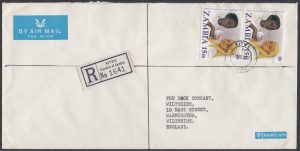
Two of the more prominent members/officers were Samuel Koslowsky (Sam Kelly) and Neil Hartley. A number of philatelic covers exist from Koslowsky to family members in Latvia, France and Canada between 1935 to c.1965. Koslowsky covers share the same P.O. Box as The Copperbelt Philatelic Society.

Samuel Koslowsky eventually moved to Johannesburg and died in the 1980’s. Neil Hartley died in the early 1990’s.

Commemorative Covers

First Day Covers

Reference

  • Horizon: The Magazine of the Rhodesian Selection Trust Group of Companies, Volume 7

Smart & Co.

Smart & Co.

Gwelo

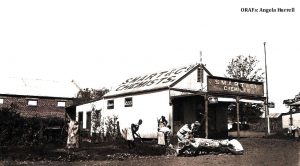
In 1910, Harold Smart, left Smart & Copley Ltd and cycled to Gwelo where he opened his own chemist shop Smart & Co. Smart died July 30th, 1953.

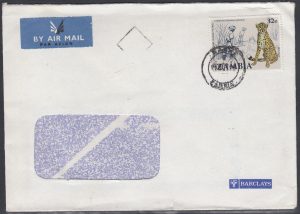
Barclays Bank of Zambia Ltd: Kitwe

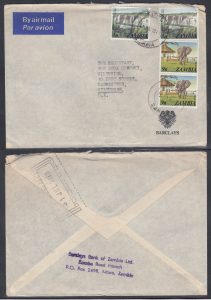
Barclays Bank of Zambia Ltd

Kitwe

Barclays Bank of Zambia Ltd: Kabwe

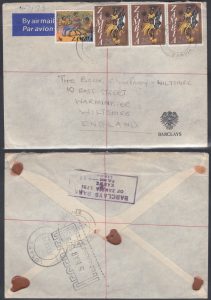
Barclays Bank of Zambia Ltd

Kabwe

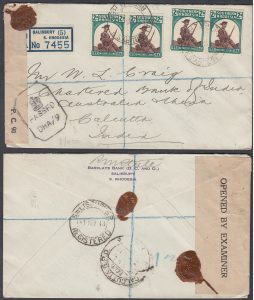
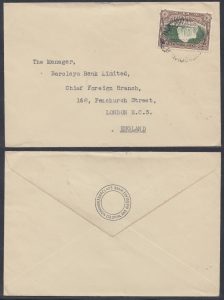
Barclays Bank: Southern Rhodesia

Barclays Bank

Southern Rhodesia

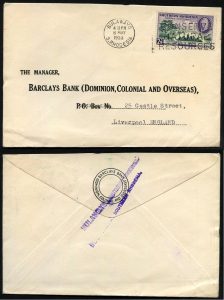
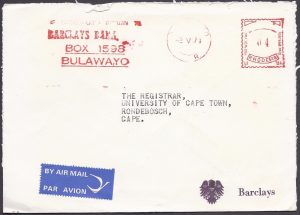
Barclays Bank (Dominion, Colonial and Overseas) was incorporated as Barclays Bank of Zimbabwe Ltd in June, 1981 and at the time had more than 50 branches.

Branches

Contributors
  • James Gavin

FB

Barclays Bank: Southern Rhodesia – Bulawayo

Barclays Bank

Southern Rhodesia – Bulawayo

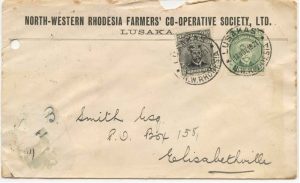
North-Western Farmers’ Co-Operative Society Ltd

North-Western Farmers’ Co-Operative Society Ltd

Lusaka

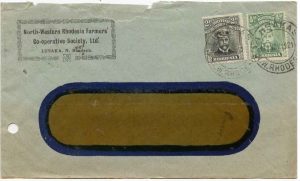
In 1914, farmers across Northern Rhodesia were facing poor prices due to overproduction. In 1915, a group of farmers form the North-Western Farmers’ Co-Operative Society Ltd. Although there was no formal link between the Farmer’s Association and the co-operative, membership over-lapped.

The goal of the co-operative was to control enough of the produce in Northern Rhodesia to increase prices. If prices went too low, supplies could be withheld. Alternatively, when prices rose, stocks could be marketed to benefit of farmers rather than speculating territorial traders.

The co-op had very limited success because it was never able to control the requisite proportion of produce place onto the market. Also, some farmers stayed out of the market as it did not pay as quickly as territorial merchants.

Eventually, after long negotiations, the British South Africa Company reluctantly agreed to a £5000 line of credit to the organisation and offered a contract for 7,500 bags. The company was reluctant to get involved with the co-op as the influential businessman Tom King did not join. King was partner in the King & Werner – a major territorial merchant for cattle and maize.

References

  • Black and White in Southern Zambia – Kenneth P Vickery

Michael Pevsner

Michael Pevsner

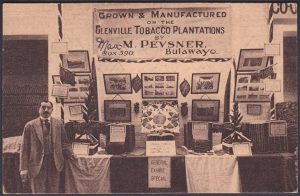
Michael (Max) Pevsner was a Russian Jew who emigrated to Rhodesia after the Anglo-Boer War. He owned a fifty acre farm outside Bulawayo called Glenville Estate. The estate was established by the Barker brothers in early 1904 and sold to Pevsner in 1907. Pevsner was one of the early pioneers of tobacco growing in Rhodesia and was believed to the be the largest grower of Turkish tobacco in the world.

In 1923, Michael Pevsner entered into a working arrangement with William Boone Wilson which continued through until the outbreak of World War II in 1939. At about this time, the growing of Bulawayo Turkish tobacco was in decline and the Glenville Estates was eventually sold to a consortium of property developers.

Michael Pevsner died in 1941. In his will he bequested large sums of money to charities in Bulawayo and Salisbury, and to Rhodesian Seaside Home in Cape Town, South Africa.

Postcards

References

Commemorative Covers: Dunlop – MATAPEX 75

Dunlop

MATAPEX 75

1 23 24 25 26 27 51