Dutch Reformed Church: Margaretha Hugo School for the Blind

Dutch Reformed Church

Margaretha Hugo School for the Blind

The Margaretha Hugo School for the Blind (commonly known as Copata School for the Blind) had its origins when the parents of a blind boy approached Dutch Reformed Church missionary Reverend Hugo at Chibi Mission for help. Rev. Hugo asked his wife, Margaretha, to look after the boy and she replied “I will try,” from which was born the later motto of the Margaretha Hugo Mission – “We will try.”Soon, there were 8 children in her care. Margaretha later went to South Africa to learn how to teach Braille.

Established in 1915, the school was registered as a school in 1927 as the first school in Southern Rhodesia providing services to students with disabilities. Because of challenges with accessibility, the school was moved to the Zimuto Mission farm in 1938.

From its initial founding, the school has grown to include a primary and secondary boarding school supporting 480 students with disabilities, most of them with visual impairments, coming from across Southern Africa. The school has a staff of 35 primary and 14 secondary school teachers and continues to be managed by the Reformed Church in Zimbabwe (RCZ).

References

Contributors
  • Mark Loomis

Dutch Reformed Church: Zimuto Mission

Dutch Reformed Church

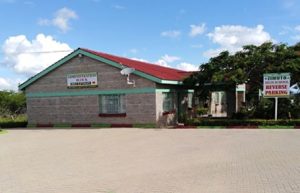
Zimuto Mission

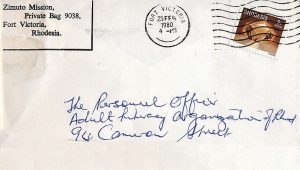
African evangelist from the Dutch Reformed Church (DRC) first entered the area of what would become Zimuto Mission in the 1870-80’s, but it was the Berlin Missionary Society (BMS) that opened Zimuto Mission in 1904, 15-20 km north of Fort Victoria (Masvingo). BMS transferred control of Zimuto to the DRC in 1907.

The first DRC missionary, Rev. G. S. Murray, was sent to the mission in 1907 and did a lot of evangelism in the area. Educational and medical work was started soon after the mission opened. In 1956 a secondary school was opened with the aim of offering preparatory training for entering the Higher Primary Teacher Training Course, an advanced nursing course, or a course for African ministers. The Margaretha Hugo School for the Blind (Copata) was moved from Chivi to the Zimuto Mission farm in 1938 as a sister institution.

Along with DRC’s other missions in Southern Rhodesia, Zimuto Mission was transferred to the local control of the African Reformed Church – later renamed Reformed Church in Zimbabwe (RCZ) – in 1977.

Today Zimuto is also one of the RCZ’ s largest mission stations. It has a conventional primary school, a primary school for the blind, a high school, a secondary school for the blind, a clinic and workshops for basketry and chalk making. Zimuto High School has students from Form 1 through “A” level and more than 50 teaching staff. Zimuto Clinic has 6 beds and serves the majority of the people in the Zimuto area. It averages 6 deliveries a month.

References

Contributors
  • Mark Loomis

FB

The Salvation Army: Howard Institute – Howard Hospital

Howard Institute

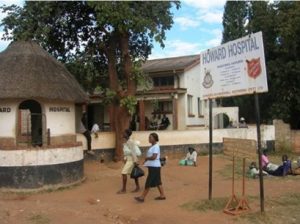
Howard Hospital

A medical clinic with 15 beds was established at Howard Institute in 1928 by Adjutant Agatha Battersby, who had prior experience running a dispensary in South Africa. By 1930, under the leadership of S.R.N Mary I. Ryan, the clinic was treating nearly 2,000 out-patients. In 1939, Adjutant Isabel Sloman began a Nurses Training School, with government support, to train assistant nurses who received a government certificate. The clinic became a recognized hospital in 1956.

The hospital was administratively separated from Howard’s educational facilities in 1967 when Dr. James Watt took up the post of Chief Medical Officer. Dr. James and his wife Bette remained in country until 1984. The hospital was kept open during the Bush War. 1980 to 1984 were rebuilding years.

Today, the 144-bed Howard Hospital is a major provider of health services to more than 40,000 outpatients and 4,000 inpatients per year. The hospital includes pediatrics, obstetrics, psychiatry, infectious diseases and runs a number of community-based programs. There are currently 40 student nurses in the nurses training program, which offers residential training courses in primary care and midwifery.

References

Contributors
  • Mark Loomis

The Salvation Army: Howard Institute

The Salvation Army

Howard Institute

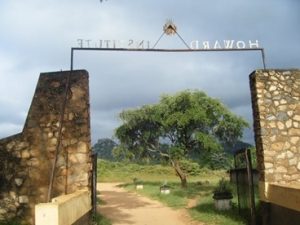
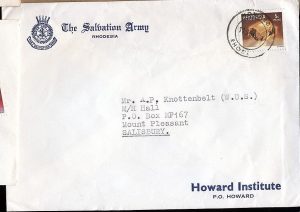
In 1923, Major James Barker and Captain Leonard Kirby of The Salvation Army moved the education facility that was at Pearson Farm to Nyachuru in the Chiweshe Communal lands, approximately 80km north of Salisbury (Harare). The new mission was built on 105 acres granted by the British South Africa Company and named Howard Institute after T. Henry Howard, the Salvation Army’s second Chief of Staff, who died in 1923.

Howard Institute would become the Salvation Army’s primary education center in Southern Rhodesia, with a “Practicing School” (where student teachers could practice in a class room), a combined Central Primary School with boarding section and theological training school for Salvation Army Officers, teacher training (established 1933 by Captain Thomas Lewis) and a nurses training school (begun 1939). By 1928, Howard had 48 students. Secondary education was added as of the 1960’s. Howard Hospital was opened 1928.

Eva Burrows, future General of the Salvation Army (as of 1986), was appointed an officer teacher at Howard Institute beginning 1952. During her 14 years at Howard, Burrows focused on the training of teachers to serve in the network of Salvation Army schools throughout Southern Rhodesia. She was promoted to Head of the Teachers’ College and then Vice-Principal of Howard Institute, before leaving to become Principal at Usher Institute in 1966/1967.

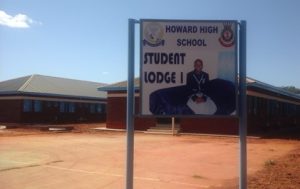
Howard Institute currently consists of Howard High School, with approximately 800 students, and Howard Hospital.

Facilities

References

Contributors
  • Mark Loomis

FB

The Salvation Army: Bradley Institute

The Salvation Army

Bradley Institute

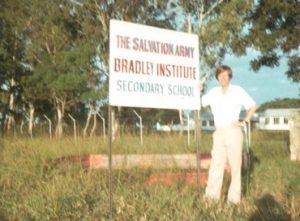
The Bradley Institute was founded in 1926 by Major James and Captain Bennett of the Salvation Army. It is located near the village of Madziwa, Mashonaland Central Province, about 100 km northwest of Salisbury (Harare) and 32 km north of Shamva. A central boarding school was soon opened for boys; girls were accepted later.

Bradley has had an acute water problem from its very inception that has threatened closure many times over the years. Even after a dam was built for the school, the water was muddy. During the tenure of Lt Col Gaughey Gauntlett, 1953 – 1962, the school was able to drill deep wells to produce a supply of water. Gaughey also arranged for building water storage tanks, which have been important as the water table sank. Nonetheless, Bradley was closed 1964 – 1966 due to severe water shortage.

In addition to Lt Col Gauntlett, other missionaries at Bradley have included Captain Jean Wylie (as of 1948 – 1949); Major Margretta Nelson (Headmistress as of 1954-1955, during which time the institute consisted of a boarding school for 200 boys); and following departure of Gauntlett in 1964, Major Hafford, who was soon replaced by Captain William Evans.

Bradley Institute was closed in 1976 during the Bush War in Rhodesia by authorities who feared the school would be a breeding ground for “terrorist.” At time of closure, the school was a primary boarding school teaching from Standard 4 to Standard 6. In addition to basic academics, the school also taught building, carpentry and agriculture. Bradley reopened in 1980 as a mixed boarding school and upgraded to a secondary school, Form 1 to Form 4 (“O” level). Captain Brian Knightley (with his wife Dorothy and daughter Helen) was Superintendent as of 1981 – 1984. During his tenure, enrollment increased from 220 to 320.

The mission currently consists of the Bradley Institute Secondary school.

References

Contributors
  • Mark Loomis

The Salvation Army: Usher Institute

The Salvation Army

Usher Institute

The Usher Institute was established by the Salvation Army at Leighwoods farm near Figtree, Southern Rhodesia in 1933 by then Staff Captain Salhus and his wife, but has its origins in the work of pioneer Salvationist James Henry Usher and his wife Jessie who informally began teaching Africans living in the area starting in 1906. The school was later named Usher Institute in their honor.

The first class in 1933 consisted of five boys and one girl. By 1935, enrollment had risen to thirty-four. A new classroom block was opened in 1939 with an enrolment of 101 students. Boys were taught “practical subjects” such as Metal work, Gardening, animal husbandry and carpentry while the girls learned needlework, cookery, child line and domestic sciences. Captain and Mrs. Morton came to Usher Institute in the mid-1950’s, establishing a post standard six course in Domestic Sciences in 1956. Major Brigadier Lavinia Benson later started the first Boys Secondary School. Between 1966 and 1970, Usher was under the leadership of Eva Burrows, who would go on to become the 13th General of the Salvation Army (1986 – 1993). It appears that during her tenure, Usher became a secondary boarding school for girls only.

Usher Institute witnessed the tragic murder of two women Salvation Army missionaries, Charon F. Swindells (age 25) and Diane B. Thompson (age 28), by guerrilla fighters on June 7, 1978 during the Bush War. Two other missionaries were injured. Their deaths led to the school’s closure and the Salvation Army withdrawing from the World Council of Churches (which supported the rebels’ cause against the Rhodesian government). As of its closure, Usher had 267 secondary boarding students and 260 primary students, of whom 60 were boarders. The school reopened March 1980 with 240 students.

The school is presently known as Usher Girls High School or Usher Secondary School.

References

Contributors
  • Mark Loomis

Reformed Church in Zimbabwe

Reformed Church in Zimbabwe

Masvingo

The beginnings of the indigenous Reformed Church in Zimbabwe (RCZ) date back to the founding of a “Synod for the Shona Reformed Church” in 1952 with an initial 20,0000 communicant members. The name was later changed to “African Reformed Church (AFC).”

The Dutch Reformed Church (DRC) withdrew the majority of its missionary staff from Southern Rhodesia in the late 1970’s because of security concerns during the “War of Liberation”/”Bush war.” On 4 May 1977, after the signing of a Deed of Agreement, all the DRC’s mission work and properties were officially handed over to the African Reformed Church (ARC), which had grown into a full-fledged autonomous indigenous church.

The name was changed to the “Reformed Church in Zimbabwe” following Zimbabwean independence in April 1980. Today the RCZ consists of 18 presbyteries, more than 49 congregations and approximately 100,000 communicants.

References

Contributors
  • James Gavin
  • Mark Loomis

FB

National Railways of Zimbabwe Museum

National Railways of Zimbabwe Museum

Raylton

The National Railways of Zimbabwe Museum was established in 1972 as the Bulawayo Railway Museum.

The Museum is situated in the old railway suburb of Raylton just three kilometers from the city center of Bulawayo. On display at the museum are various artifacts rich in Railway history and locomotives used by the NRZ over the years.

The museum also has the Rhodes funeral coach which was made specifically for Cecil Rhodes by an American company. The first locomotive to cross the Victoria Falls bridge the Jack Tar is among the major highlights of the rich historical collection.

Postcards

References

Contributors
  • Narendhra Morar

Postcards: National Railways of Zimbabwe Museum – Type I

National Railways of Zimbabwe Museum

Type I

No.DescriptionEarliest PMK Date
N/A"Jack Tar" a small class locomotive.
N/A"7th Class locomotive which can be seen at Railway Museum Bulawayo"

FB

Matombo Gallery

Matombo Gallery

Harare

Matombo Gallery was established in 1985 and is based in Harare, Zimbabwe. It has been described as “the world’s premier establishment specialising in Shona sculpture”. It has curated and organised numerous critically acclaimed international exhibitions exclusively featuring works by Zimbabwe’s major artists.

Postcards

Contributors
  • Narendhra Morar
1 2 3 4 5 6 50