
Category: Zimbabwe
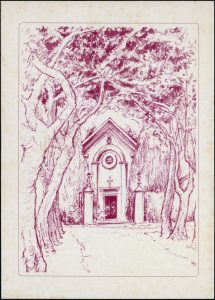
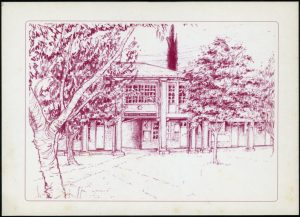
Prince Edward School
Prince Edward School
Harare

Prince Edward was established in 1898 in Salisbury, Southern Rhodesia as Salisbury Grammar. It was renamed Salisbury High School in 1906 and adopted its current name in during the 1925 Royal visit of Edward VIII, who was Prince of Wales at the time. It is the second oldest boys school in Harare and in Zimbabwe after its main sporting rival, St Georges’ College.
The School’s badge is a crown and three feathers, granted to it by Prince Edward. The school’s colours are maroon and dark green. For its centenary, Prince Edward School adopted a new coat of arms which does not replace the school’s badge. The motto of the school “Tot Facienda Parum Factum” (“So much to do, So little done”) is attributed as Cecil John Rhodes’ last words.
In 2002, before the March 2002 presidential elections, the Ministry of Education announced plans to change names of all government schools that had colonial connotations. Scores of government schools were set to have their names changed to honour liberation war heroes, past national and African personalities and/or the suburban area in which the school is located. Prince Edward School was set to be renamed Murenga Boys High School after a Njelele high spirit said to have assisted the local heroes who fought the First Chimurenga of 1896–7. The change of names did not occur but in its wake, as a compromise, the Games Houses within the school had their colonial names changed to those of rivers in Zimbabwe.
The school is currently a public, boarding and day school for boys aged 13 to 19. It provides education facilities to 1200+ boys in Forms I to VI. The school is served by a graduate staff of over 100 teachers. It was ranked 6th out of the top 100 best high schools in Africa by Africa Almanac in 2003, based upon quality of education, student engagement, strength and activities of alumni, school profile, internet and news visibility.It was also ranked as one of the Top 10 High Schools in Zimbabwe in 2014.
Postcards
Contributors
- Geoff Brakspear
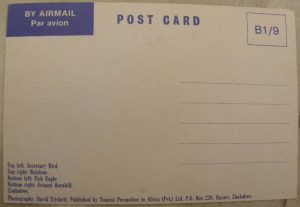
Postcards: Tourist Promotion in Africa (PVT) Ltd – Type IC – B1 Series
Tourist Promotion in Africa (PVT) Ltd
Type IC – B1 Series
-
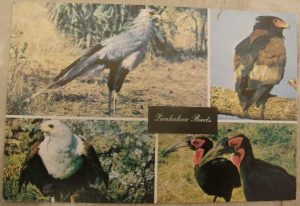
- B1/9
| No.s | Description | Earliest PMK Date |
|---|---|---|
| B1/9 | Zimbabwe Birds |
Postcards: Tourist Promotion in Africa (Pvt) Ltd – Type ID – V Series
Tourist Promotion in Africa (Pvt) Ltd
Type ID – V Series
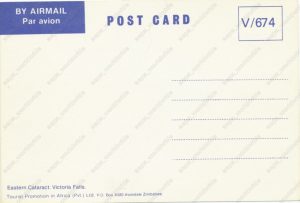
-
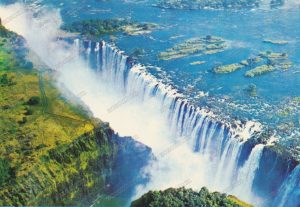
- V/622
-
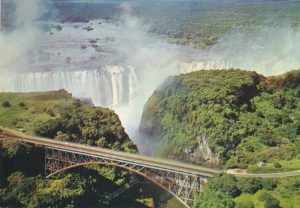
- V/653
-
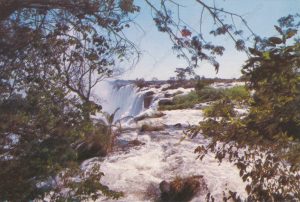
- V/674
| No.s | Description | Earliest PMK Date |
|---|---|---|
| V/622 | Rainbow Falls... | |
| V/653 | Closeup of Bridge and Armchair... | |
| V/674 | Eastern Cataract. Victoria Falls. |
Postcards: Tourist Promotion in Africa (Pvt) Ltd – Type IC – L3 Series
Tourist Promotion in Africa (PVT) Ltd
Type IC – L3 Series
-
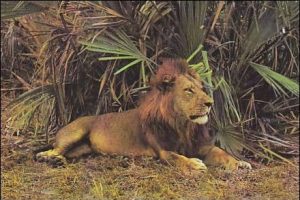
- L3/225
| No.s | Description | Earliest PMK Date |
|---|---|---|
| L3/225 | Lion... |
FB
Postcards: Tourist Promotion in Africa (Pvt) Ltd – Type IC – M7 Series
Tourist Promotion in Africa (PVT) Ltd
Type IC – M7 Series
-
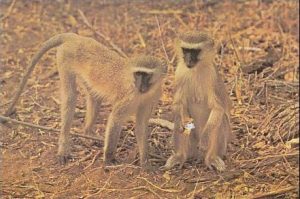
- M7/3
| No.s | Description | Earliest PMK Date |
|---|---|---|
| M7/3 | Vervet Monkeys. |
Postcards: Tourist Promotion in Africa (PVT) Ltd – Type IC – F Series
Tourist Promotion in Africa (PVT) Ltd
Type IC – F Series
-
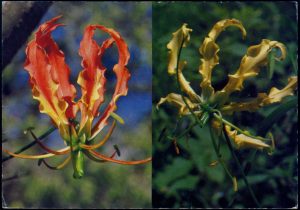
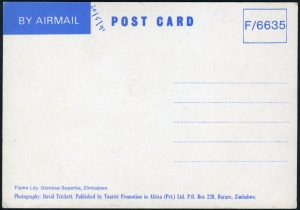
- F/6635
| No.s | Description | Earliest PMK Date |
|---|---|---|
| F/6635 | Flame Lily. Gloriosa Superba. Zimbabwe. |
Postcards: P.P.I (Pvt) Ltd – Type VIA (Green Banner)
Packaging and Printing Industries (Pvt) Ltd
Type VIA
-
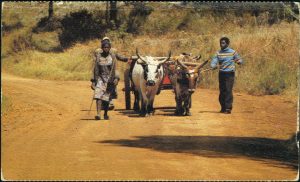
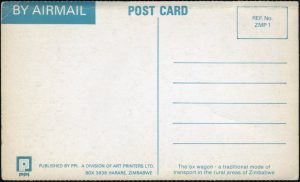
- ZMP 1
| No.s | Description | Earliest PMK Date |
|---|---|---|
| ZMP 1 | The Ox wagon... |
Postcards: Tourist Promotion in Africa (Pvt) Ltd – Type V – A Series
Tourist Promotion in Africa (Pvt) Ltd
Type V – A Series

-

- A/17
| No.s | Description | Earliest PMK Date |
|---|---|---|
| A/17 | Shangaan Dancers at Victoria Falls, Zimbabwe |
Roman Catholic Church: St Albert’s Mission
Roman Catholic Church
St Albert’s Mission

The East German province of Jesuits established St. Albert’s Mission in 1962, which became the center of their efforts in Southern Rhodesia. The mission is located near the village of Centenary in Mashonaland Central province, on the escarpment overlooking the Zambezi Valley.
St. Albert’s Mission Hospital was completed in 1963 with 85 beds. It was originally run by nurses from the Dominican Sisters. In 1983, Dr Elizabeth Tarira became the first resident doctor, building up the hospital to its present 140-bed capacity. A convent for the Little Children of our Blessed Lady (LCBL), who also worked in the hospital, was completed in 1968. St. Albert’s became a district (government funded) hospital in 1985. It is the only hospital serving the 120,000 people in the district. Today the hospital includes male, female and children’s wards, maternity and neonatal units, surgical theater, laboratory and pharmacy. It admits about 5,000 patients per year and treats approximately 40,000 outpatients.
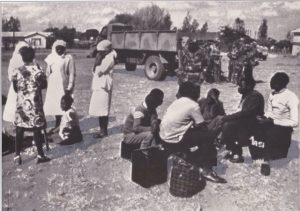
The Dominican Sisters opened a secondary school (St. Albert’s High School) in 1964. By 1973 the school had 197 students and there was a primary school of 261 pupils. In February 1973, the High School was closed by Rhodesian security forces as a ‘communal punishment’ after the discovery of a guerilla base nearby. The school reopened in April, but three months later a force from the Zimbabwe African National Liberation Army (ZANLA) captured approximately 300 pupils and staff and force marched them towards Mozambique to train as guerilla fighters. Before crossing the border, Rhodesian Security Forces were able to secure the release of all but eight of the children and staff. The school was later closed in the late 1970’s during the height of the “liberation struggle”, not opening again until 1981 with 120 students.
-
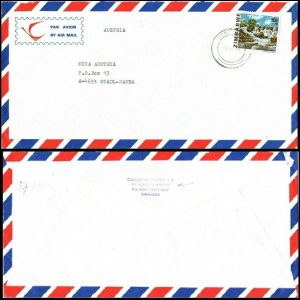
- 07.03.1985
References
- The Catholic Church and Zimbabwe, 1879-1979 – A.J Dachs & W.F. Rea
- On the Frontline, Catholic Missions in Zimbabwe – Janice McLaughlin,
- www.stalbertsmissionhospital.org
Contributors
- Mark Loomis