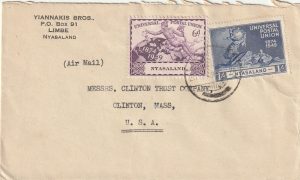
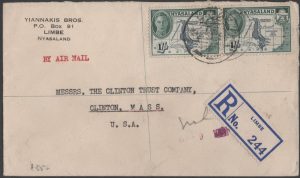
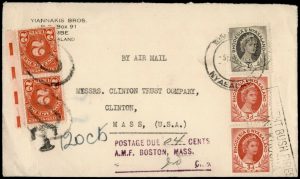
Yiannakis Bros

Yiannakis Bros

Limbe


The Yiannakis Bros was established in 1934 by three brothers; Nicholas, Christos and Stavros who started commercially fishing at Chipoka.

The three brothers originally came from the Greek island of Limnos and were attracted to Nyasaland by the prospects of growing tobacco in the Namwera district. They started working in the transport business before focusing on commercial fishing. By 1938 they were trawling using a small boat. They owned four lorries which transported fresh fish from Lake Nyasaland to Blantyre and dried fish to Salisbury.

During the 1940’s, the business was in constant conflict with Government. The Government were looking to supply local markets with dried fish. 60% of the Yiannakis Bros’ catch went to Southern Rhodesia. The issue came to a head in 1949 when a famine hit Nyasaland and there was a ban on the exporting of fish.

By 1950 they employed 150 permanent workers and were the only firm working full time on the lake and continue to try and defy the Governmental policies on the export of fish. The Government, in response, looked to ban the business from trading but this recommendation was never implemented. In 1951, after a bitter row between the brothers, Christos bought out Nicholas and Stavros’ interest in the business.

It was not until 1958, with the formation of the Federation of Rhodesia & Nyasaland, that the ban on fish exports was lifted.

References

  • The Journal of African History (Vol. 1, No. 1 – Vol. 54, No. 3)

FB

Nyasaland

Nyasaland

Nyasaland was a British Protectorate located in Africa that was established in 1907 when the former British Central Africa Protectorate changed its name. Between 1953 and 1963, Nyasaland was part of the Federation of Rhodesia and Nyasaland. After the Federation was dissolved, Nyasaland became independent from Britain on 6 July 1964 and was renamed Malawi.

Nyasaland’s history was marked by the massive loss of African communal lands in the early colonial period. In January 1915, the Reverend John Chilembwe staged an attempt at rebellion in protest at discrimination against Africans. Colonial authorities reassessed some of their policies. From the 1930s, a growing class of educated African elite, many educated in Great Britain, became increasingly politically active and vocal about gaining independence. They established associations and, after 1944, the Nyasaland African Congress (NAC).

When Nyasaland was forced in 1953 into a Federation with Southern and Northern Rhodesia, there was a rise in civic unrest, as this was deeply unpopular among the people of the territory. The failure of the NAC to prevent this caused its collapse. Not long afterwards, a younger and more militant generation revived the NAC. Ultimately, they invited Hastings Banda to return to the country and lead it to independence as Malawi in 1964.

Political Parties

Acts & Ordinances

Departments

Services

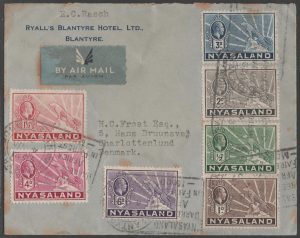
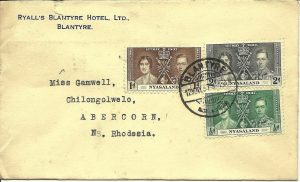
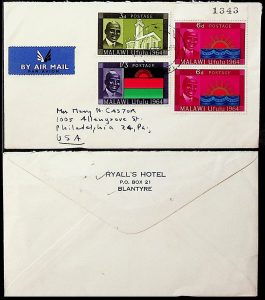
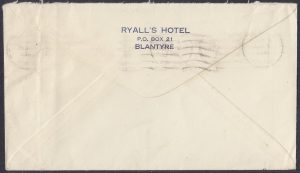
Ryall’s Blantyre Hotel Ltd

Ryall’s Blantyre Hotel Ltd

Blantyre

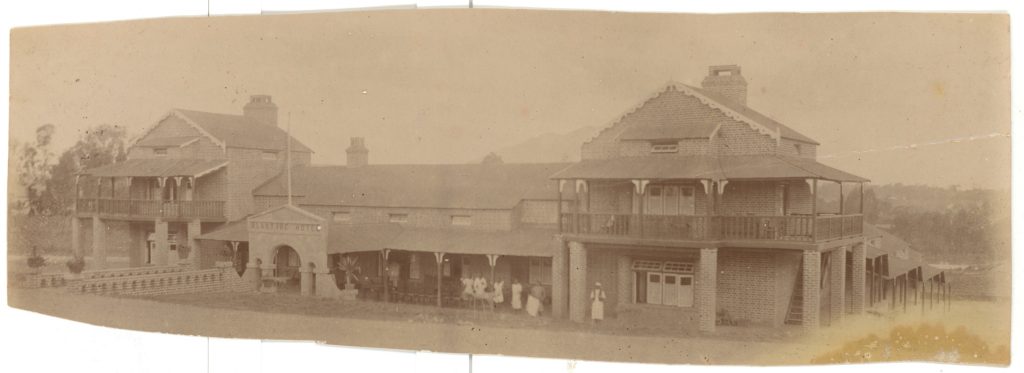
Louisa Ryall, whose husband worked for the Nyasaland Volunteer Reserve as builder and contractor, responded to an advertisement appearing in the Nyasaland Times in 1919 requesting the need for hotel accommodation in Nyasaland. Louisa had already established the Limbe Hotel in 1914.

Ryall converted one of the buildings that used to be a concentration camp during the First World War as the first premise for a hotel in Blantyre. The building later became Nash’s Hotel, a family business owned by Mr Nash.

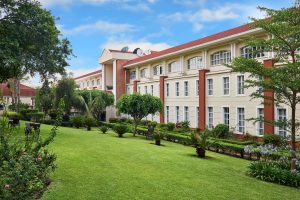
After the death of her husband, Francis Ryall, she married the manager of her Limbe Hotel, John Stratton. They built a new establishment, Ryall’s Blantyre Hotel, which opened in 1922.

The business is now known as Protea Hotel Blantyre Ryalls. It is the longest established hotel in Malawi.

Contributors
  • James Gavin
References

FB

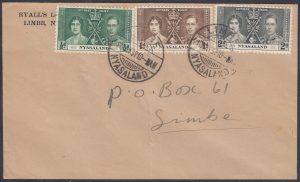
Ryall’s Limbe Hotel

Ryall’s Limbe Hotel

Limbe

Ryall’s Limbe Hotel was started by Louisa Ryall in 1914. She later opened Ryall’s Blantyre Hotel.

References

Contributors
  • James Gavin

FB

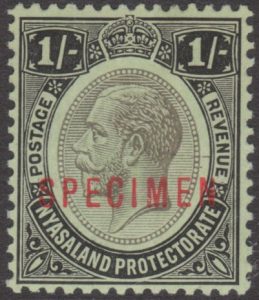
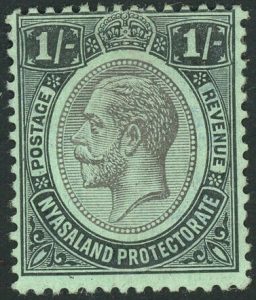
Presentation: 1930 – George V Definitive Series (1s Value)

Nyasaland

1930 – George V Definitive Series (1s Value)

FB

1930 – George V Definitive Series (1s Value)

Nyasaland

1930 – George V Definitive Series (1s Value)

Details

  • Date of Issue: 1930
  • Date Withdrawn:
  • Date Invalidated:
  • Designer: 
  • Printer: De La Rue
  • Process:
  • Paper: Chalk surfaced (all others)
  • Watermark: Multi Script CA
  • Perf: 14
  • Cylinders: 1
  • Sheet:
  • Booklet: N/A
  • Quantity:

Production Details

FB

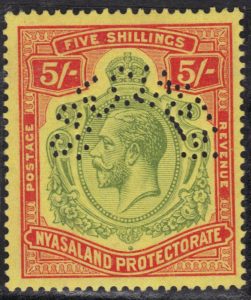
Presentation: 1929 – George V Definitive Series (5s Value)

Nyasaland

1929 – George V Definitive Series (5s Value)

FB

1929 – George V Definitive Series (5s Value)

Nyasaland

1929 – George V Definitive Series (5s Value)

Details

  • Date of Issue: 1929
  • Date Withdrawn:
  • Date Invalidated:
  • Designer: 
  • Printer: De La Rue
  • Process:
  • Paper: Chalk surfaced (all others)
  • Watermark: Multi Script CA
  • Perf: 14
  • Cylinders: 1
  • Sheet:
  • Booklet: N/A
  • Quantity:

Production Details

FB

1927 – George V Definitive Series (4s Value)

Nyasaland

1927 – George V Definitive Series (4s Value)

Details

  • Date of Issue: 1927
  • Date Withdrawn:
  • Date Invalidated:
  • Designer: 
  • Printer: De La Rue
  • Process:
  • Paper: Chalk surfaced (all others)
  • Watermark: Multi Script CA
  • Perf: 14
  • Cylinders: 1
  • Sheet:
  • Booklet: N/A
  • Quantity:

FB

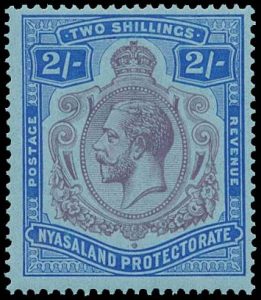
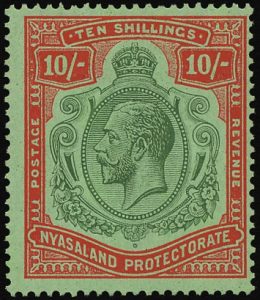
1926 – George V Definitive Series (2s. & 10s. Values)

Nyasaland

1926 – George V Definitive Series (2s. & 10s. Values)

Details

  • Date of Issue: 1926
  • Date Withdrawn:
  • Date Invalidated:
  • Designer: 
  • Printer: De La Rue
  • Process:
  • Paper: Chalk surfaced (all others)
  • Watermark: Multi Script CA
  • Perf: 14
  • Cylinders: 1
  • Sheet:
  • Booklet: N/A
  • Quantity:

Production Details

FB

1 5 6 7 8 9 29